Program for Neurotrauma, Neuroproteomics and Biomarkers Research, Department of Psychiatry, McKnight Brain Institute, University of Florida, Gainesville, FL 32611, USA.
The Departments of Psychiatry, University of Florida, Gainesville, FL 32611, USA.
Int J Mol Sci. 2022 Aug 11;23(16):8960. doi: 10.3390/ijms23168960.
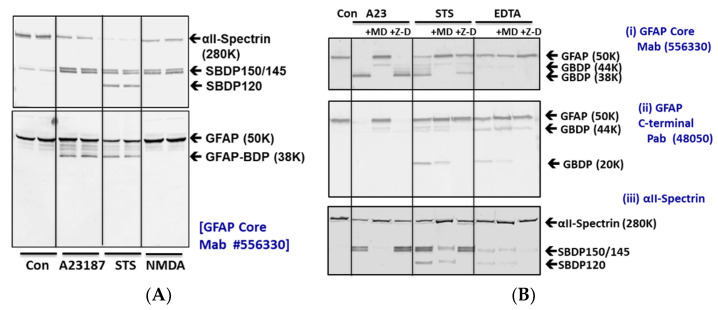
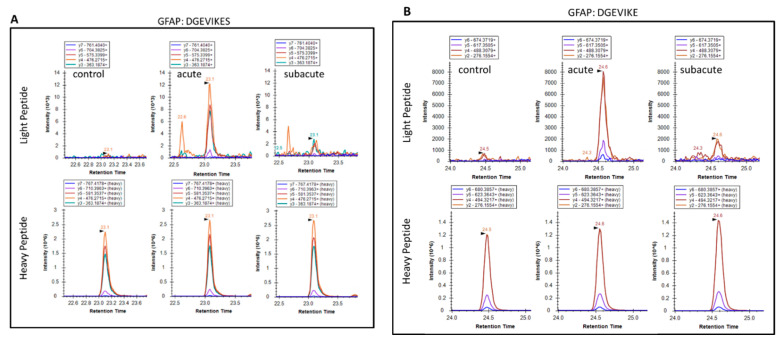
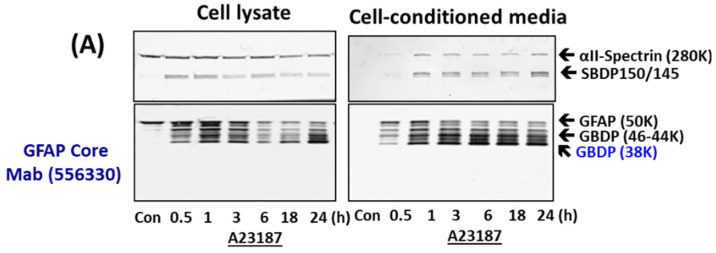
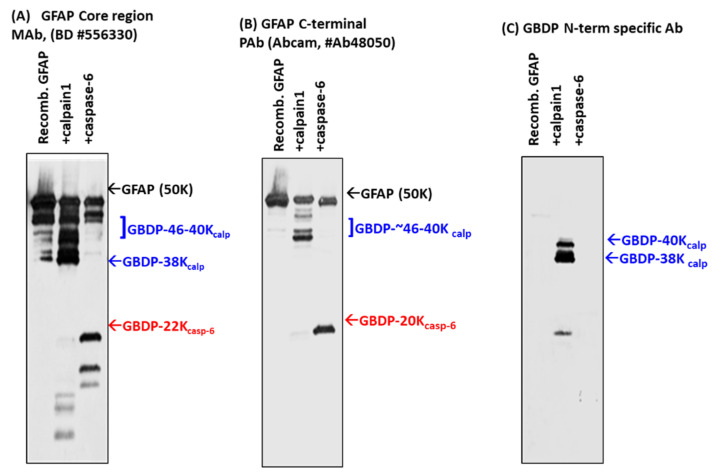
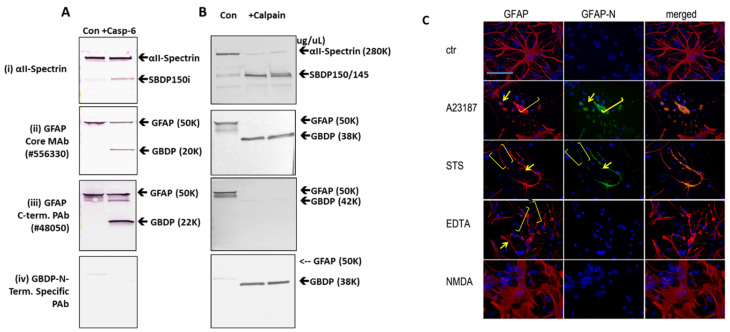
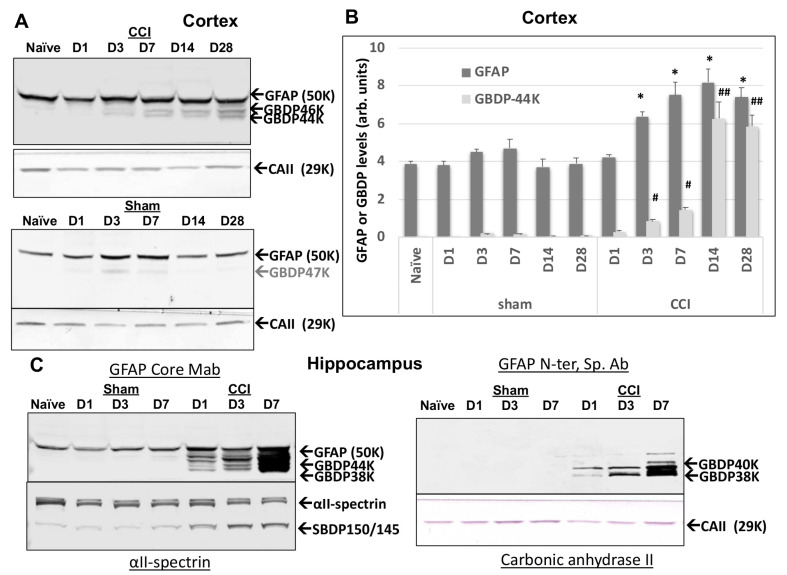
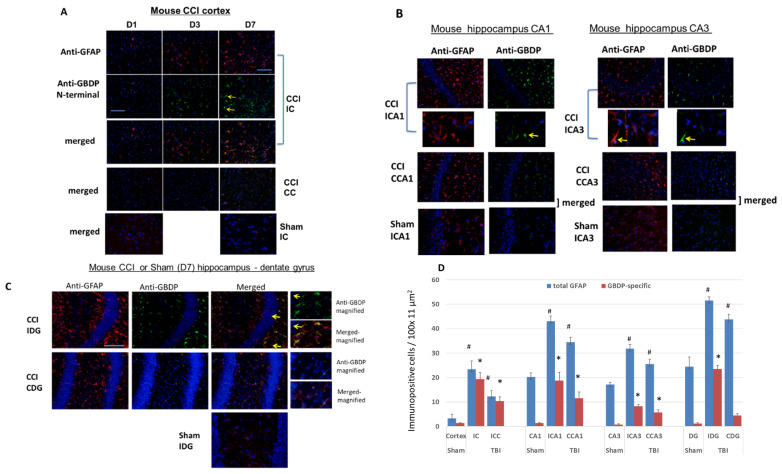
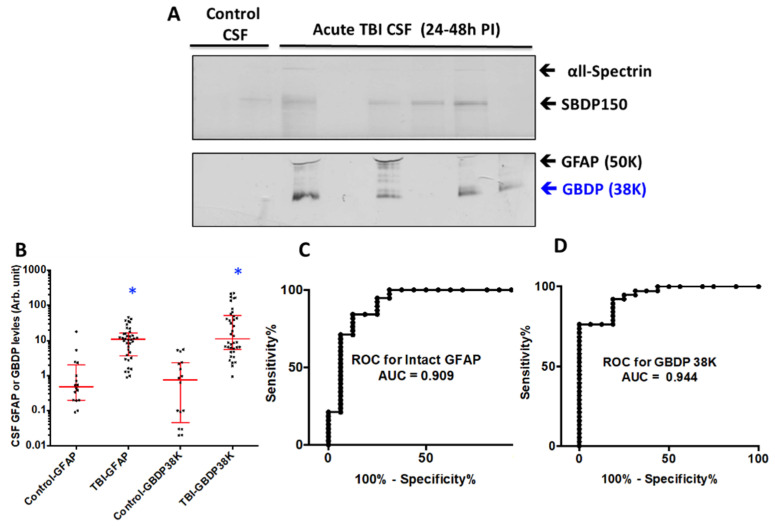
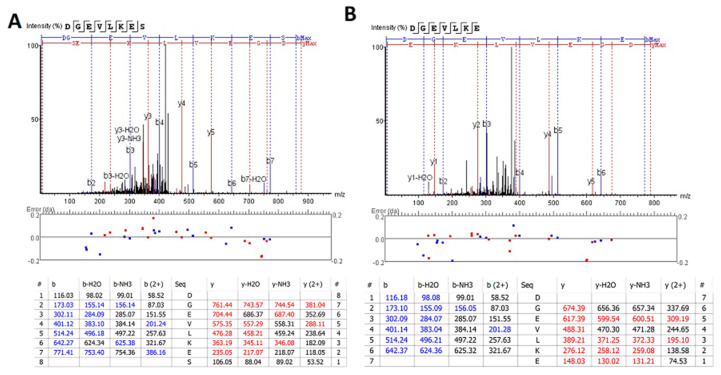
Glial fibrillary acidic protein (GFAP) is the major intermediate filament III protein of astroglia cells which is upregulated in traumatic brain injury (TBI). Here we reported that GFAP is truncated at both the C- and N-terminals by cytosolic protease calpain to GFAP breakdown products (GBDP) of 46-40K then 38K following pro-necrotic (A23187) and pro-apoptotic (staurosporine) challenges to primary cultured astroglia or neuron-glia mixed cells. In addition, with another pro-apoptotic challenge (EDTA) where caspases are activated but not calpain, GFAP was fragmented internally, generating a C-terminal GBDP of 20 kDa. Following controlled cortical impact in mice, GBDP of 46-40K and 38K were formed from day 3 to 28 post-injury. Purified GFAP protein treated with calpain-1 and -2 generates (i) major N-terminal cleavage sites at A-56A-61 and (ii) major C-terminal cleavage sites at T-383Q-388, producing a limit fragment of 38K. Caspase-6 treated GFAP was cleaved at D-78/R-79 and D-225/A-226, where GFAP was relatively resistant to caspase-3. We also derived a GBDP-38K N-terminal-specific antibody which only labels injured astroglia cell body in both cultured astroglia and mouse cortex and hippocampus after TBI. As a clinical translation, we observed that CSF samples collected from severe human TBI have elevated levels of GBDP-38K as well as two C-terminally released GFAP peptides (DGEVIKES and DGEVIKE). Thus, in addition to intact GFAP, both the GBDP-38K as well as unique GFAP released C-terminal proteolytic peptides species might have the potential in tracking brain injury progression.
胶质纤维酸性蛋白 (GFAP) 是星形胶质细胞的主要中间丝 III 蛋白,在创伤性脑损伤 (TBI) 中上调。在这里,我们报道细胞溶质蛋白酶钙蛋白酶将 GFAP 在 C 端和 N 端截断,形成 GFAP 降解产物 (GBDP) 的 46-40K 然后是 38K,随后是原坏死 (A23187) 和原凋亡 (星形孢菌素) 对原代培养的星形胶质细胞或神经元-胶质混合细胞的挑战。此外,在用另一种促凋亡挑战 (EDTA) 激活半胱天冬酶但不激活钙蛋白酶的情况下,GFAP 内部发生片段化,产生 C 端 GBDP 的 20 kDa。在小鼠的皮质控制冲击后,从损伤后第 3 天到第 28 天形成 46-40K 和 38K 的 GBDP。用钙蛋白酶-1 和 -2 处理纯化的 GFAP 生成 (i) 在 A-56A-61 处的主要 N 端切割位点和 (ii) 在 T-383Q-388 处的主要 C 端切割位点,产生 38K 的限片段。半胱天冬酶-6 处理的 GFAP 在 D-78/R-79 和 D-225/A-226 处被切割,其中 GFAP 相对抵抗半胱天冬酶-3。我们还衍生出一种 GBDP-38K N 端特异性抗体,该抗体仅在 TBI 后培养的星形胶质细胞和小鼠皮质和海马体中标记受伤的星形胶质细胞体。作为临床转化,我们观察到从严重的人类 TBI 收集的 CSF 样本中升高了 GBDP-38K 以及两种 C 端释放的 GFAP 肽 (DGEVIKES 和 DGEVIKE) 的水平。因此,除了完整的 GFAP 之外,GBDP-38K 以及独特的 GFAP 释放的 C 端蛋白水解肽种类都有可能在跟踪脑损伤进展方面发挥作用。