Martins Francisco, Przednowek Krzysztof, França Cíntia, Lopes Helder, de Maio Nascimento Marcelo, Sarmento Hugo, Marques Adilson, Ihle Andreas, Henriques Ricardo, Gouveia Élvio Rúbio
Department of Physical Education and Sport, University of Madeira, 9020-105 Funchal, Portugal.
Laboratory of Robotics and Engineering Systems, Interactive Technologies Institute, 9020-105 Funchal, Portugal.
J Clin Med. 2022 Aug 22;11(16):4923. doi: 10.3390/jcm11164923.
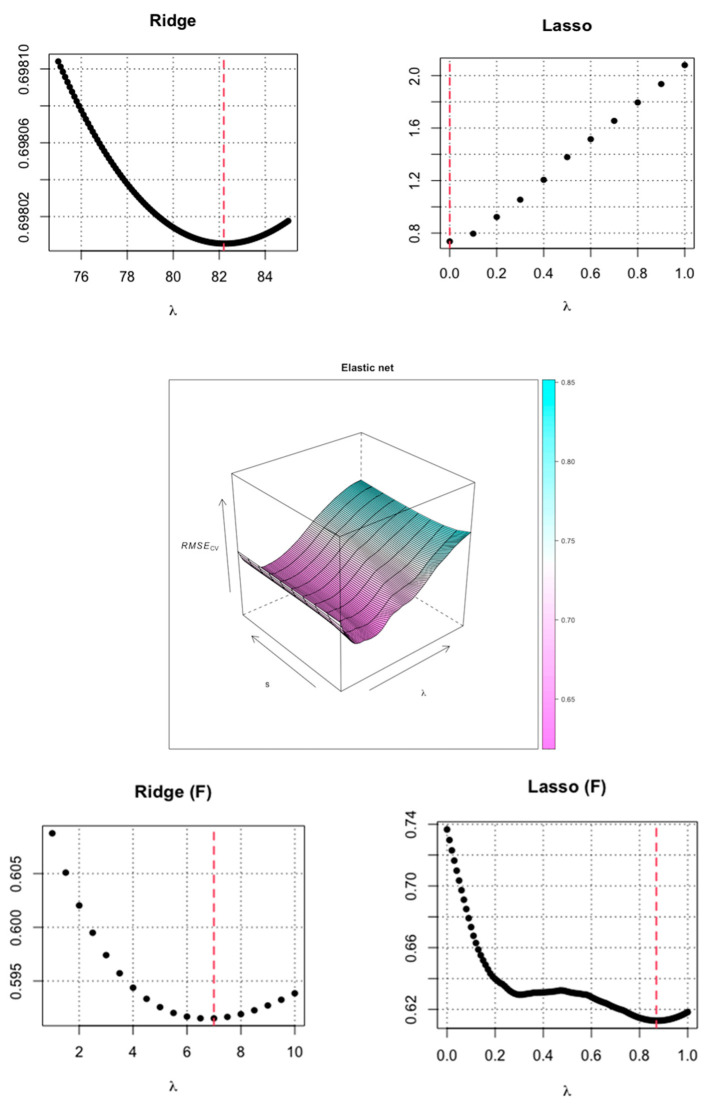
Injuries are one of the most significant issues for elite football players. Consequently, elite football clubs have been consistently interested in having practical, interpretable, and usable models as decision-making support for technical staff. This study aimed to analyze predictive modeling of injury risk based on body composition variables and selected physical fitness tests for elite football players through a sports season. The sample comprised 36 male elite football players who competed in the First Portuguese Soccer League in the 2020/2021 season. The models were calculated based on 22 independent variables that included players' information, body composition, physical fitness, and one dependent variable, the number of injuries per season. In the net elastic analysis, the variables that best predicted injury risk were sectorial positions (defensive and forward), body height, sit-and-reach performance, 1 min number of push-ups, handgrip strength, and 35 m linear speed. This study considered multiple-input single-output regression-type models. The analysis showed that the most accurate model presented in this work generates an error of RMSE = 0.591. Our approach opens a novel perspective for injury prevention and training monitorization. Nevertheless, more studies are needed to identify risk factors associated with injury prediction in elite soccer players, as this is a rising topic that requires several analyses performed in different contexts.
伤病是精英足球运动员面临的最重要问题之一。因此,精英足球俱乐部一直热衷于拥有实用、可解释且可用的模型,作为技术人员决策的支持。本研究旨在通过一个赛季,分析基于身体成分变量和选定的体能测试对精英足球运动员伤病风险进行预测建模。样本包括36名在2020/2021赛季参加葡萄牙足球超级联赛的男性精英足球运动员。模型基于22个自变量计算得出,这些自变量包括球员信息、身体成分、体能,以及一个因变量,即每个赛季的伤病次数。在净弹性分析中,最能预测伤病风险的变量是场上位置(后卫和前锋)、身高、坐位体前屈成绩、1分钟俯卧撑次数、握力和35米直线速度。本研究考虑了多输入单输出回归类型的模型。分析表明,本研究中提出的最准确模型产生的均方根误差(RMSE)为0.591。我们的方法为伤病预防和训练监测开辟了一个新的视角。然而,由于这是一个新兴话题,需要在不同背景下进行多项分析,因此还需要更多研究来确定与精英足球运动员伤病预测相关的风险因素。