Filip Roxana, Gheorghita Puscaselu Roxana, Anchidin-Norocel Liliana, Dimian Mihai, Savage Wesley K
Faculty of Medicine and Biological Sciences, Stefan cel Mare University of Suceava, 720229 Suceava, Romania.
BK Laboratory, SuceavaCounty Emergency Hospital, 720224 Suceava, Romania.
J Pers Med. 2022 Aug 7;12(8):1295. doi: 10.3390/jpm12081295.
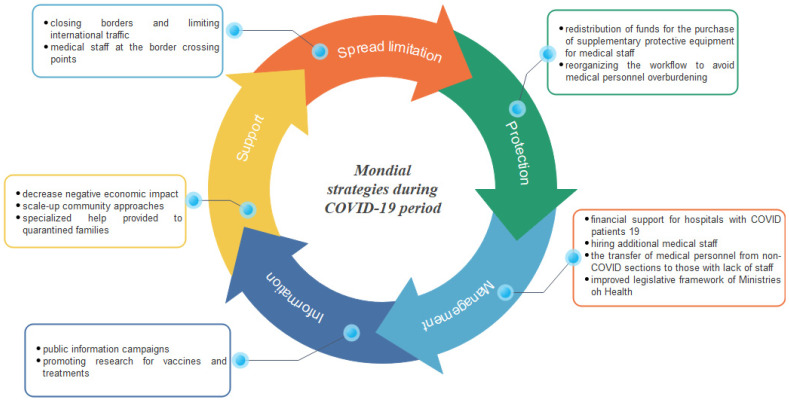
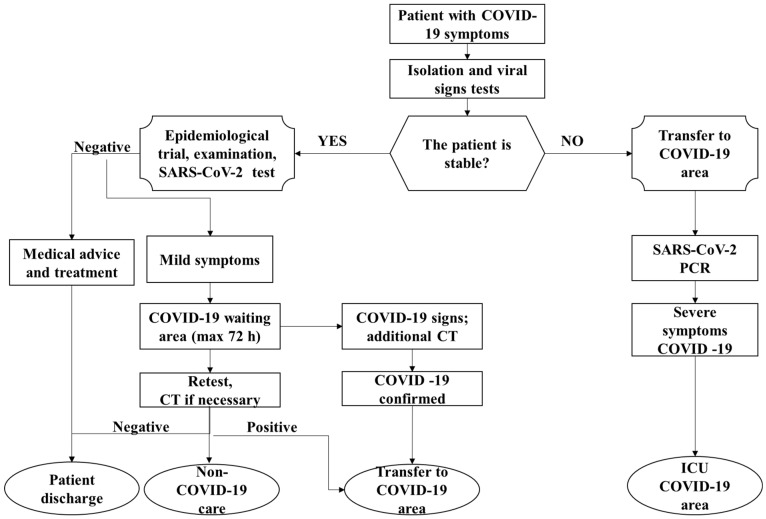
Beginning in December 2019, the world faced a critical new public health stressor with the emergence of SARS-CoV-2. Its spread was extraordinarily rapid, and in a matter of weeks countries across the world were affected, notably in their ability to manage health care needs. While many sectors of public structures were impacted by the pandemic, it particularly highlighted shortcomings in medical care infrastructures around the world that underscored the need to reorganize medical systems, as they were vastly unprepared and ill-equipped to manage a pandemic and simultaneously provide general and specialized medical care. This paper presents modalities in approaches to the pandemic by various countries, and the triaged reorganization of medical sections not considered first-line in the pandemic that was in many cases transformed into wards for treating COVID-19 cases. As new viruses and structural variants emerge, it is important to find solutions to streamline medical care in hospitals, which includes the expansion of digital network medicine (i.e., telemedicine and mobile health apps) for patients to continue to receive appropriate care without risking exposure to contagions. Mobile health app development continues to evolve with specialized diagnostics capabilities via external attachments that can provide rapid information sharing between patients and care providers while eliminating the need for office visits. Telemedicine, still in the early stages of adoption, especially in the developing world, can ensure access to medical information and contact with care providers, with the potential to release emergency rooms from excessive cases, and offer multidisciplinary access for patients and care providers that can also be a means to avoid contact during a pandemic. As this pandemic illustrated, an overhaul to streamline health care is essential, and a move towards greater use of mobile health and telemedicine will greatly benefit public health to control the spread of new variants and future outbreaks.
自2019年12月起,随着严重急性呼吸综合征冠状病毒2(SARS-CoV-2)的出现,世界面临着一个新的重大公共卫生压力源。其传播速度极快,短短几周内,全球各国均受到影响,尤其是在满足医疗保健需求的能力方面。虽然公共机构的许多部门都受到了疫情的冲击,但它特别凸显了世界各地医疗基础设施的不足,这些不足突显了重新组织医疗系统的必要性,因为它们在应对大流行以及同时提供普通和专科医疗护理方面准备严重不足且设备简陋。本文介绍了各国应对疫情的方式,以及对在疫情中不被视为一线科室的医疗科室进行分类重组,这些科室在许多情况下被改造成了治疗新冠肺炎病例的病房。随着新病毒和结构变体的出现,找到简化医院医疗护理的解决方案非常重要,这包括扩展数字网络医疗(即远程医疗和移动健康应用程序),以便患者在不接触传染病风险的情况下继续获得适当的护理。移动健康应用程序的开发通过外部附件不断发展,具备专门的诊断功能,能够在患者和护理人员之间快速共享信息,同时无需患者前往医疗机构就诊。远程医疗仍处于采用的早期阶段,尤其是在发展中世界,它可以确保获取医疗信息并与护理人员取得联系,有可能减轻急诊室处理过多病例的负担,并为患者和护理人员提供多学科接入途径,这也可以成为在大流行期间避免接触的一种手段。正如这次疫情所表明的,全面改革以简化医疗护理至关重要,朝着更多使用移动健康和远程医疗的方向发展将极大地有益于公共卫生,以控制新变体的传播和未来的疫情爆发。