Department of Anesthesiology and Intensive Care Medicine, University Medical Center Rostock, 18057 Rostock, Germany.
Department of Anesthesiology, University of Florida College of Medicine, Gainesville, FL 32610, USA.
Medicina (Kaunas). 2022 Aug 8;58(8):1068. doi: 10.3390/medicina58081068.
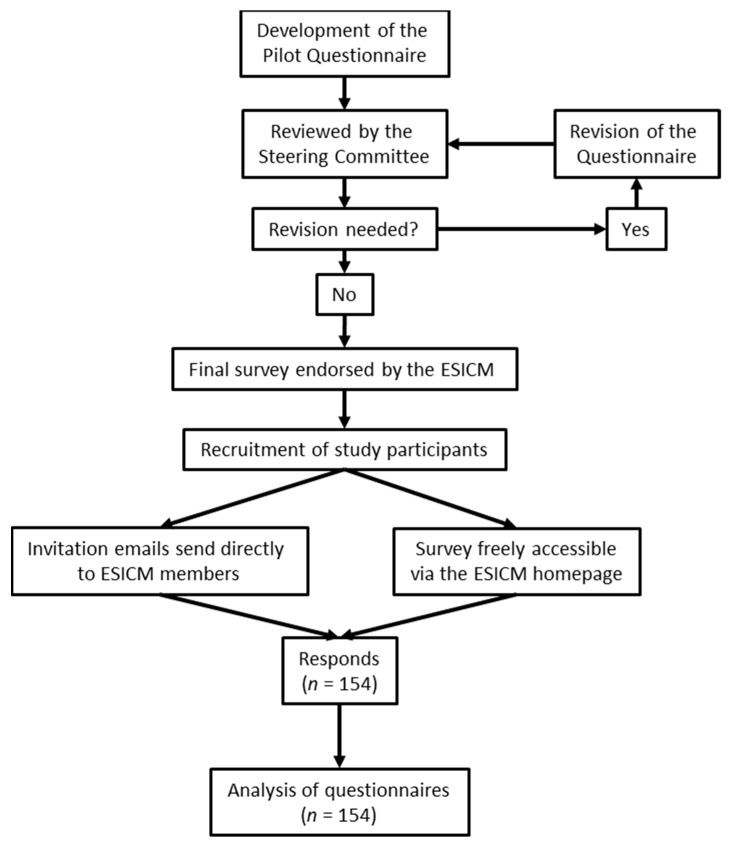
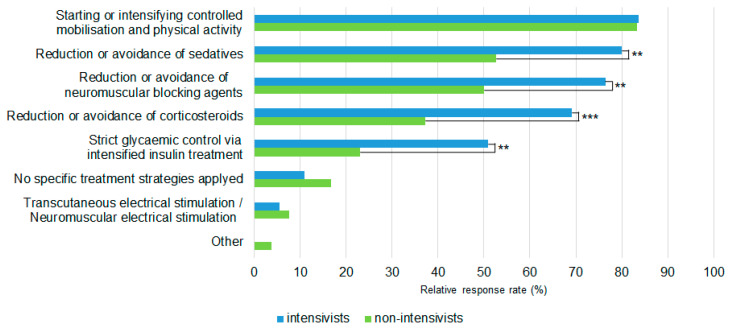
Background and Objectives: Intensive care unit-acquired weakness (ICU-AW) is one of the most frequent neuromuscular complications in critically ill patients. We conducted a global survey to evaluate the current practices of diagnostics, treatment and prevention in patients with ICU-AW. Materials and Methods: A pre-survey was created with international experts. After revision, the final survey was endorsed by the European Society of Intensive Care Medicine (ESICM) using the online platform SurveyMonkey®. In 27 items, we addressed strategies of diagnostics, therapy and prevention. An invitation link was sent by email to all ESICM members. Furthermore, the survey was available on the ESICM homepage. Results: A total of 154 healthcare professionals from 39 countries participated in the survey. An ICU-AW screening protocol was used by 20% (28/140) of participants. Forty-four percent (62/141) of all participants reported performing routine screening for ICU-AW, using clinical examination as the method of choice (124/141, 87.9%). Almost 63% (84/134) of the participants reported using current treatment strategies for patients with ICU-AW. The use of treatment and prevention strategies differed between intensivists and non-intensivists regarding the reduction in sedatives (80.0% vs. 52.6%, p = 0.002), neuromuscular blocking agents (76.4% vs. 50%, p = 0.004), corticosteroids (69.1% vs. 37.2%, p < 0.001) and glycemic control regimes (50.9% vs. 23.1%, p = 0.002). Mobilization and physical activity are the most frequently reported treatment strategies for ICU-AW (111/134, 82.9%). The availability of physiotherapists (92/134, 68.7%) and the lack of knowledge about ICU-AW within the medical team (83/134, 61.9%) were the main obstacles to the implementation of the strategies. The necessity to develop guidelines for the screening, diagnosing, treatment and prevention of ICU-AW was recognized by 95% (127/133) of participants. Conclusions: A great heterogeneity regarding diagnostics, treatment and prevention of ICU-AW was reported internationally. Comprehensive guidelines with evidence-based recommendations for ICU-AW management are needed.
重症监护病房获得性肌无力(ICU-AW)是危重病患者最常见的神经肌肉并发症之一。我们进行了一项全球调查,以评估 ICU-AW 患者的诊断、治疗和预防现状。
我们与国际专家共同制定了预调查,经修订后,欧洲重症监护医学学会(ESICM)使用在线平台 SurveyMonkey®对最终调查进行了认可。在 27 个项目中,我们探讨了诊断、治疗和预防策略。我们向所有 ESICM 成员发送了调查链接。此外,该调查也可在 ESICM 主页上查看。
共有来自 39 个国家的 154 名医疗保健专业人员参与了这项调查。20%(28/140)的参与者使用 ICU-AW 筛查方案。44%(62/141)的参与者报告对 ICU-AW 进行常规筛查,首选方法是临床检查(124/141,87.9%)。近 63%(84/134)的参与者报告使用当前的 ICU-AW 患者治疗策略。在减少镇静剂(80.0% vs. 52.6%,p = 0.002)、神经肌肉阻滞剂(76.4% vs. 50%,p = 0.004)、皮质类固醇(69.1% vs. 37.2%,p < 0.001)和血糖控制方案(50.9% vs. 23.1%,p = 0.002)方面,使用治疗和预防策略在重症监护医生和非重症监护医生之间存在差异。动员和身体活动是最常报告的 ICU-AW 治疗策略(111/134,82.9%)。物理治疗师的可用性(92/134,68.7%)和医疗团队对 ICU-AW 缺乏了解(83/134,61.9%)是实施这些策略的主要障碍。95%(127/133)的参与者认为需要制定 ICU-AW 的筛查、诊断、治疗和预防指南。
国际上 ICU-AW 的诊断、治疗和预防存在很大的异质性。需要制定有循证建议的 ICU-AW 管理综合指南。