Riesbeck Sarah, Petruschke Hannes, Rolle-Kampczyk Ulrike, Schori Christian, Ahrens Christian H, Eberlein Christian, Heipieper Hermann J, von Bergen Martin, Jehmlich Nico
Helmholtz-Centre for Environmental Research-UFZ GmbH, Department of Molecular Systems Biology, 04318 Leipzig, Germany.
Agroscope, Molecular Ecology and SIB Swiss Institute of Bioinformatics, 8820 Wädenswil, Switzerland.
Microorganisms. 2022 Aug 9;10(8):1610. doi: 10.3390/microorganisms10081610.
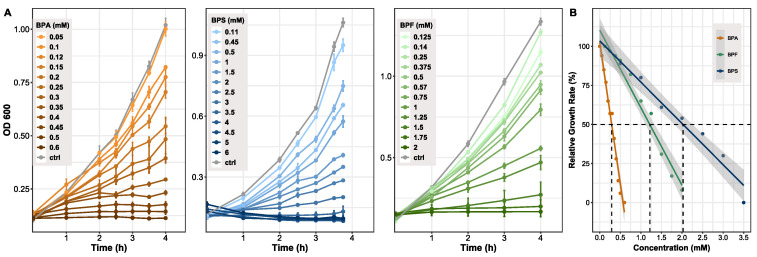
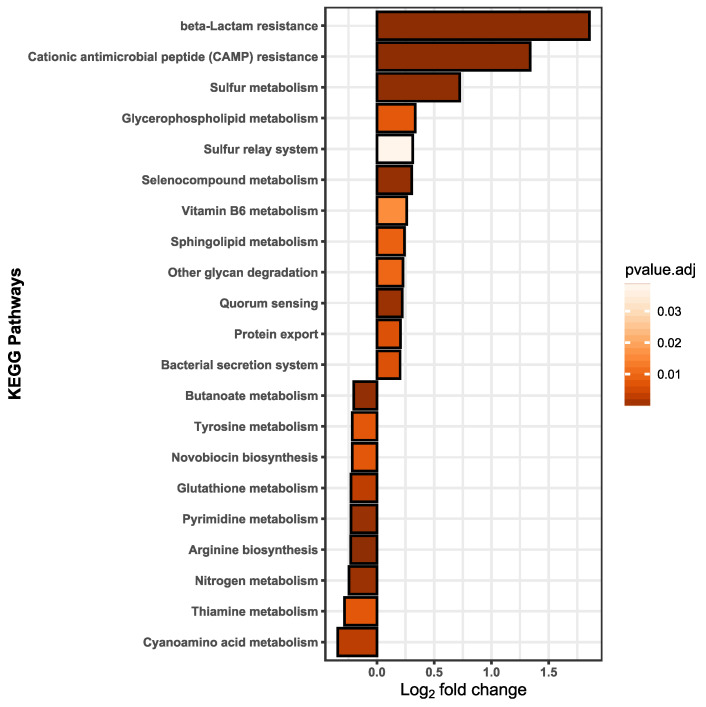
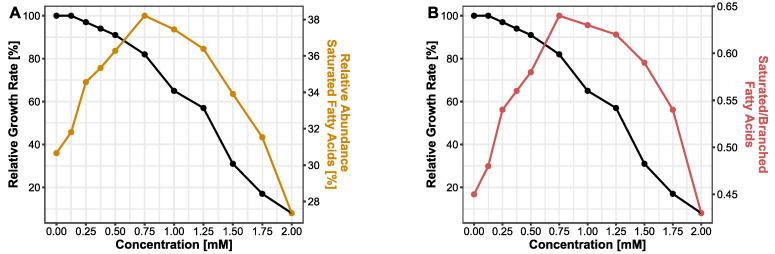
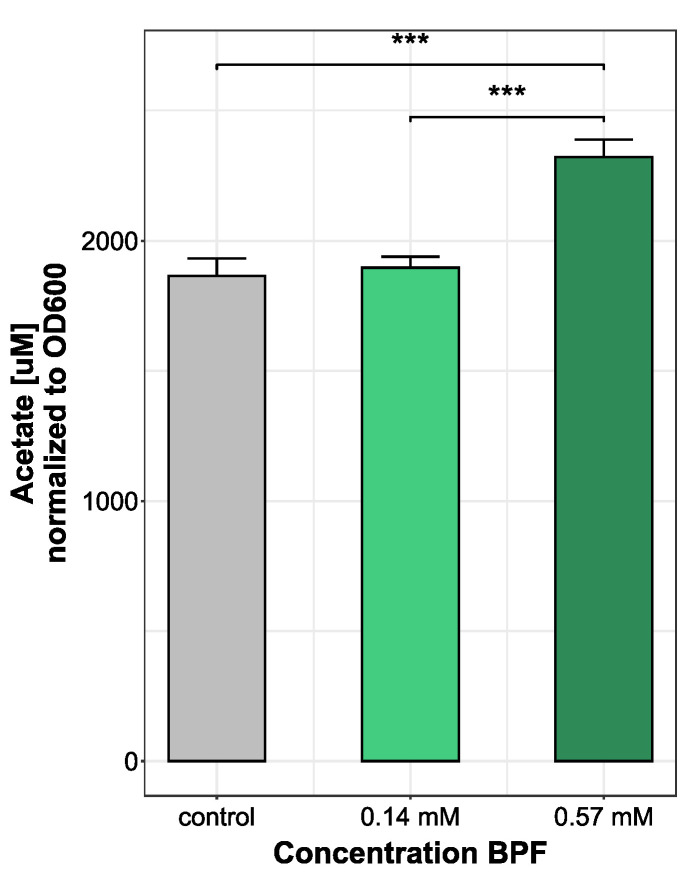
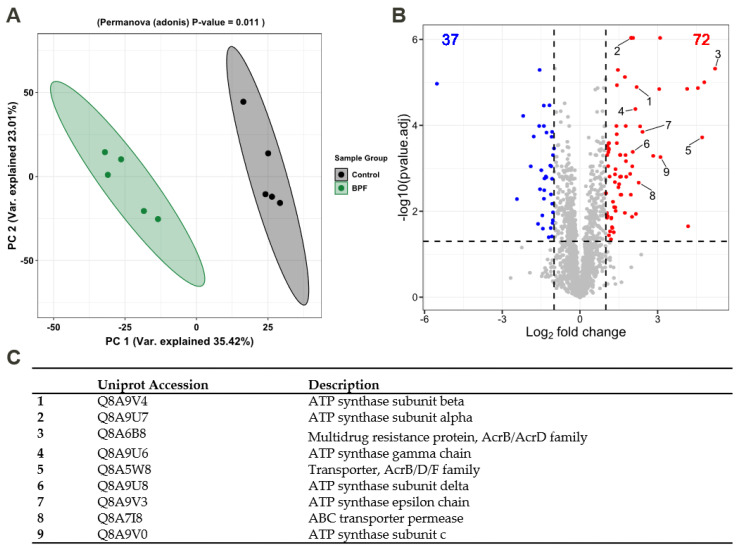
Bisphenols are used in the process of polymerization of polycarbonate plastics and epoxy resins. Bisphenols can easily migrate out of plastic products and enter the gastrointestinal system. By increasing colonic inflammation in mice, disrupting the intestinal bacterial community structure and altering the microbial membrane transport system in zebrafish, bisphenols seem to interfere with the gut microbiome. The highly abundant human commensal bacterium was exposed to bisphenols (Bisphenol A (BPA), Bisphenol F (BPF), Bisphenol S (BPS)), to examine the mode of action, in particular of BPF. All chemicals caused a concentration-dependent growth inhibition and the half-maximal effective concentration (EC50) corresponded to their individual logP values, a measure of their hydrophobicity. exposed to BPF decreased membrane fluidity with increasing BPF concentrations. Physiological changes including an increase of acetate concentrations were observed. On the proteome level, a higher abundance of several ATP synthase subunits and multidrug efflux pumps suggested an increased energy demand for adaptive mechanisms after BPF exposure. Defense mechanisms were also implicated by a pathway analysis that identified a higher abundance of members of resistance pathways/strategies to cope with xenobiotics (i.e., antibiotics). Here, we present further insights into the mode of action of bisphenols in a human commensal gut bacterium regarding growth inhibition, and the physiological and functional state of the cell. These results, combined with microbiota-directed effects, could lead to a better understanding of host health disturbances and disease development based on xenobiotic uptake.
双酚类物质用于聚碳酸酯塑料和环氧树脂的聚合过程。双酚类物质很容易从塑料制品中迁移出来并进入胃肠道系统。通过增加小鼠结肠炎症、破坏肠道细菌群落结构以及改变斑马鱼的微生物膜转运系统,双酚类物质似乎会干扰肠道微生物群。将高度丰富的人类共生细菌暴露于双酚类物质(双酚A(BPA)、双酚F(BPF)、双酚S(BPS))中,以研究其作用模式,特别是BPF的作用模式。所有化学物质均导致浓度依赖性生长抑制,半数最大效应浓度(EC50)与其各自的logP值相对应,logP值是衡量其疏水性的指标。暴露于BPF的细菌随着BPF浓度的增加而膜流动性降低。观察到包括乙酸盐浓度增加在内的生理变化。在蛋白质组水平上,几种ATP合酶亚基和多药外排泵的丰度较高,表明BPF暴露后适应性机制的能量需求增加。通路分析也表明存在防御机制,该分析确定了应对异生物素(即抗生素)的抗性通路/策略的成员丰度较高。在此,我们进一步深入了解双酚类物质在人类共生肠道细菌中关于生长抑制以及细胞生理和功能状态的作用模式。这些结果与微生物群导向的效应相结合,可能有助于更好地理解基于异生物素摄取的宿主健康紊乱和疾病发展。