Wotring Jesse W, McCarty Sean M, Shafiq Khadija, Zhang Charles J, Nguyen Theophilus, Meyer Sophia R, Fursmidt Reid, Mirabelli Carmen, Clasby Martin C, Wobus Christiane E, O'Meara Matthew J, Sexton Jonathan Z
Department of Medicinal Chemistry, College of Pharmacy, University of Michigan, Ann Arbor, MI 48109, USA.
Department of Internal Medicine, Gastroenterology and Hepatology, Michigan Medicine at the University of Michigan, Ann Arbor, MI 48109, USA.
Vaccines (Basel). 2022 Aug 9;10(8):1284. doi: 10.3390/vaccines10081284.
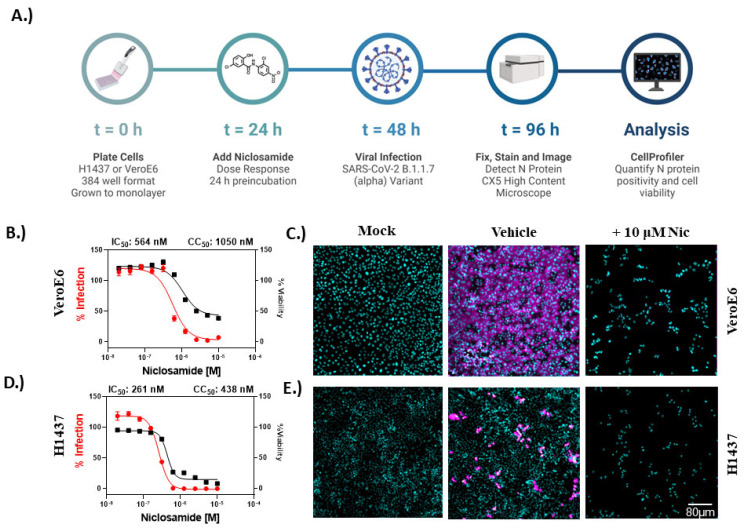
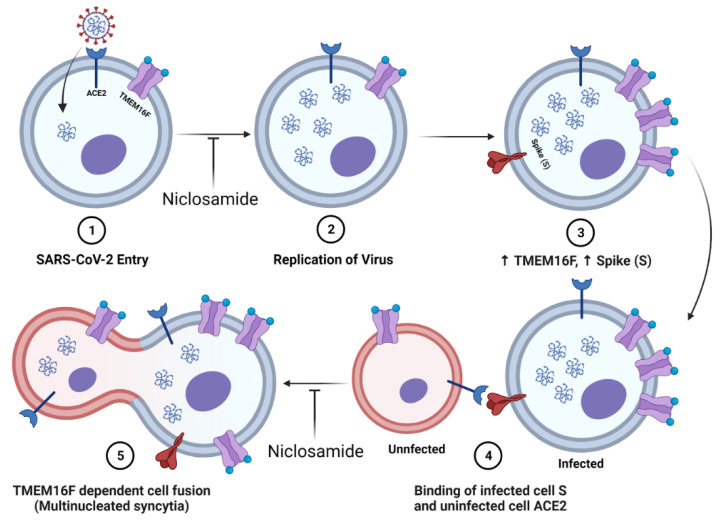
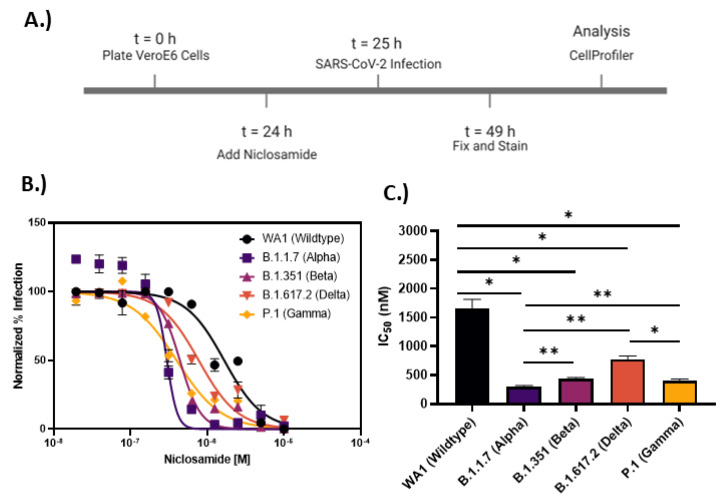
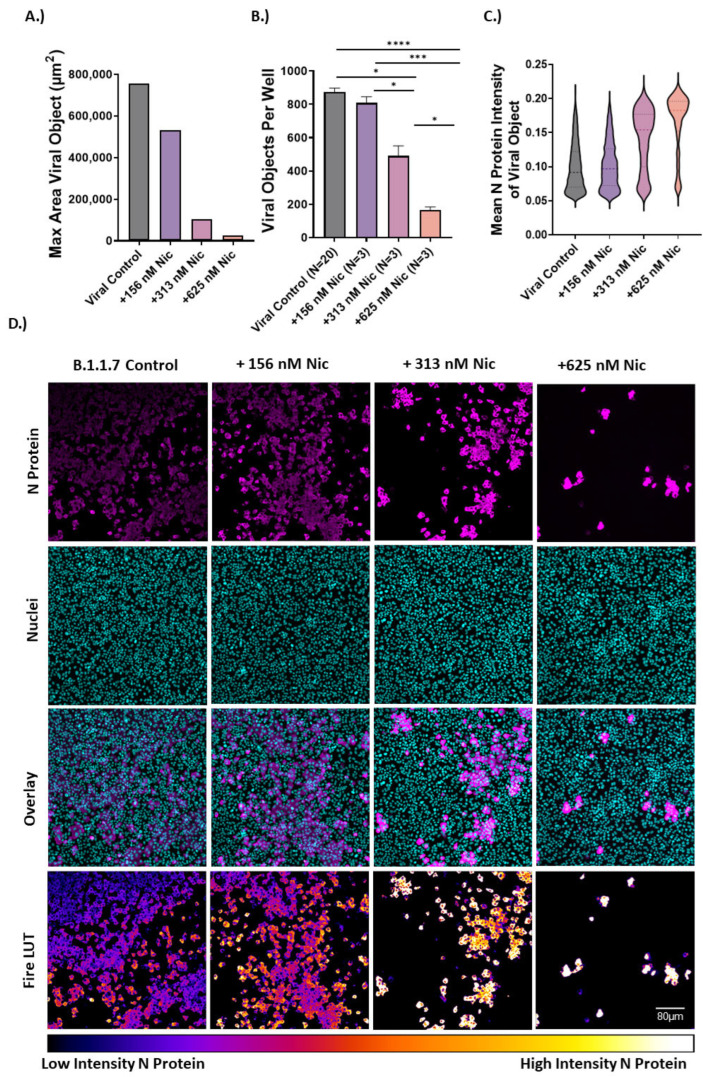
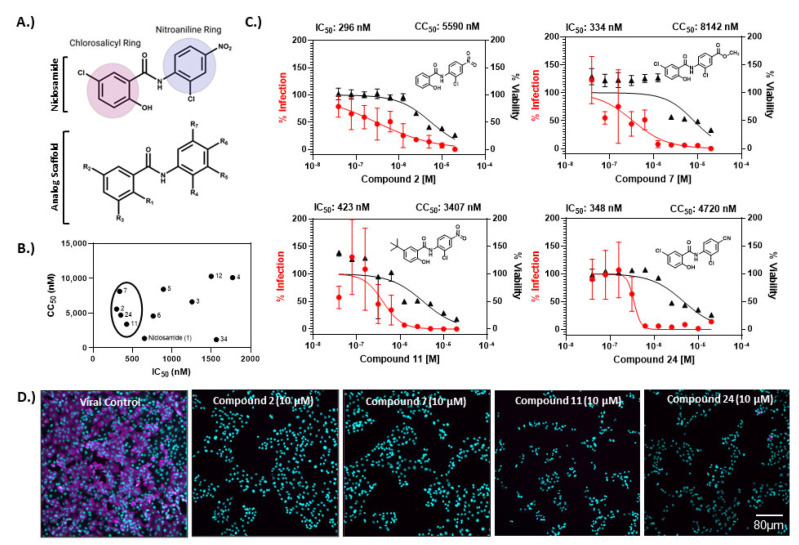
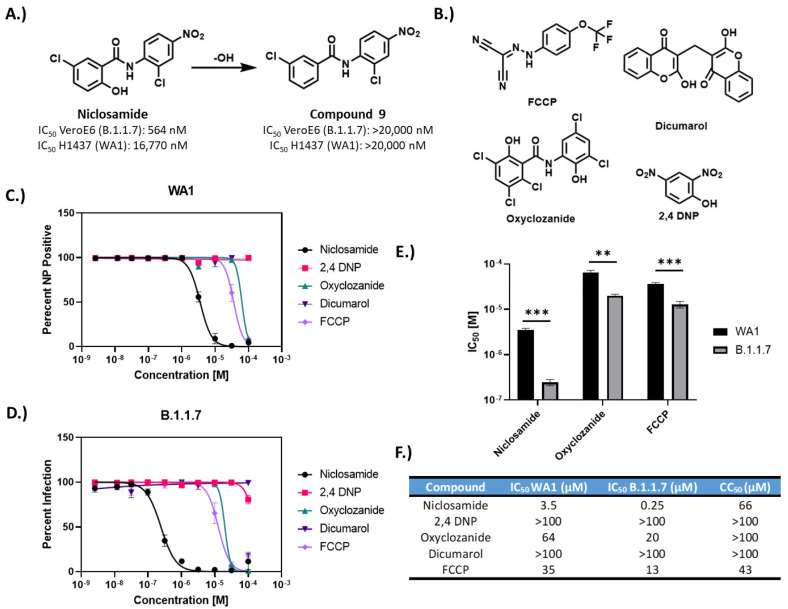
Niclosamide, an FDA-approved oral anthelmintic drug, has broad biological activity including anticancer, antibacterial, and antiviral properties. Niclosamide has also been identified as a potent inhibitor of SARS-CoV-2 infection in vitro, generating interest in its use for the treatment or prevention of COVID-19. Unfortunately, there are several potential issues with using niclosamide for COVID-19, including low bioavailability, significant polypharmacology, high cellular toxicity, and unknown efficacy against emerging SARS-CoV-2 variants of concern. In this study, we used high-content imaging-based immunofluorescence assays in two different cell models to assess these limitations and evaluate the potential for using niclosamide as a COVID-19 antiviral. We show that despite promising preliminary reports, the antiviral efficacy of niclosamide overlaps with its cytotoxicity giving it a poor in vitro selectivity index for anti-SARS-CoV-2 inhibition. We also show that niclosamide has significantly variable potency against the different SARS-CoV-2 variants of concern and is most potent against variants with enhanced cell-to-cell spread including the B.1.1.7 (alpha) variant. Finally, we report the activity of 33 niclosamide analogs, several of which have reduced cytotoxicity and increased potency relative to niclosamide. A preliminary structure-activity relationship analysis reveals dependence on a protonophore for antiviral efficacy, which implicates nonspecific endolysosomal neutralization as a dominant mechanism of action. Further single-cell morphological profiling suggests niclosamide also inhibits viral entry and cell-to-cell spread by syncytia. Altogether, our results suggest that niclosamide is not an ideal candidate for the treatment of COVID-19, but that there is potential for developing improved analogs with higher clinical translational potential in the future.
氯硝柳胺是一种经美国食品药品监督管理局(FDA)批准的口服驱虫药,具有广泛的生物学活性,包括抗癌、抗菌和抗病毒特性。氯硝柳胺在体外也被确定为严重急性呼吸综合征冠状病毒2(SARS-CoV-2)感染的有效抑制剂,这引发了人们对其用于治疗或预防2019冠状病毒病(COVID-19)的兴趣。不幸的是,使用氯硝柳胺治疗COVID-19存在几个潜在问题,包括生物利用度低、显著的多药药理学特性、高细胞毒性以及对新出现的SARS-CoV-2变异株的疗效未知。在本研究中,我们在两种不同的细胞模型中使用基于高内涵成像的免疫荧光测定法来评估这些局限性,并评估使用氯硝柳胺作为COVID-19抗病毒药物的潜力。我们表明,尽管有令人鼓舞的初步报告,但氯硝柳胺的抗病毒功效与其细胞毒性重叠,导致其在体外抗SARS-CoV-2抑制方面的选择性指数较差。我们还表明,氯硝柳胺对不同的SARS-CoV-2变异株的效力有显著差异,并且对包括B.1.1.7(α)变异株在内的具有增强细胞间传播能力的变异株最为有效。最后,我们报告了33种氯硝柳胺类似物的活性,其中几种相对于氯硝柳胺具有降低的细胞毒性和增强的效力。初步的构效关系分析揭示了抗病毒功效对质子载体的依赖性,这表明非特异性内溶酶体中和是主要的作用机制。进一步的单细胞形态分析表明,氯硝柳胺还通过合胞体抑制病毒进入和细胞间传播。总之,我们的结果表明氯硝柳胺不是治疗COVID-19的理想候选药物,但未来有可能开发出具有更高临床转化潜力的改良类似物。