Department of Pathology, The Ohio State University Wexner Medical Center, Columbus, OH, United States.
Department of Microbiology, The Ohio State University, Columbus, OH, United States.
Front Immunol. 2022 Aug 9;13:932742. doi: 10.3389/fimmu.2022.932742. eCollection 2022.
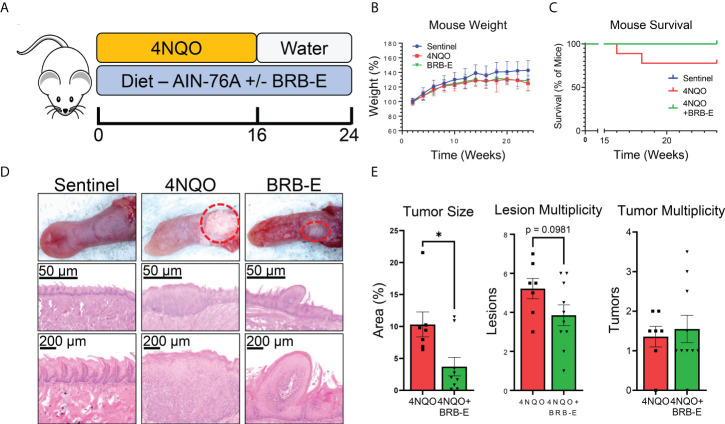
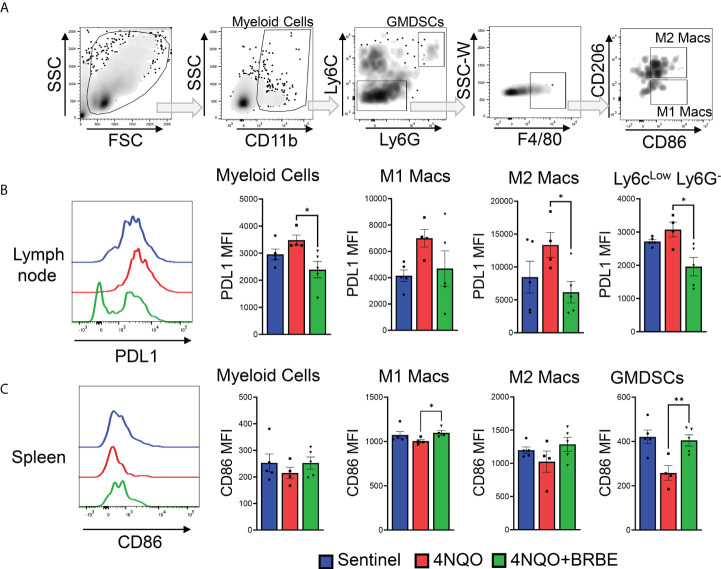
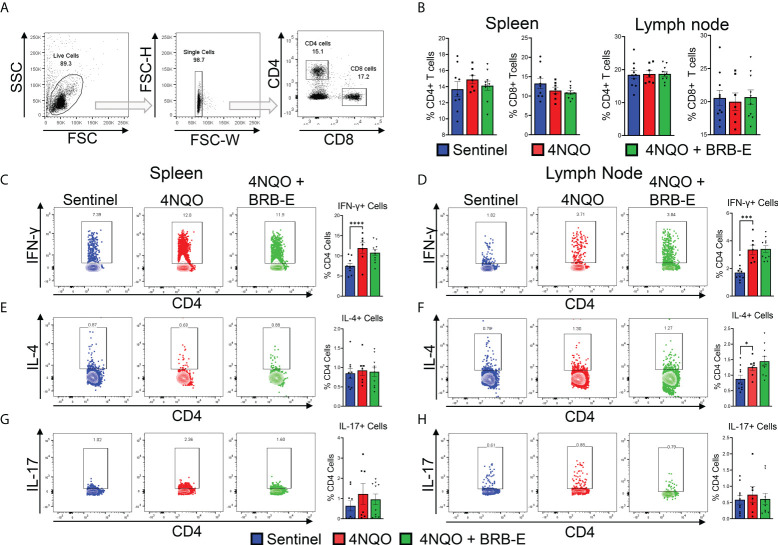
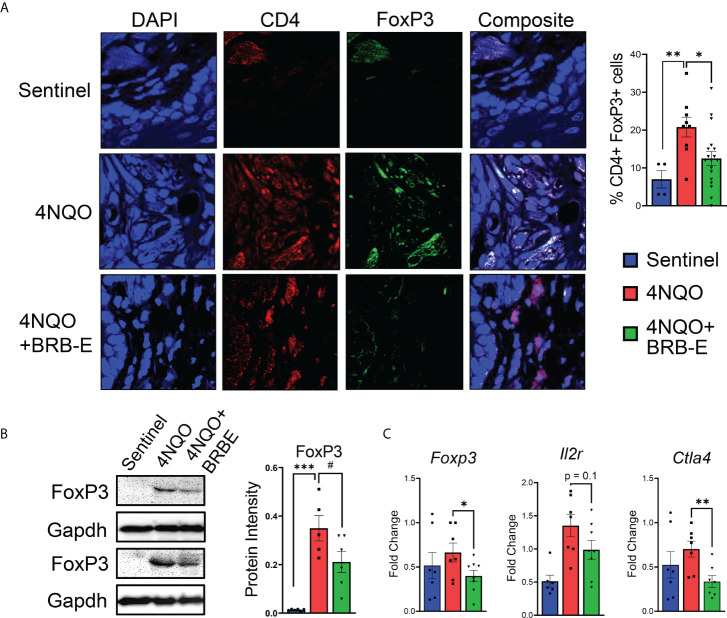
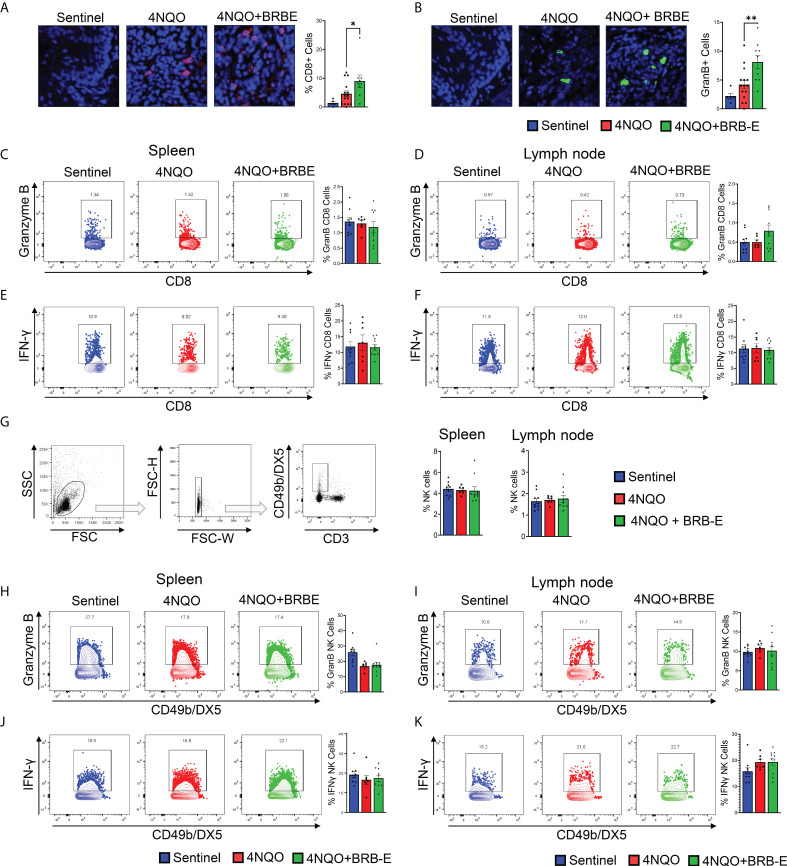
Head and neck squamous cell carcinomas (HNSCC) are one of the most diagnosed malignancies globally, with a 5-year survival rate of approximately 40% to 50%. Current therapies are limited to highly invasive surgery, aggressive radiation, and chemotherapies. Recent reports have demonstrated the potential phytochemical properties of black raspberries in inhibiting the progression of various cancers including HNSCCs. However, the effects of black raspberry extracts on immune cells of the tumor microenvironment, specifically regulatory T cells during HNSCC, have not been investigated. We used a mouse model of 4-nitroquinoline-1-oxide (4NQO) chemically induced HNSCC carcinogenesis to determine these effects. C57BL/6 mice were exposed to 4NQO for 16 weeks and regular water for 8 weeks. 4NQO-exposed mice were fed the AIN-76A control mouse diet or the AIN76 diet supplemented with black raspberry extract. At terminal sacrifice, tumor burdens and immune cell recruitment and activity were analyzed in the tumor microenvironment, draining lymph nodes, and spleens. Mice fed the BRB extract-supplemented diet displayed decreased tumor burden compared to mice provided the AIN-76A control diet. Black raspberry extract administration did not affect overall T-cell populations as well as Th1, Th2, or Th17 differentiation in spleens and tumor draining lymph nodes. However, dietary black raspberry extract administration inhibited regulatory T-cell recruitment to HNSCC tumor sites. This was associated with an increased cytotoxic immune response in the tumor microenvironment characterized by increased CD8 T cells and enhanced Granzyme B production during BRB extract-mediated HNSCC chemoprevention. Interestingly, this enhanced CD8 T-cell antitumoral response was localized at the tumor sites but not at spleens and draining lymph nodes. Furthermore, we found decreased levels of PD-L1 expression by myeloid populations in draining lymph nodes of black raspberry-administered carcinogen-induced mice. Taken together, our findings demonstrate that black raspberry extract inhibits regulatory T-cell recruitment and promotes cytotoxic CD8 T-cell activity at tumor sites during HNSCC chemoprevention. These results demonstrate the immunomodulatory potential of black raspberry extracts and support the use of black raspberry-derived phytochemicals as a complementary approach to HNSCC chemoprevention and treatment.
头颈部鳞状细胞癌(HNSCC)是全球最常见的恶性肿瘤之一,其 5 年生存率约为 40%至 50%。目前的治疗方法仅限于高度侵袭性的手术、积极的放疗和化疗。最近的报告表明,黑覆盆子中的植物化学物质具有抑制多种癌症(包括 HNSCC)进展的潜力。然而,黑覆盆子提取物对肿瘤微环境中的免疫细胞,特别是 HNSCC 中的调节性 T 细胞的影响尚未得到研究。我们使用 4-硝基喹啉-1-氧化物(4NQO)化学诱导的 HNSCC 致癌小鼠模型来确定这些影响。C57BL/6 小鼠暴露于 4NQO 16 周,普通水 8 周。4NQO 暴露的小鼠喂食 AIN-76A 对照小鼠饮食或补充黑覆盆子提取物的 AIN76 饮食。在终端牺牲时,分析肿瘤负担以及免疫细胞在肿瘤微环境、引流淋巴结和脾脏中的募集和活性。与提供 AIN-76A 对照饮食的小鼠相比,喂食 BRB 提取物补充饮食的小鼠的肿瘤负担降低。黑覆盆子提取物的给予并不影响整体 T 细胞群体以及脾脏和肿瘤引流淋巴结中的 Th1、Th2 或 Th17 分化。然而,饮食中黑覆盆子提取物的给予抑制了调节性 T 细胞向 HNSCC 肿瘤部位的募集。这与肿瘤微环境中细胞毒性免疫反应的增加有关,其特征是 CD8 T 细胞增加和 Granzyme B 在 BRB 提取物介导的 HNSCC 化学预防期间的产生增加。有趣的是,这种增强的 CD8 T 细胞抗肿瘤反应定位于肿瘤部位,但不在脾脏和引流淋巴结。此外,我们发现在黑覆盆子给药的致癌物诱导小鼠的引流淋巴结中髓样细胞的 PD-L1 表达水平降低。总之,我们的研究结果表明,黑覆盆子提取物在 HNSCC 化学预防过程中抑制调节性 T 细胞的募集,并促进肿瘤部位的细胞毒性 CD8 T 细胞活性。这些结果表明黑覆盆子提取物具有免疫调节潜力,并支持将黑覆盆子衍生的植物化学物质用作 HNSCC 化学预防和治疗的补充方法。