Experimental and Molecular Immunology, Department of Infection and Immunity, Luxembourg Institute of Health, Esch-sur-Alzette, Luxembourg.
Immunology and Genetics, Luxembourg Centre for Systems Biomedicine (LCSB), University of Luxembourg, Belvaux, Luxembourg.
Eur J Immunol. 2020 Nov;50(11):1626-1642. doi: 10.1002/eji.201948470. Epub 2020 Oct 26.
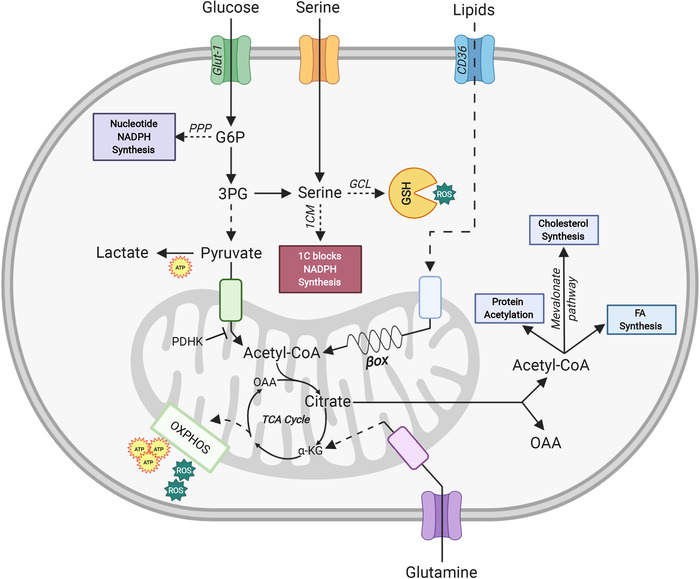
Regulatory T cells (Tregs) are critical for peripheral immune tolerance and homeostasis, and altered Treg behavior is involved in many pathologies, including autoimmunity and cancer. The expression of the transcription factor FoxP3 in Tregs is fundamental to maintaining their stability and immunosuppressive function. Recent studies have highlighted the crucial role that metabolic reprogramming plays in controlling Treg plasticity, stability, and function. In this review, we summarize how the availability and use of various nutrients and metabolites influence Treg metabolic pathways and activity. We also discuss how Treg-intrinsic metabolic programs define and shape their differentiation, FoxP3 expression, and suppressive capacity. Lastly, we explore how manipulating the regulation of Treg metabolism might be exploited in different disease settings to achieve novel immunotherapies.
调节性 T 细胞(Tregs)对于外周免疫耐受和稳态至关重要,Treg 行为的改变与许多病理有关,包括自身免疫和癌症。转录因子 FoxP3 在 Tregs 中的表达对于维持其稳定性和免疫抑制功能至关重要。最近的研究强调了代谢重编程在控制 Treg 可塑性、稳定性和功能方面的关键作用。在这篇综述中,我们总结了各种营养素和代谢物的可用性和利用如何影响 Treg 代谢途径和活性。我们还讨论了 Treg 内在代谢程序如何定义和塑造它们的分化、FoxP3 表达和抑制能力。最后,我们探讨了如何操纵 Treg 代谢的调节在不同的疾病环境中被利用来实现新的免疫疗法。