Department of Immunology and Microbiology, School of Medicine, University of Colorado, Aurora, CO, United States.
Department of Pharmaceutical Sciences, Skaggs School of Pharmacy, University of Colorado, Aurora, CO, United States.
Front Immunol. 2022 Aug 10;13:926650. doi: 10.3389/fimmu.2022.926650. eCollection 2022.
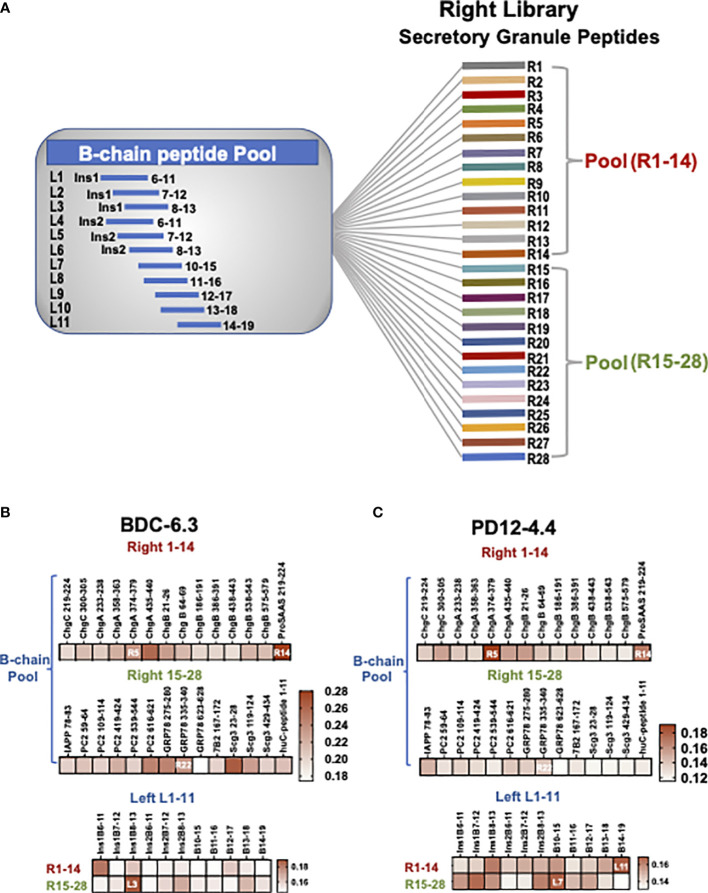
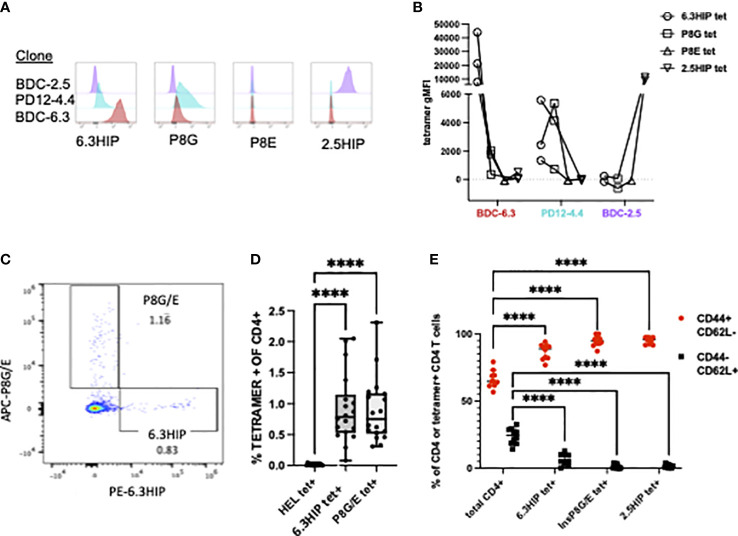
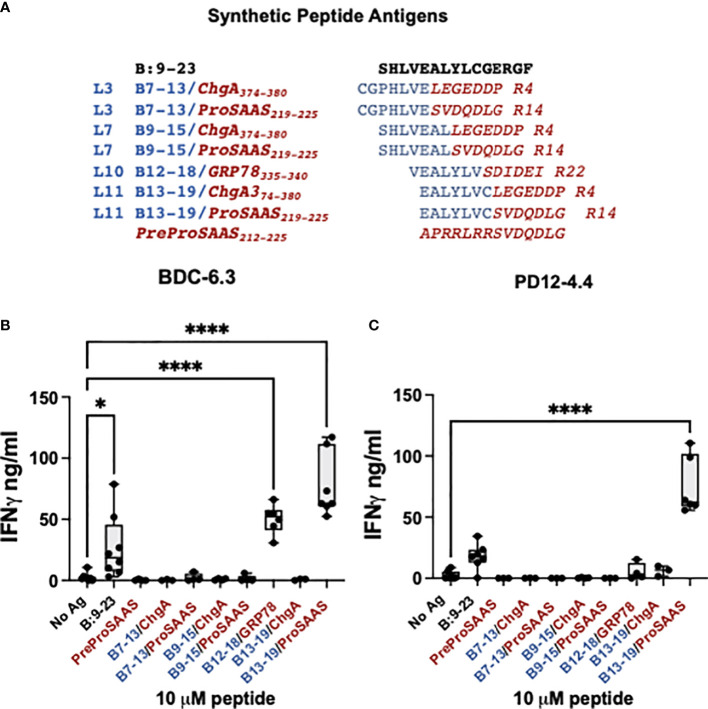
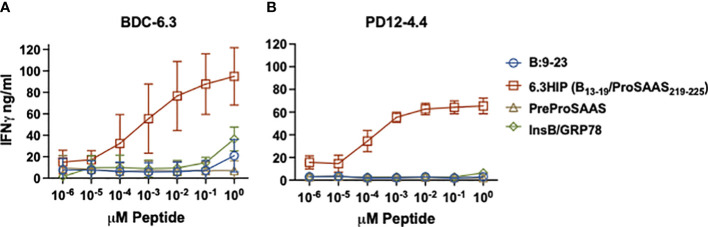
Insulin is considered to be a key antigenic target of T cells in Type 1 Diabetes (T1D) and autoimmune diabetes in the NOD mouse with particular focus on the B-chain amino acid sequence B:9-23 as the primary epitope. Our lab previously discovered that hybrid insulin peptides (HIPs), comprised of insulin C-peptide fragments fused to other β-cell granule peptides, are ligands for several pathogenic CD4 T cell clones derived from NOD mice and for autoreactive CD4 T cells from T1D patients. A subset of CD4 T cell clones from our panel react to insulin and B:9-23 but only at high concentrations of antigen. We hypothesized that HIPs might also be formed from insulin B-chain sequences covalently bound to other endogenously cleaved ß-cell proteins. We report here on the identification of a B-chain HIP, termed the 6.3HIP, containing a fragment of B:9-23 joined to an endogenously processed peptide of ProSAAS, as a strong neo-epitope for the insulin-reactive CD4 T cell clone BDC-6.3. Using an I-A tetramer loaded with the 6.3HIP, we demonstrate that T cells reactive to this B-chain HIP can be readily detected in NOD mouse islet infiltrates. This work suggests that some portion of autoreactive T cells stimulated by insulin B:9-23 may be responding to B-chain HIPs as peptide ligands.
胰岛素被认为是 1 型糖尿病(T1D)和 NOD 小鼠自身免疫性糖尿病中 T 细胞的关键抗原性靶标,特别关注 B 链氨基酸序列 B:9-23 作为主要表位。我们实验室之前发现,由胰岛素 C 肽片段与其他β细胞颗粒肽融合而成的杂交胰岛素肽(HIPs)是源自 NOD 小鼠的几种致病性 CD4 T 细胞克隆和 T1D 患者自身反应性 CD4 T 细胞的配体。我们小组的一部分 CD4 T 细胞克隆对胰岛素和 B:9-23 有反应,但仅在抗原的高浓度下才有反应。我们假设 HIPs 也可能由与其他内源性切割的β细胞蛋白共价结合的胰岛素 B 链序列形成。我们在此报告了一种 B 链 HIP 的鉴定,称为 6.3HIP,它包含 B:9-23 的片段与 ProSAAS 的内源性加工肽连接,作为胰岛素反应性 CD4 T 细胞克隆 BDC-6.3 的强新表位。使用加载有 6.3HIP 的 I-A 四聚体,我们证明可以在 NOD 小鼠胰岛浸润中容易地检测到对这种 B 链 HIP 反应的 T 细胞。这项工作表明,由胰岛素 B:9-23 刺激的某些自身反应性 T 细胞可能对 B 链 HIP 作为肽配体产生反应。