Benaroya Research Institute at Virginia Mason, Seattle, WA.
Department of Pharmaceutical Sciences, University of Colorado School of Pharmacy, Denver, CO.
Diabetes. 2020 Jul;69(7):1492-1502. doi: 10.2337/db19-0620. Epub 2020 Apr 14.
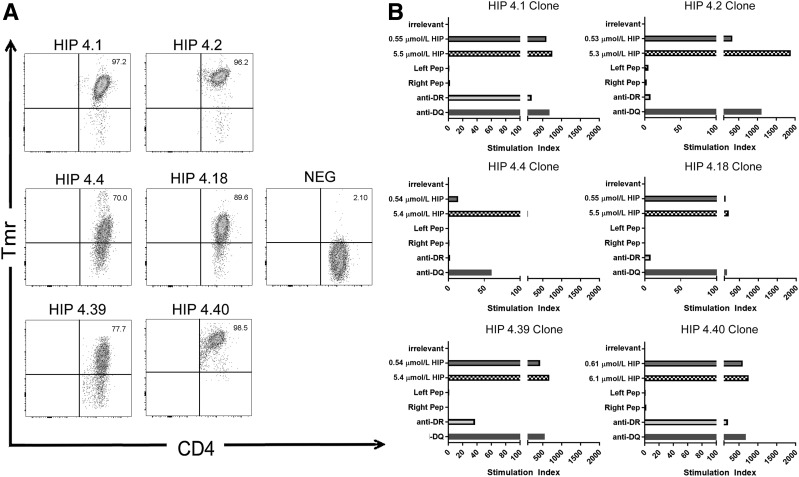
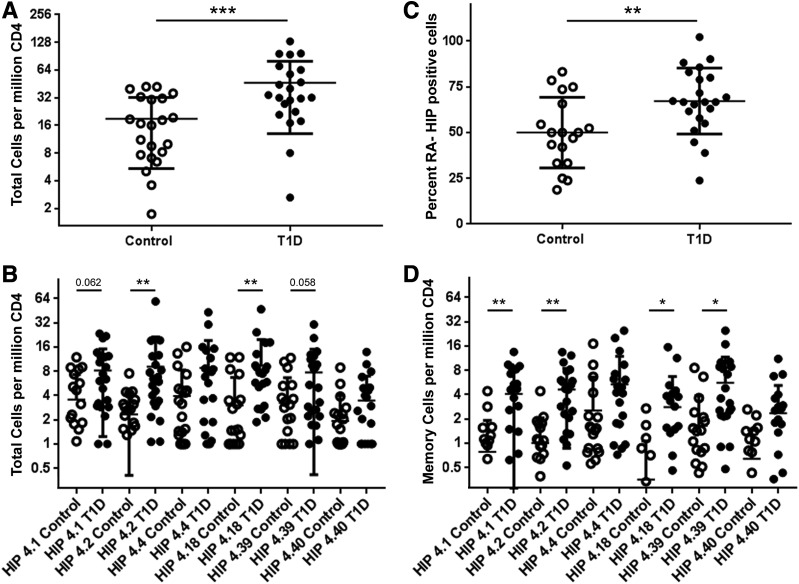
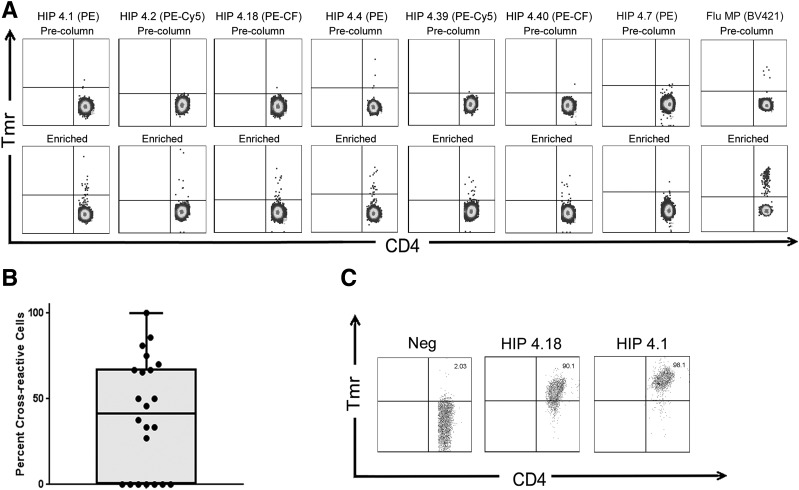
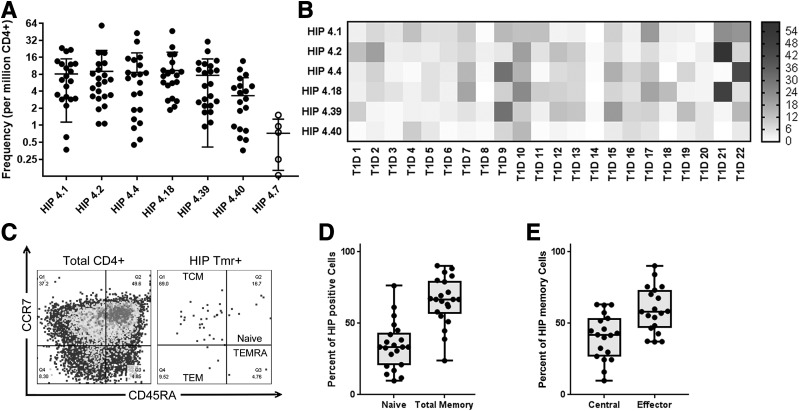
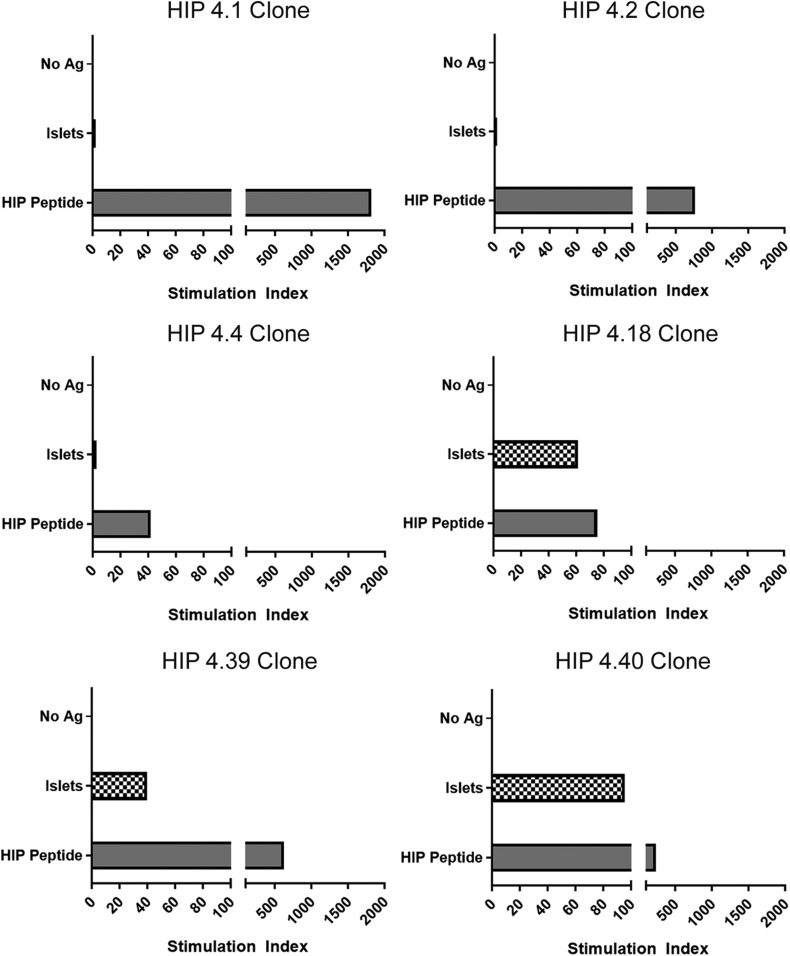
T cells isolated from the pancreatic infiltrates of nonobese diabetic mice have been shown to recognize epitopes formed by the covalent cross-linking of proinsulin and secretory granule peptides. Formation of such hybrid insulin peptides (HIPs) was confirmed through mass spectrometry, and responses to HIPs were observed among the islet-infiltrating T cells of pancreatic organ donors and in the peripheral blood of individuals with type 1 diabetes (T1D). However, questions remain about the prevalence of HIP-specific T cells in humans, the sequences they recognize, and their role in disease. We identified six novel HIPs that are recognized in the context of DRB1*04:01, discovered by using a library of theoretical HIP sequences derived from insulin fragments covalently linked to one another or to fragments of secretory granule proteins or other islet-derived proteins. We demonstrate that T cells that recognize these HIPs are detectable in the peripheral blood of subjects with T1D and exhibit an effector memory phenotype. HIP-reactive T-cell clones produced Th1-associated cytokines and proliferated in response to human islet preparations. These results support the relevance of HIPs in human disease, further establishing a novel posttranslational modification that may contribute to the loss of peripheral tolerance in T1D.
从非肥胖型糖尿病(NOD)小鼠胰腺浸润的 T 细胞中分离出来的 T 细胞已被证实能够识别由胰岛素原和分泌颗粒肽的共价交联形成的表位。通过质谱证实了这种杂交胰岛素肽(HIP)的形成,并且在胰岛浸润的 T 细胞中观察到了对 HIP 的反应,这些 T 细胞来自胰腺器官供体,也存在于 1 型糖尿病(T1D)个体的外周血中。然而,关于 HIP 特异性 T 细胞在人类中的流行程度、它们识别的序列以及它们在疾病中的作用,仍存在一些问题。我们通过使用源自胰岛素片段与彼此或与分泌颗粒蛋白或其他胰岛衍生蛋白的片段共价连接的理论 HIP 序列文库,鉴定了在 DRB1*04:01 背景下被识别的六个新的 HIP。我们证明,在 T1D 患者的外周血中可以检测到识别这些 HIP 的 T 细胞,并表现出效应记忆表型。对 HIP 反应的 T 细胞克隆产生了 Th1 相关的细胞因子,并对人胰岛制剂产生了增殖反应。这些结果支持 HIP 在人类疾病中的相关性,进一步确立了一种新的翻译后修饰,可能导致 T1D 中外周耐受的丧失。