Ursino Mauro, Serra Michele, Tarasi Luca, Ricci Giulia, Magosso Elisa, Romei Vincenzo
Department of Electrical, Electronic, and Information Engineering "Guglielmo Marconi", University of Bologna, Cesena, Italy.
Centro Studi e Ricerche in Neuroscienze Cognitive, Dipartimento di Psicologia, Alma Mater Studiorum-Università di Bologna, Cesena, Italy.
Front Syst Neurosci. 2022 Aug 12;16:932128. doi: 10.3389/fnsys.2022.932128. eCollection 2022.
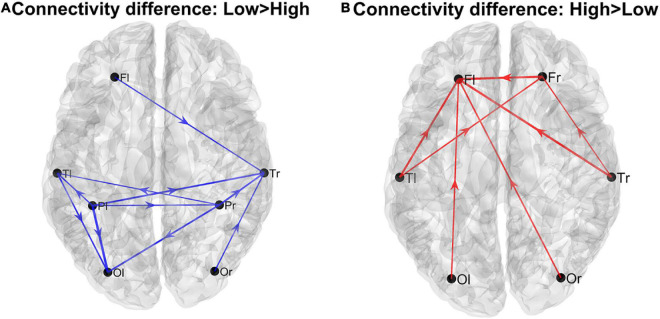
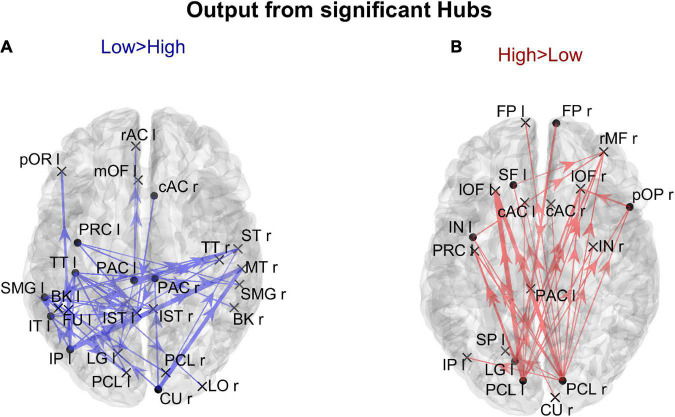
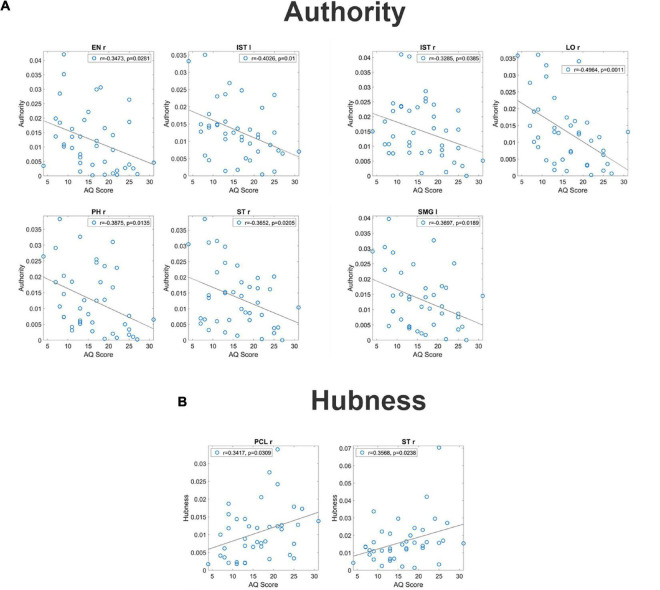
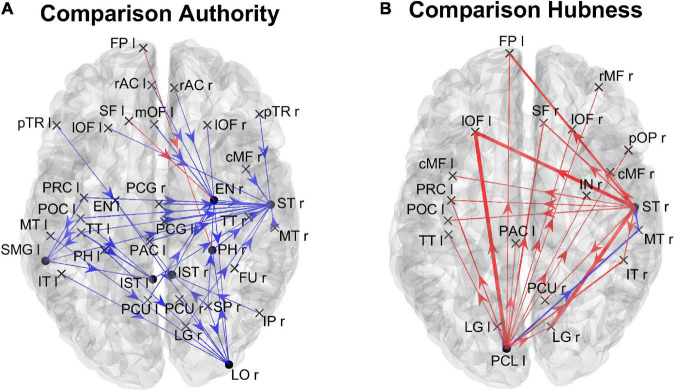
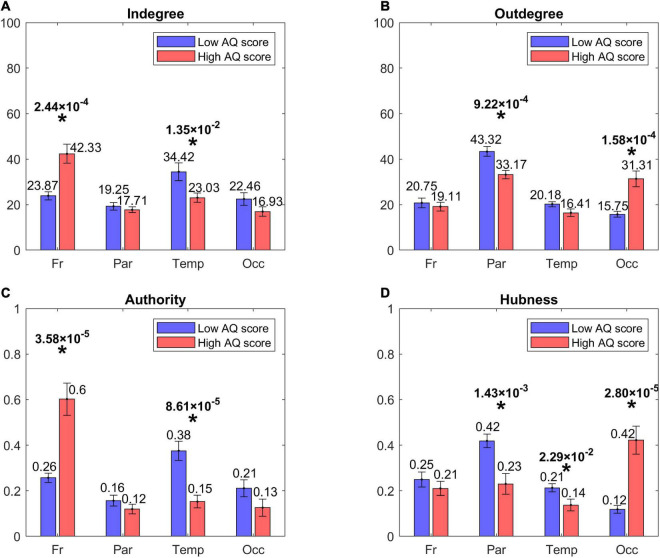
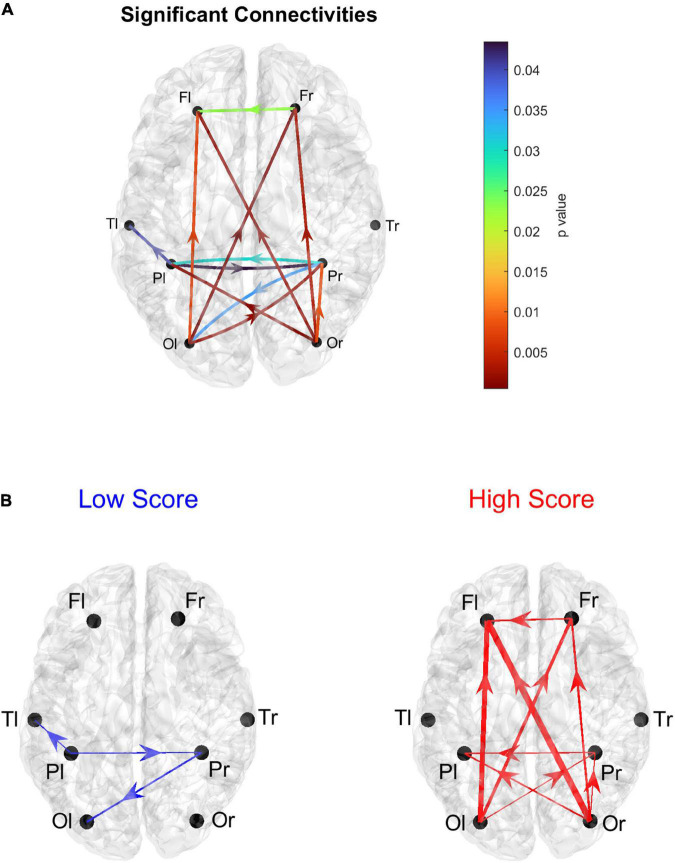
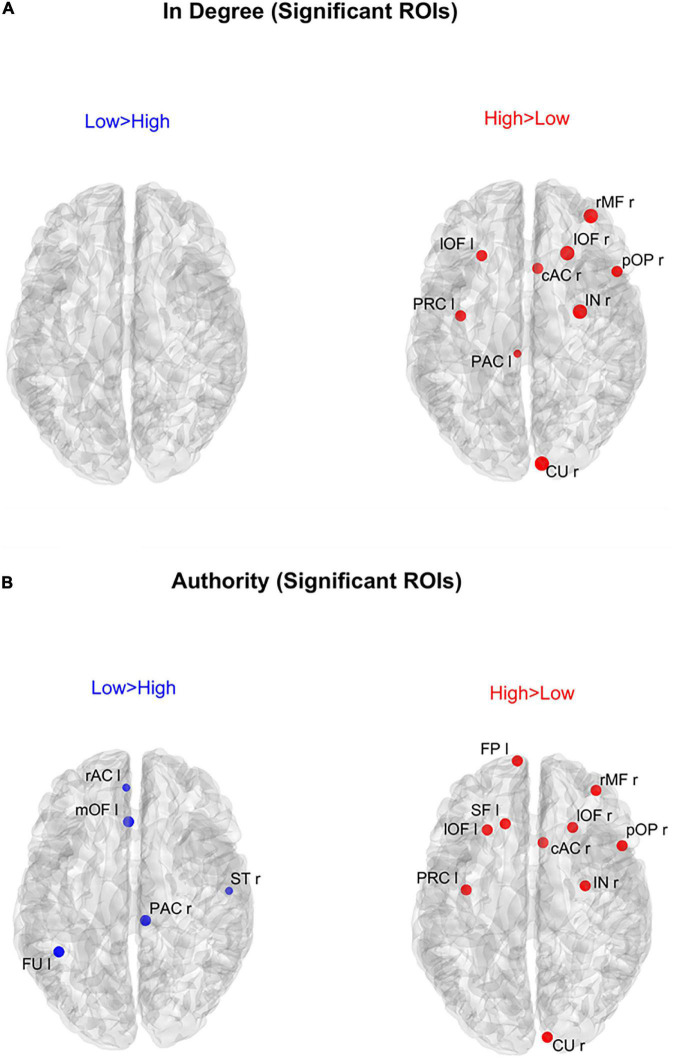
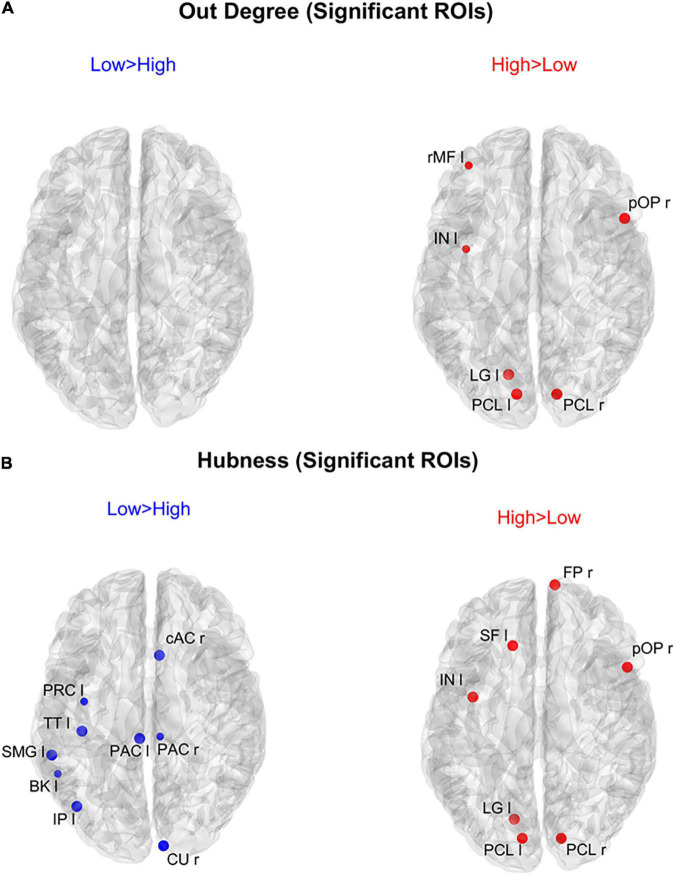
Brain connectivity is often altered in autism spectrum disorder (ASD). However, there is little consensus on the nature of these alterations, with studies pointing to either increased or decreased connectivity strength across the broad autism spectrum. An important confound in the interpretation of these contradictory results is the lack of information about the directionality of the tested connections. Here, we aimed at disambiguating these confounds by measuring differences in directed connectivity using EEG resting-state recordings in individuals with low and high autistic traits. Brain connectivity was estimated using temporal Granger Causality applied to cortical signals reconstructed from EEG. Between-group differences were summarized using centrality indices taken from graph theory (, , , and ). Results demonstrate that individuals with higher autistic traits exhibited a significant increase in and in frontal regions involved in high-level mechanisms (emotional regulation, decision-making, and social cognition), suggesting that anterior areas mostly receive information from more posterior areas. Moreover, the same individuals exhibited a significant increase in the and over occipital regions (especially the left and right pericalcarine regions, where the primary visual cortex is located), suggesting that these areas mostly send information to more anterior regions. and appeared to be more sensitive indices than the and . The observed brain connectivity differences suggest that, in individual with higher autistic traits, bottom-up signaling overcomes top-down channeled flow. This imbalance may contribute to some behavioral alterations observed in ASD.
在自闭症谱系障碍(ASD)中,大脑连接性常常发生改变。然而,对于这些改变的本质,人们几乎没有达成共识,各项研究表明在整个自闭症谱系中连接强度既有增加的情况,也有降低的情况。解释这些相互矛盾的结果时,一个重要的混淆因素是缺乏关于所测试连接方向性的信息。在此,我们旨在通过使用具有低自闭症特征和高自闭症特征个体的脑电图静息态记录来测量定向连接性的差异,从而消除这些混淆因素。使用应用于从脑电图重建的皮质信号的时间格兰杰因果关系来估计大脑连接性。使用从图论中获取的中心性指标(度中心性、介数中心性、紧密中心性和特征向量中心性)来总结组间差异。结果表明,具有较高自闭症特征的个体在参与高级机制(情绪调节、决策和社会认知)的额叶区域的度中心性和介数中心性显著增加,这表明前部区域主要从更靠后的区域接收信息。此外,相同个体在枕叶区域(特别是主要视觉皮层所在的左右距状周围区域)的紧密中心性和特征向量中心性显著增加,这表明这些区域主要向更靠前的区域发送信息。度中心性和介数中心性似乎比紧密中心性和特征向量中心性更敏感。观察到的大脑连接性差异表明,在具有较高自闭症特征的个体中,自下而上的信号传递克服了自上而下的信息流。这种不平衡可能导致在自闭症谱系障碍中观察到的一些行为改变。