Xu Shuai, Zhang Ziyu, Xie Xuewen, Shi Yanxia, Chai Ali, Fan Tengfei, Li Baoju, Li Lei
Institute of Vegetables and Flowers, Chinese Academy of Agricultural Sciences, Beijing, China.
Front Microbiol. 2022 Aug 11;13:966986. doi: 10.3389/fmicb.2022.966986. eCollection 2022.
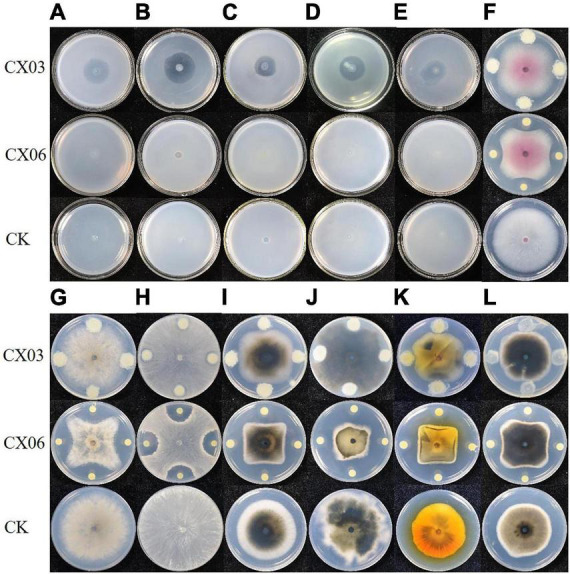
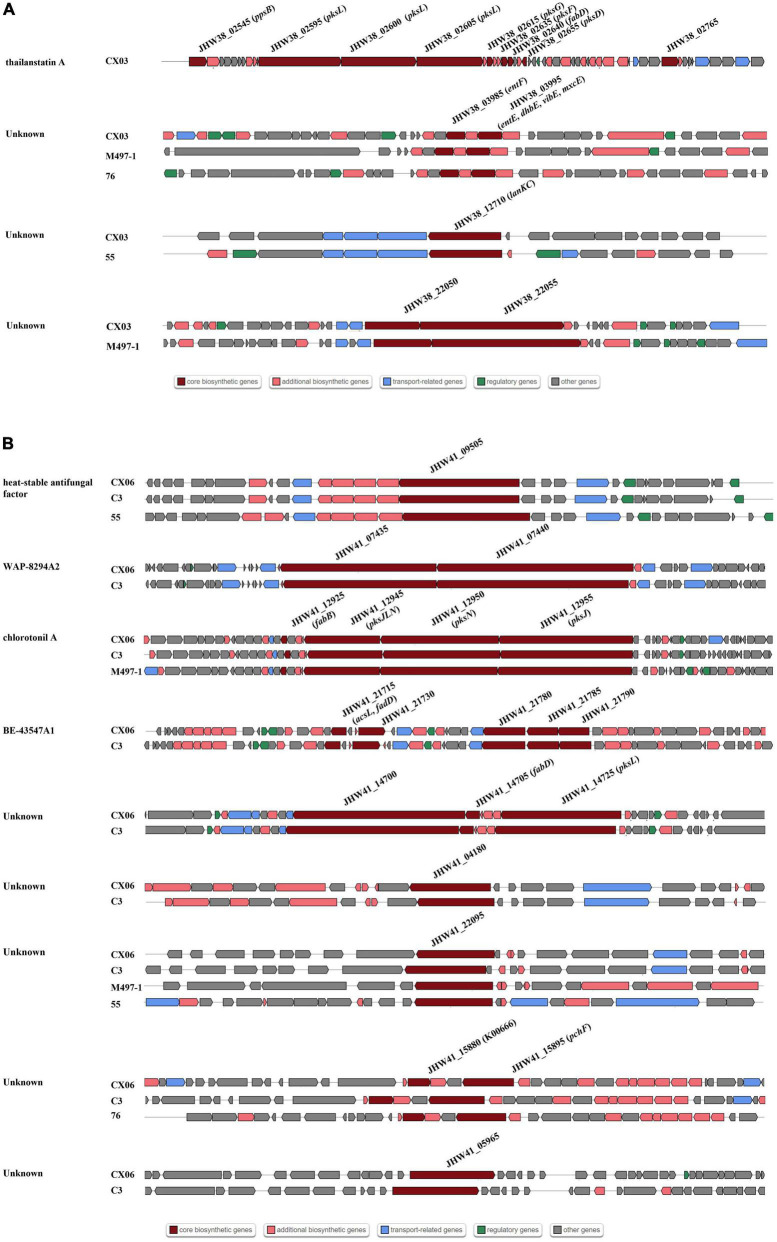
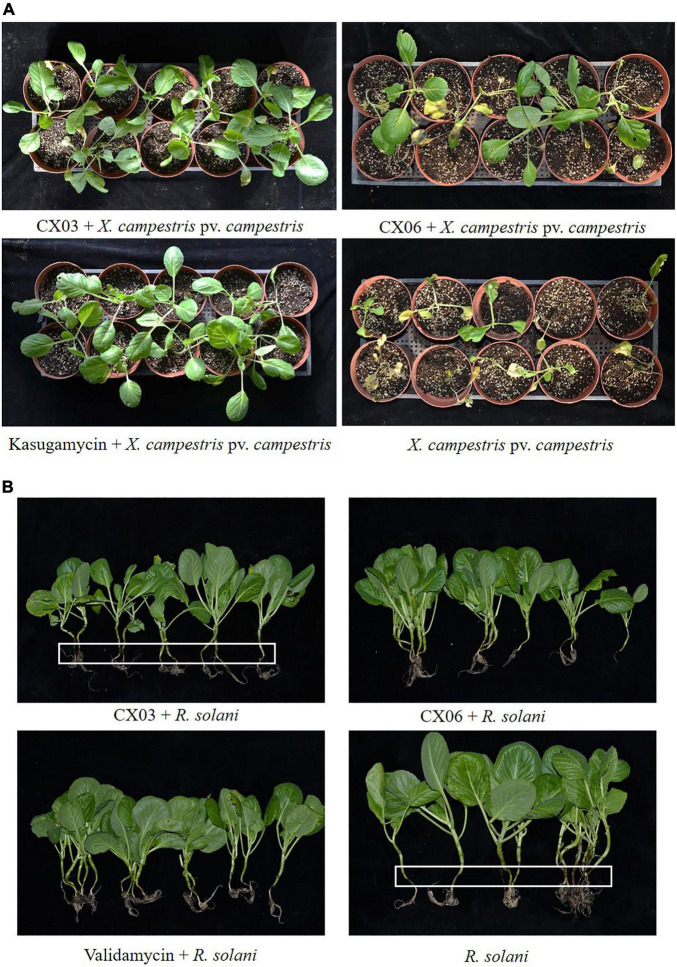
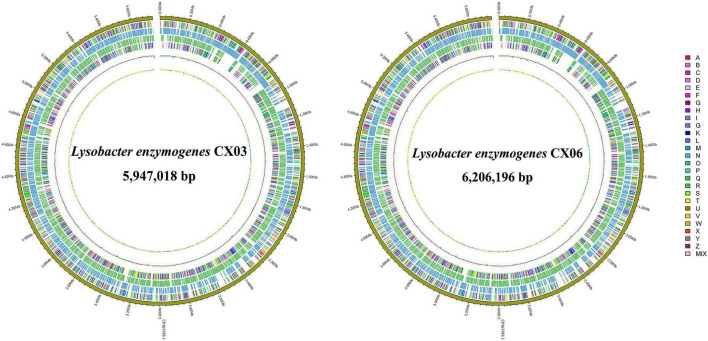
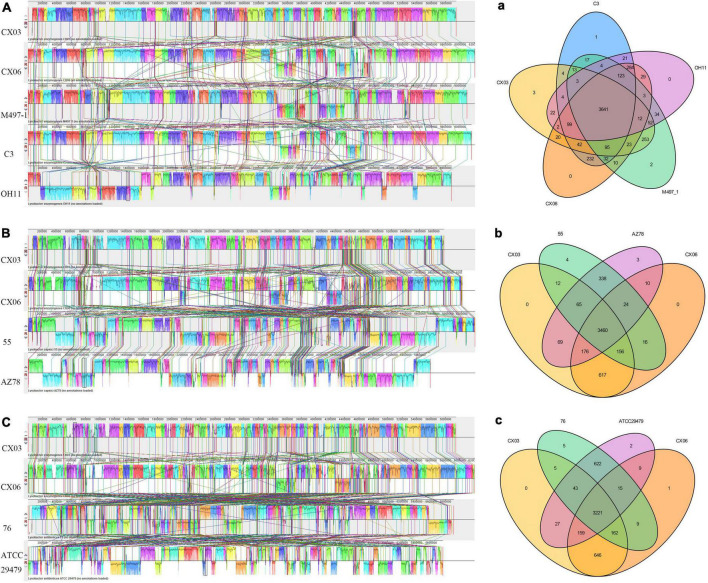
has been applied as an abundant beneficial microorganism to control plant disease; however, most strains have been mainly reported to control fungal diseases, not bacterial diseases. In this study, two strains were characterized, of which CX03 displayed a broad spectrum of antagonistic activities toward multiple bacteria, while CX06 exhibited a broad spectrum of antagonistic activities toward diverse fungi and oomycete, and the whole genomes of the two strains were sequenced and compared. The genome annotation showed that the CX03 genome comprised a 5,947,018 bp circular chromosome, while strain CX06 comprised a circular 6,206,196 bp chromosome. Phylogenetic analysis revealed that CX03 had a closer genetic relationship with ATCC29487 and M497-1, while CX06 was highly similar to C3. Functional gene annotation analyses of the two strains showed that many genes or gene clusters associated with the biosynthesis of different secondary metabolites were found in strains CX03 and CX06, which may be responsible for the different antagonistic activities against diverse plant pathogens. Moreover, comparative genomic analysis revealed the difference in bacterial secretory systems between strains CX03 and CX06. In addition, numerous conserved genes related to siderophore biosynthesis, quorum sensing, two-component systems, flagellar biosynthesis and chemotaxis were also identified in the genomes of strains CX03 and CX06. Most reported strains were proven mainly to suppress fungi, while CX03 exhibited direct inhibitory activities toward plant bacterial pathogens and showed an obvious role in managing bacterial disease. This study provides a novel understanding of the biocontrol mechanisms of , and reveals great potential for its application in plant disease control.
已被作为一种丰富的有益微生物用于防治植物病害;然而,大多数菌株主要报道用于防治真菌病害,而非细菌病害。在本研究中,对两株菌株进行了表征,其中CX03对多种细菌表现出广谱拮抗活性,而CX06对多种真菌和卵菌表现出广谱拮抗活性,并对这两株菌株的全基因组进行了测序和比较。基因组注释显示,CX03基因组由一条5,947,018 bp的环状染色体组成,而菌株CX06由一条6,206,196 bp的环状染色体组成。系统发育分析表明,CX03与ATCC29487和M497-1的遗传关系更近,而CX06与C3高度相似。对这两株菌株的功能基因注释分析表明,在菌株CX03和CX06中发现了许多与不同次生代谢物生物合成相关的基因或基因簇,这可能是它们对不同植物病原体具有不同拮抗活性的原因。此外,比较基因组分析揭示了菌株CX03和CX06之间细菌分泌系统的差异。此外,在菌株CX03和CX06的基因组中还鉴定出了许多与铁载体生物合成、群体感应、双组分系统、鞭毛生物合成和趋化作用相关的保守基因。大多数报道的菌株主要被证明能抑制真菌,而CX03对植物细菌病原体表现出直接抑制活性,并在管理细菌病害方面发挥了明显作用。本研究为[具体微生物名称]的生物防治机制提供了新的认识,并揭示了其在植物病害防治中的巨大应用潜力。