Jiao Xue-Feng, Zhang Miao, Chen Jingjing, Wei Qiang, Zeng Linan, Liu Dan, Zhang Chuan, Li Hailong, Zou Kun, Zhang Li, Zhang Lingli
Department of Pharmacy, West China Second University Hospital, Sichuan University, Chengdu, China.
Evidence-Based Pharmacy Center, West China Second University Hospital, Sichuan University, Chengdu, China.
Front Endocrinol (Lausanne). 2022 Aug 5;13:964084. doi: 10.3389/fendo.2022.964084. eCollection 2022.
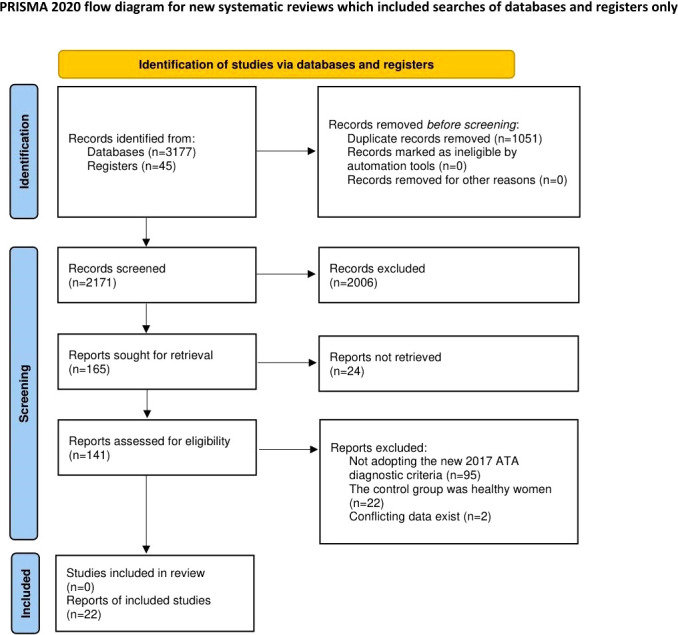
Several systematic reviews and meta-analyses have investigated the effect of levothyroxine (LT4) therapy in pregnant women with subclinical hypothyroidism (SCH). However, all these studies have clinical or methodological problems (such as adopting the old 2011 American Thyroid Association [ATA] diagnostic criteria, directly combining randomized controlled trials [RCTs] and cohort studies for meta-analysis, and so on), and cannot provide accurate and satisfactory results. Thus, we performed this updated systematic review, meta-analysis and trial sequential analysis (TSA) to assess the effect of LT4 therapy in pregnant women with SCH, with the goal of providing more accurate and reliable evidence for clinical practice.
We searched nine databases from inception to February 2022. The search strategy targeted the RCTs and cohort studies on pregnancy, neonatal and childhood outcomes following LT4 treatment in pregnant women with SCH based on the new 2017 ATA diagnostic criteria. We performed meta-analyses of RCTs and cohort studies separately, and further performed meta-analyses by excluding studies with high risk of bias. TSA was performed to test whether the current evidence was sufficient, and the quality of evidence was evaluated using the GRADE method.
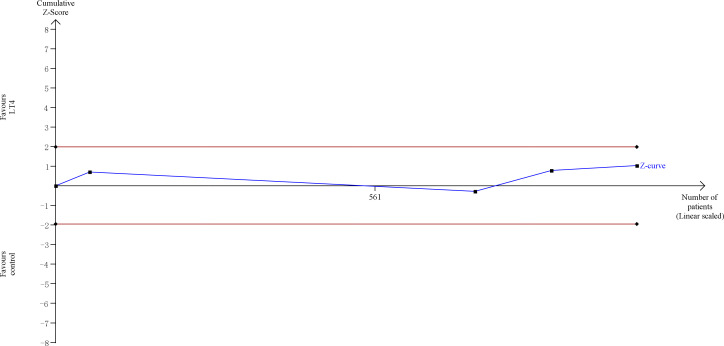
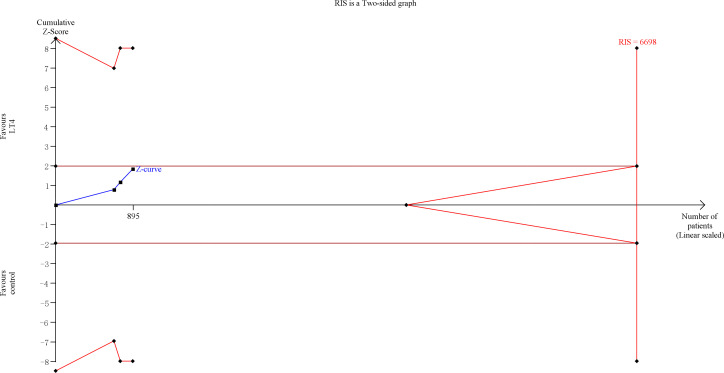
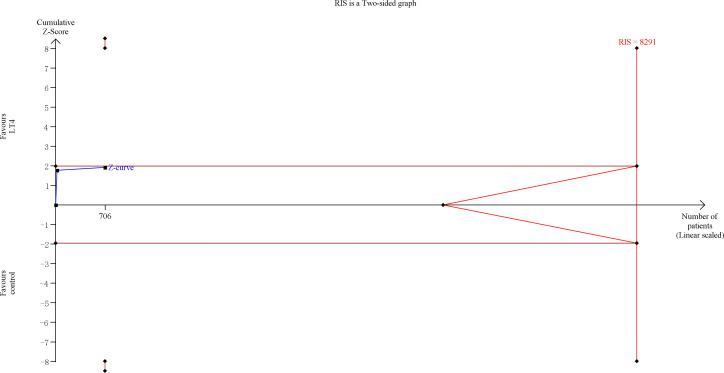
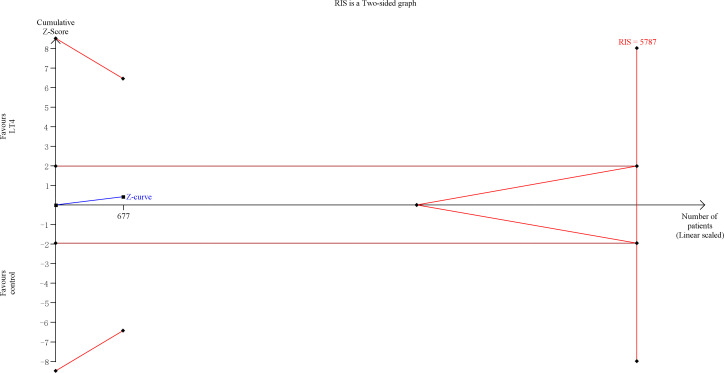
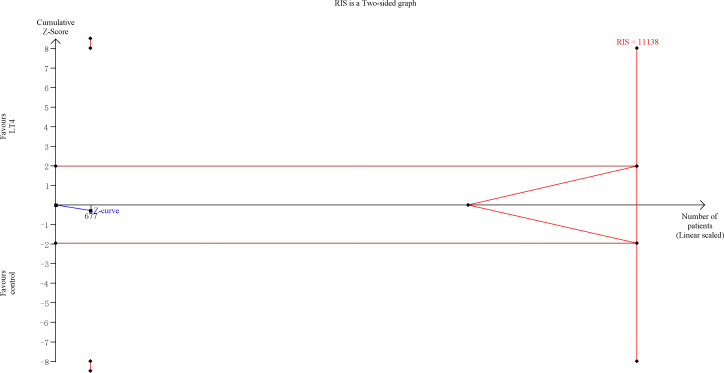
A total of 9 RCTs and 13 cohort studies comprising 11273 pregnant women with SCH were included. There were no statistically significant differences between LT4 group and control group in all primary and secondary outcomes, such as preterm delivery (RR=0.46, 95%CI: 0.19-1.09, =0.08, I 65%), miscarriage (RR=0.36, 95%CI: 0.13-1.03, =0.06, I 38%), gestational hypertension (RR=0.91, 95%CI: 0.58-1.43, =0.69, I 0%), preeclampsia (RR=1.10, 95%CI: 0.61-1.97, =0.76, I 0%), gestational diabetes (RR=0.80, 95%CI: 0.51-1.25, =0.32, I 34%), and so on. TSA showed that the results for all outcomes were insufficient and inconclusive. According to GRADE, the evidences for four outcomes (miscarriage, gestational hypertension, gestational diabetes, and small for gestational age) were rated as moderate quality, while the evidences for the other outcomes were rated as low or very low quality.
Unlike previous systematic reviews and meta-analyses, our study found no evidence of benefit of LT4 therapy on pregnancy, neonatal and childhood outcomes in pregnant women with SCH.
PROSPERO, https://www.crd.york.ac.uk/prospero/display_record.php?ID=CRD42022321937, identifier CRD42022321937.
多项系统评价和荟萃分析探讨了左甲状腺素(LT4)治疗对亚临床甲状腺功能减退症(SCH)孕妇的影响。然而,所有这些研究都存在临床或方法学问题(如采用旧的2011年美国甲状腺协会[ATA]诊断标准、直接将随机对照试验[RCT]和队列研究合并进行荟萃分析等),无法提供准确且令人满意的结果。因此,我们进行了这项更新的系统评价、荟萃分析和试验序贯分析(TSA),以评估LT4治疗对SCH孕妇的影响,旨在为临床实践提供更准确可靠的证据。
我们检索了从起始到2022年2月的九个数据库。检索策略针对基于新的2017年ATA诊断标准的SCH孕妇接受LT4治疗后妊娠、新生儿及儿童结局的RCT和队列研究。我们分别对RCT和队列研究进行荟萃分析,并通过排除高偏倚风险的研究进一步进行荟萃分析。进行TSA以检验当前证据是否充分,并使用GRADE方法评估证据质量。
共纳入9项RCT和13项队列研究,涉及11273例SCH孕妇。LT4组和对照组在所有主要和次要结局方面均无统计学显著差异,如早产(RR = 0.46,95%CI:0.19 - 1.09,P = 0.08,I² = 65%)、流产(RR = 0.36,95%CI:0.13 - 1.03,P = 0.06,I² = 38%)、妊娠期高血压(RR = 0.91,95%CI:0.58 - 1.43,P = 0.69,I² = 0%)、先兆子痫(RR = 1.10,95%CI:0.61 - 1.97,P = 0.76,I² = 0%)、妊娠期糖尿病(RR = 0.80,95%CI:0.51 - 1.25,P = 0.32,I² = 34%)等。TSA显示所有结局的结果均不充分且无定论。根据GRADE,四项结局(流产、妊娠期高血压、妊娠期糖尿病和小于胎龄儿)的证据等级为中等质量,而其他结局的证据等级为低或极低质量。
与以往的系统评价和荟萃分析不同,我们的研究未发现LT4治疗对SCH孕妇的妊娠、新生儿及儿童结局有益的证据。
PROSPERO,https://www.crd.york.ac.uk/prospero/display_record.php?ID=CRD42022321937,标识符CRD42022321937。