Wei Lei, Cafiero Thomas R, Tseng Anna, Gertje Hans P, Berneshawi Andrew, Crossland Nicholas A, Ploss Alexander
Department of Molecular Biology, Lewis Thomas Laboratory, Princeton University, Washington Road, Princeton, NJ, 08544, USA.
National Emerging Infectious Diseases Laboratories, Boston University, Boston, MA, USA.
JHEP Rep. 2022 Jul 9;4(9):100534. doi: 10.1016/j.jhepr.2022.100534. eCollection 2022 Sep.
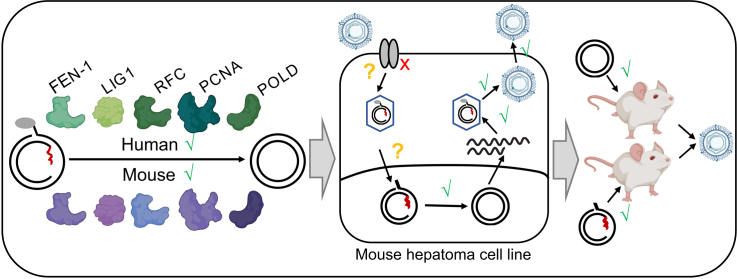
BACKGROUND & AIMS: HBV has a narrow host restriction, with humans and chimpanzees representing the only known natural hosts. The molecular correlates of resistance in species that are commonly used in biomedical research, such as mice, are currently incompletely understood. Expression of human NTCP (hNTCP) in mouse hepatocytes enables HBV entry, but subsequently covalently closed circular (cccDNA) does not form in most murine cells. It is unknown if this blockade in cccDNA formation is due to deficiency in repair of relaxed circular DNA (rcDNA) to cccDNA.
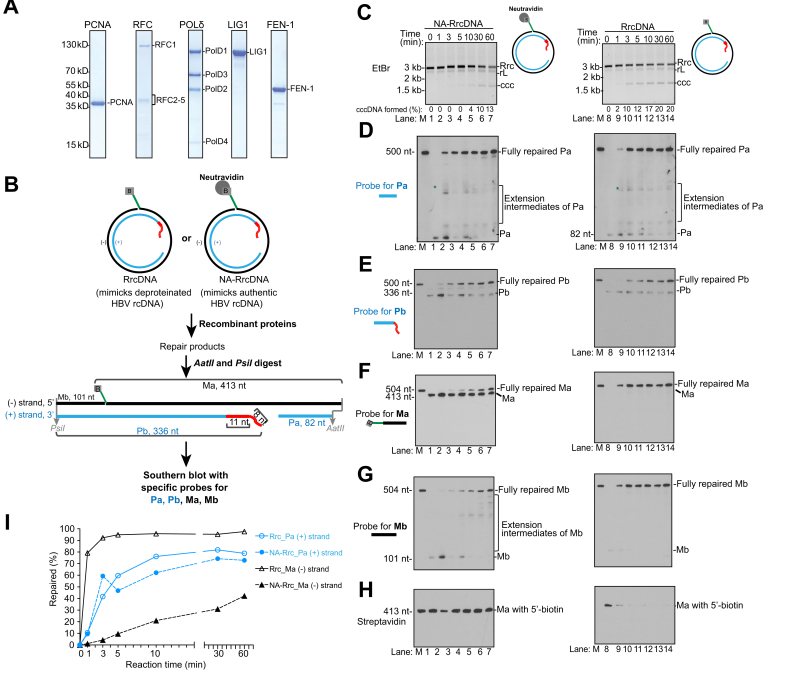
Here, we deployed both and virological and biochemical approaches to investigate if murine cells contain a complete set of repair factors capable of converting HBV rcDNA to cccDNA.
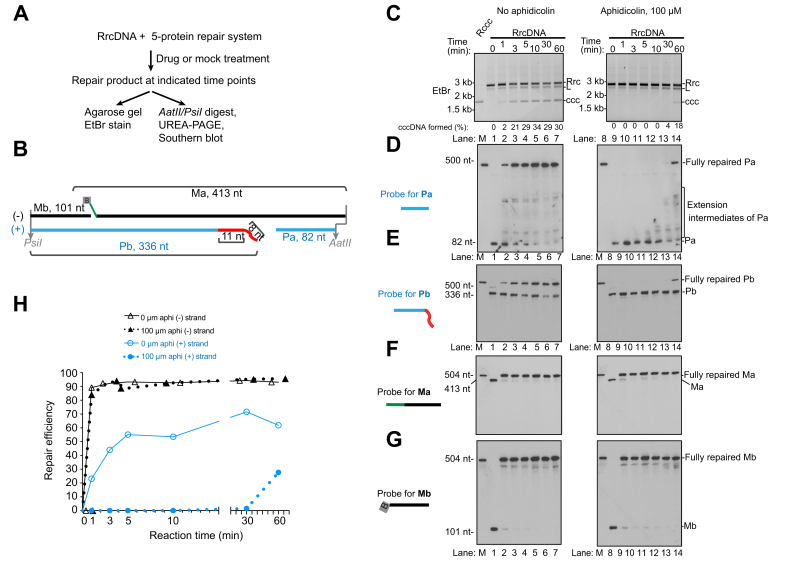
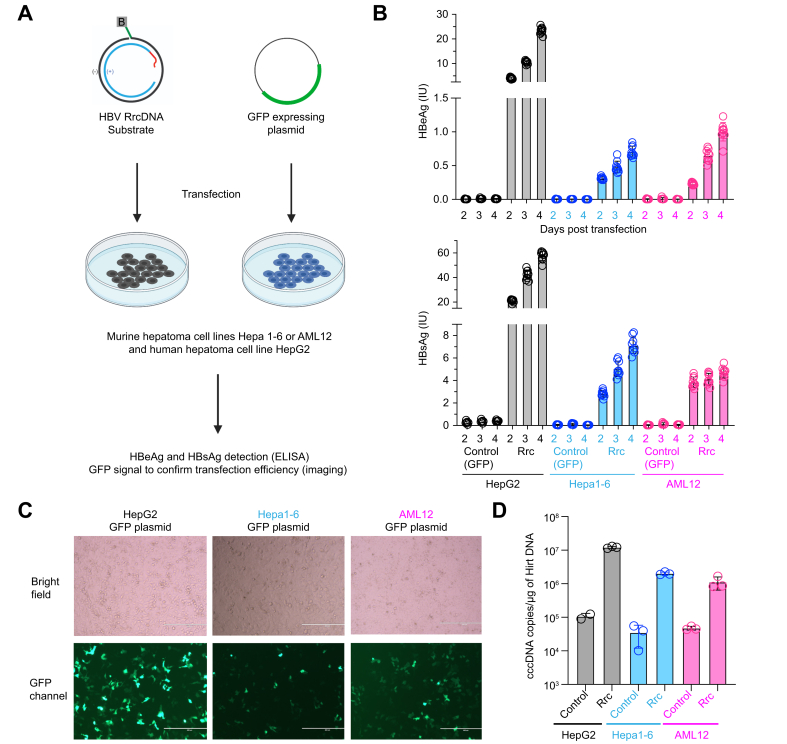
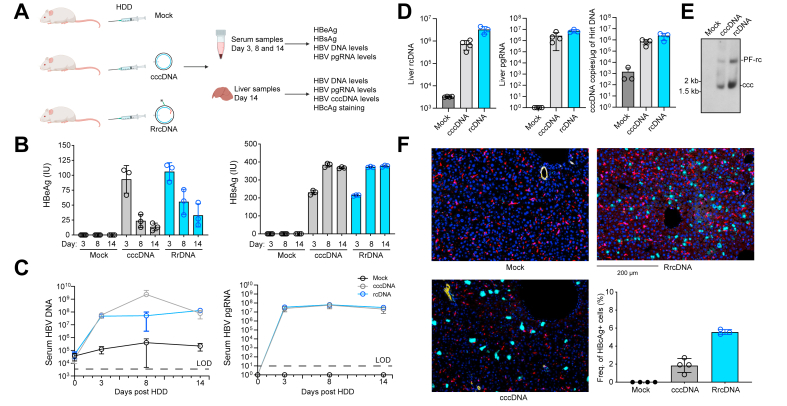
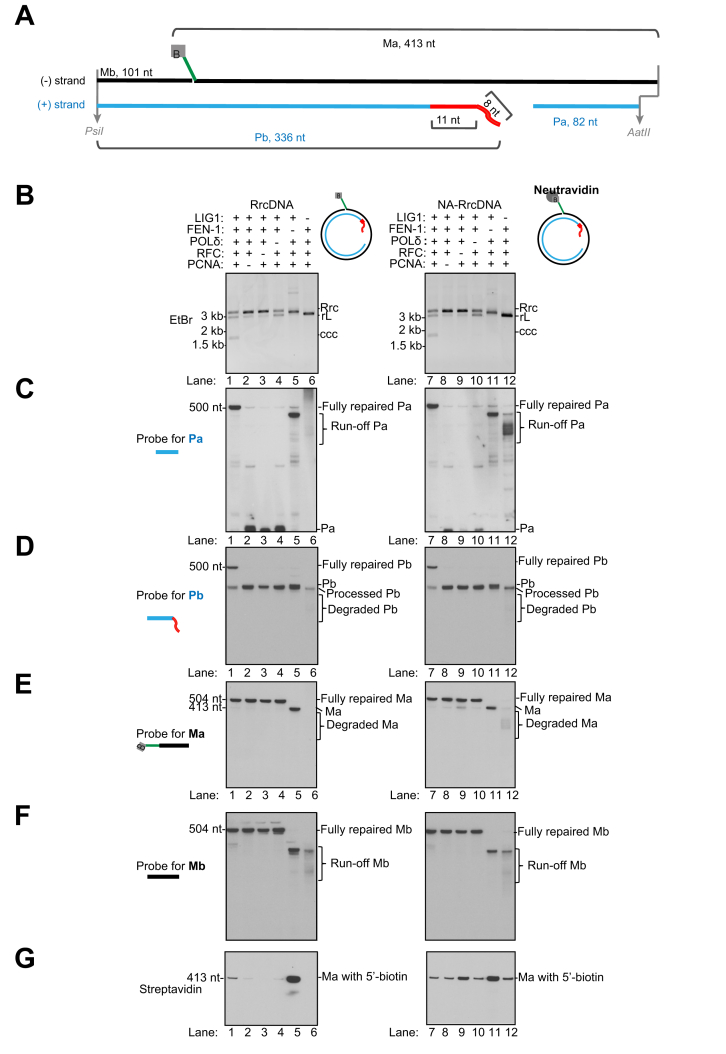
We demonstrate that HBV cccDNA does form in murine cell culture or in mice when recombinant rcDNA without a protein adduct is directly introduced into cells. We further show that the murine orthologues of core components in DNA lagging strand synthesis, required for the repair of rcDNA to cccDNA in human cells, can support this crucial step in the HBV life cycle. It is worth noting that recombinant HBV rcDNA substrates, either without a protein adduct or containing neutravidin to mimic HBV polymerase, were used in our study; it remains unclear if the HBV polymerase removal processes are the same in mouse and human cells.
Collectively, our data suggest that the HBV life cycle is blocked post entry and likely before the repair stage in mouse cells, which yields critical insights that will aid in the construction of a mouse model with inbred susceptibility to HBV infection.
Hepatitis B virus (HBV) is only known to infect humans and chimpanzees in nature. Mouse models are often used in modeling disease pathogenesis and preclinical research to assess the efficacy and safety of interventions before they are then tested in human participants. However, because mice are not susceptible to HBV infection it is difficult to accurately model human infection (and test potential treatments) in mouse models. Herein, we have shown that mice are able to perform a key step in the HBV life cycle, tightening the net around the possible reason why HBV can not efficiently infect and replicate in mice.
乙肝病毒(HBV)的宿主范围狭窄,人类和黑猩猩是仅知的天然宿主。目前对生物医学研究中常用物种(如小鼠)的耐药分子机制尚未完全了解。在小鼠肝细胞中表达人钠-牛磺胆酸共转运多肽(hNTCP)可使HBV进入细胞,但在大多数鼠细胞中随后无法形成共价闭合环状(cccDNA)。尚不清楚cccDNA形成受阻是否是由于松弛环状DNA(rcDNA)修复为cccDNA的因子缺乏所致。
在此,我们采用病毒学和生化方法来研究鼠细胞是否含有将HBV rcDNA转化为cccDNA的完整修复因子。
我们证明,当无蛋白加合物的重组rcDNA直接导入细胞时,HBV cccDNA可在鼠细胞培养物或小鼠中形成。我们进一步表明,人类细胞中rcDNA修复为cccDNA所需的DNA滞后链合成核心成分的小鼠直系同源物,可支持HBV生命周期中的这一关键步骤。值得注意的是,我们的研究中使用了无蛋白加合物或含中性抗生物素蛋白以模拟HBV聚合酶的重组HBV rcDNA底物;尚不清楚小鼠和人类细胞中HBV聚合酶去除过程是否相同。
总体而言,我们的数据表明HBV生命周期在小鼠细胞进入后且可能在修复阶段之前受阻,这产生了关键见解,将有助于构建对HBV感染具有近交易感性的小鼠模型。
乙肝病毒(HBV)在自然界仅感染人类和黑猩猩。小鼠模型常用于模拟疾病发病机制和临床前研究,以评估干预措施在人体试验前的疗效和安全性。然而,由于小鼠对HBV感染不敏感,因此难以在小鼠模型中准确模拟人类感染(并测试潜在治疗方法)。在此,我们表明小鼠能够在HBV生命周期中执行关键步骤,进一步明确了HBV无法在小鼠中有效感染和复制的可能原因。