Department of Pediatrics, Duke University School of Medicine, Durham, NC, USA.
Department of Pharmacology & Cancer Biology, Duke University School of Medicine, Durham, NC, USA.
Mol Oncol. 2022 Oct;16(20):3587-3605. doi: 10.1002/1878-0261.13304. Epub 2022 Aug 29.
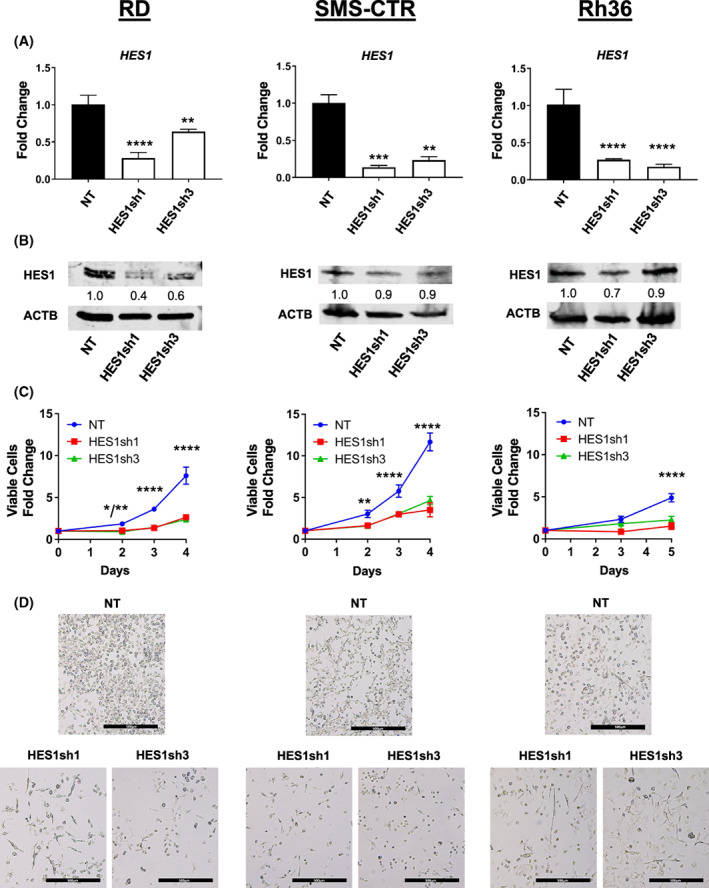
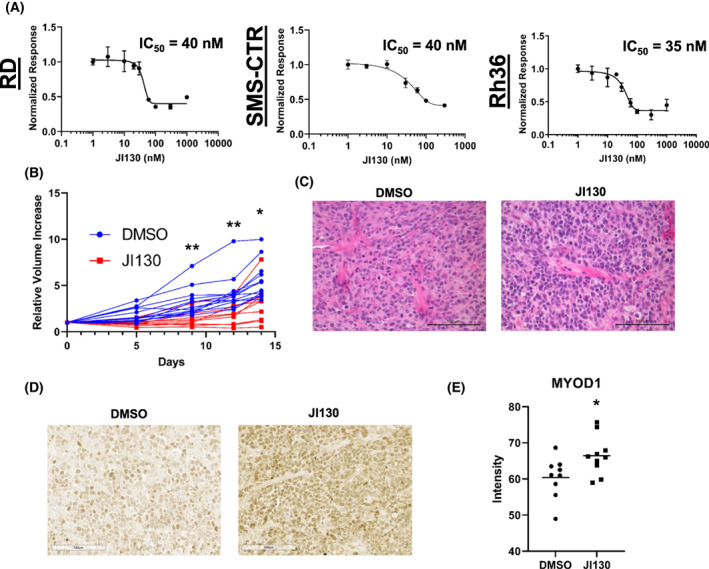
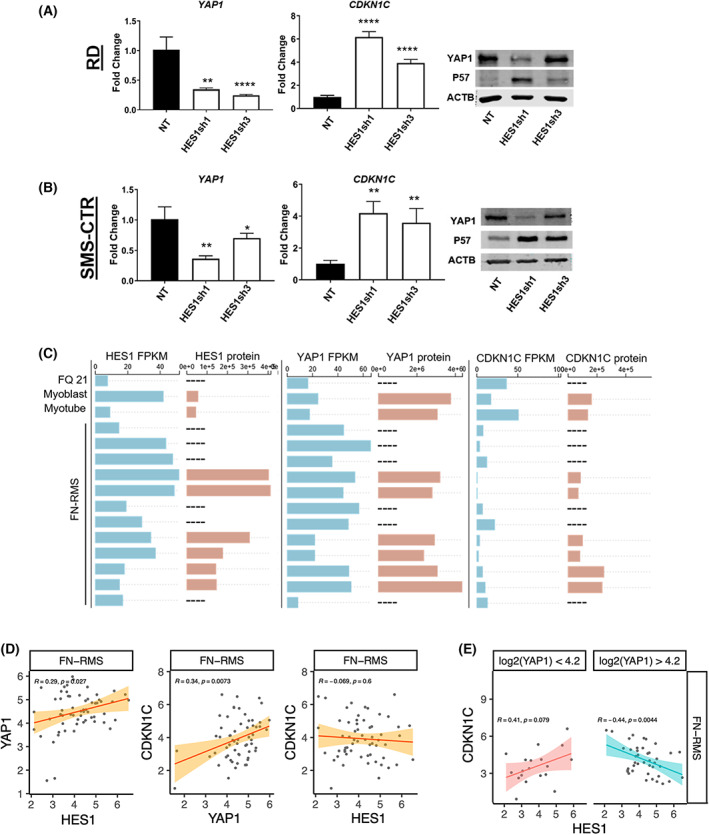
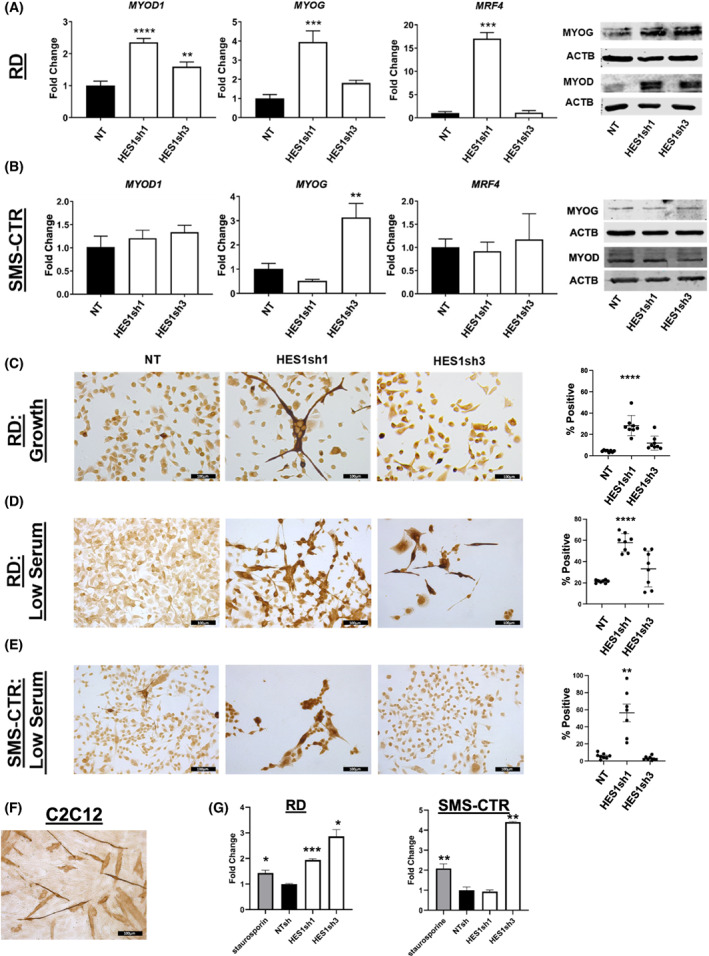
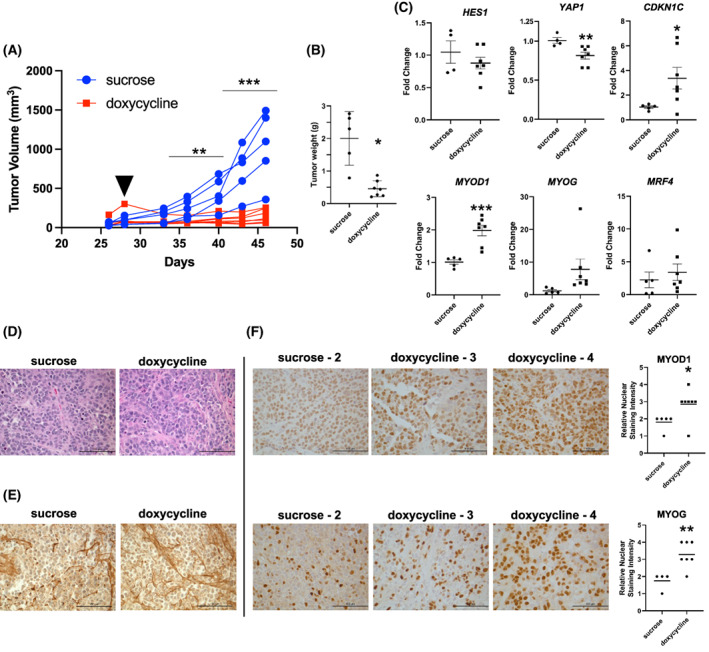
Rhabdomyosarcoma (RMS), a cancer characterized by features of skeletal muscle, is the most common soft-tissue sarcoma of childhood. With 5-year survival rates among high-risk groups at < 30%, new therapeutics are desperately needed. Previously, using a myoblast-based model of fusion-negative RMS (FN-RMS), we found that expression of the Hippo pathway effector transcriptional coactivator YAP1 (YAP1) permitted senescence bypass and subsequent transformation to malignant cells, mimicking FN-RMS. We also found that YAP1 engages in a positive feedback loop with Notch signaling to promote FN-RMS tumorigenesis. However, we could not identify an immediate downstream impact of this Hippo-Notch relationship. Here, we identify a HES1-YAP1-CDKN1C functional interaction, and show that knockdown of the Notch effector HES1 (Hes family BHLH transcription factor 1) impairs growth of multiple FN-RMS cell lines, with knockdown resulting in decreased YAP1 and increased CDKN1C expression. In silico mining of published proteomic and transcriptomic profiles of human RMS patient-derived xenografts revealed the same pattern of HES1-YAP1-CDKN1C expression. Treatment of FN-RMS cells in vitro with the recently described HES1 small-molecule inhibitor, JI130, limited FN-RMS cell growth. Inhibition of HES1 in vivo via conditional expression of a HES1-directed shRNA or JI130 dosing impaired FN-RMS tumor xenograft growth. Lastly, targeted transcriptomic profiling of FN-RMS xenografts in the context of HES1 suppression identified associations between HES1 and RAS-MAPK signaling. In summary, these in vitro and in vivo preclinical studies support the further investigation of HES1 as a therapeutic target in FN-RMS.
横纹肌肉瘤(RMS)是一种以骨骼肌特征为特征的癌症,是儿童中最常见的软组织肉瘤。高危组的 5 年生存率为 <30%,急需新的治疗方法。以前,我们使用融合阴性横纹肌肉瘤(FN-RMS)的成肌细胞模型,发现 Hippo 通路效应转录共激活因子 YAP1(YAP1)的表达允许衰老旁路并随后转化为恶性细胞,模拟 FN-RMS。我们还发现 YAP1 与 Notch 信号通路形成正反馈回路,促进 FN-RMS 的肿瘤发生。然而,我们无法确定这种 Hippo Notch 关系的直接下游影响。在这里,我们确定了一个 HES1-YAP1-CDKN1C 功能相互作用,并表明 Notch 效应物 HES1(Hes 家族 BHLH 转录因子 1)的敲低会损害多种 FN-RMS 细胞系的生长,敲低导致 YAP1 减少和 CDKN1C 表达增加。对人类 RMS 患者衍生异种移植物的已发表蛋白质组学和转录组学图谱的计算机挖掘显示了相同的 HES1-YAP1-CDKN1C 表达模式。最近描述的 HES1 小分子抑制剂 JI130 在体外对 FN-RMS 细胞的处理限制了 FN-RMS 细胞的生长。通过条件表达 HES1 定向 shRNA 或 JI130 剂量抑制 HES1 在体内抑制 FN-RMS 肿瘤异种移植物的生长。最后,在 HES1 抑制的情况下对 FN-RMS 异种移植物进行靶向转录组分析确定了 HES1 与 RAS-MAPK 信号之间的关联。总之,这些体外和体内临床前研究支持进一步研究 HES1 作为 FN-RMS 的治疗靶点。