Department of Pharmacology and Toxicology, University of Texas Medical Branch, Galveston, Texas, United States of America.
MD-PhD Combined Degree Program, University of Texas Medical Branch, Galveston, Texas, United States of America.
PLoS One. 2022 Aug 29;17(8):e0273509. doi: 10.1371/journal.pone.0273509. eCollection 2022.
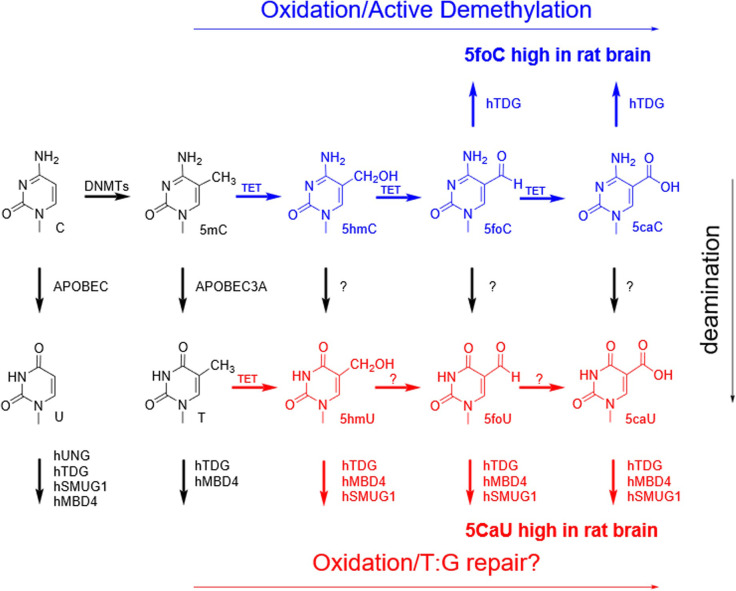
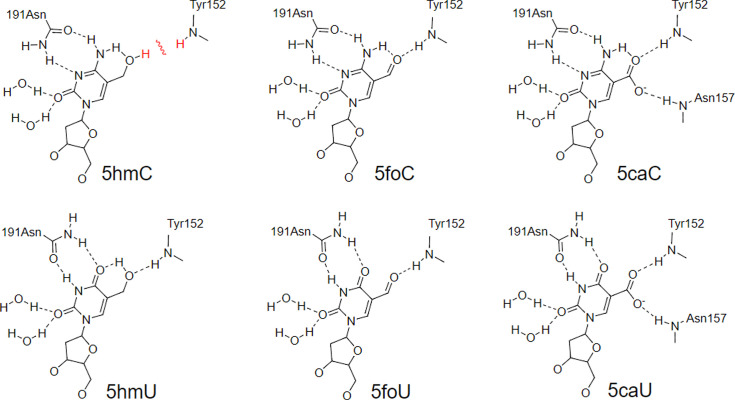
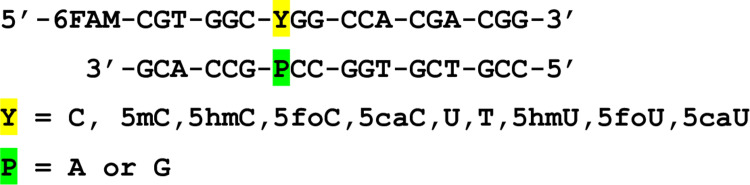
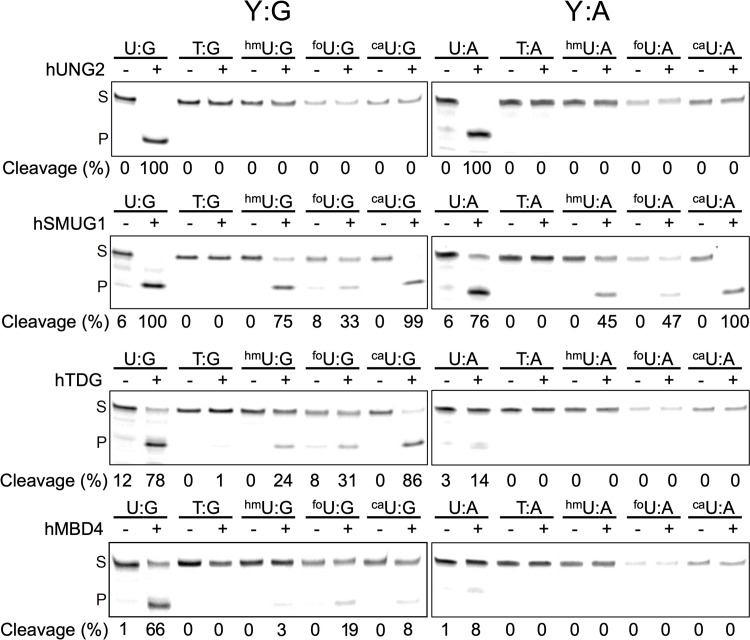
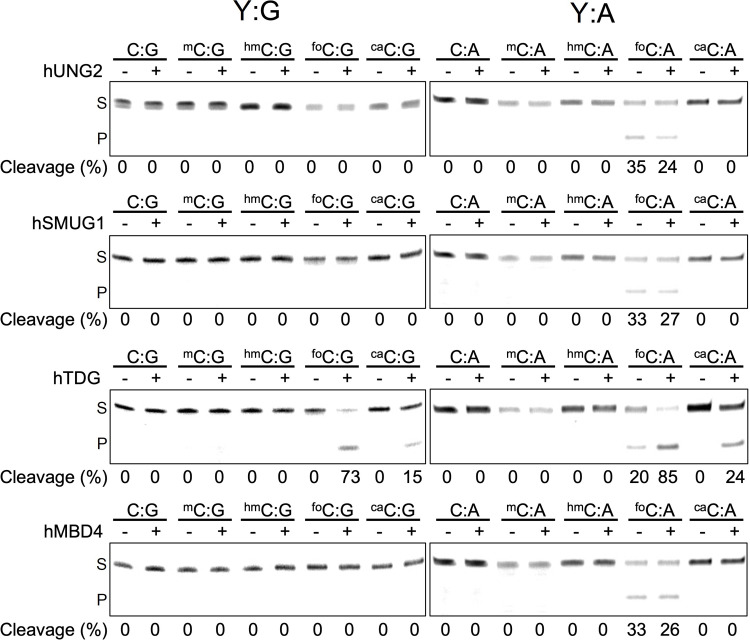
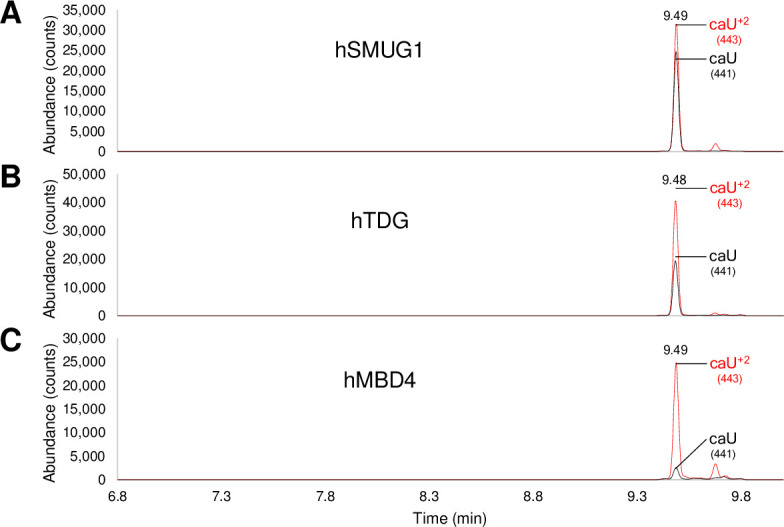
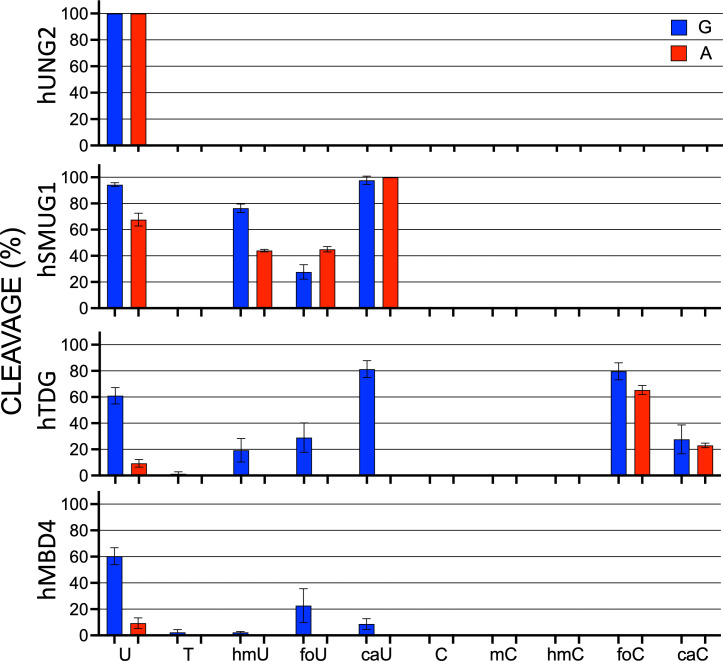
The DNA of all living organisms is persistently damaged by endogenous reactions including deamination and oxidation. Such damage, if not repaired correctly, can result in mutations that drive tumor development. In addition to chemical damage, recent studies have established that DNA bases can be enzymatically modified, generating many of the same modified bases. Irrespective of the mechanism of formation, modified bases can alter DNA-protein interactions and therefore modulate epigenetic control of gene transcription. The simultaneous presence of both chemically and enzymatically modified bases in DNA suggests a potential intersection, or collision, between DNA repair and epigenetic reprogramming. In this paper, we have prepared defined sequence oligonucleotides containing the complete set of oxidized and deaminated bases that could arise from 5-methylcytosine. We have probed these substrates with human glycosylases implicated in DNA repair and epigenetic reprogramming. New observations reported here include: SMUG1 excises 5-carboxyuracil (5caU) when paired with A or G. Both TDG and MBD4 cleave 5-formyluracil and 5caU when mispaired with G. Further, TDG not only removes 5-formylcytosine and 5-carboxycytosine when paired with G, but also when mispaired with A. Surprisingly, 5caU is one of the best substrates for human TDG, SMUG1 and MBD4, and a much better substrate than T. The data presented here introduces some unexpected findings that pose new questions on the interactions between endogenous DNA damage, repair, and epigenetic reprogramming pathways.
所有生物的 DNA 都会受到内源性反应(包括脱氨和氧化)的持续损伤。如果这种损伤不能正确修复,就会导致驱动肿瘤发展的突变。除了化学损伤,最近的研究还表明,DNA 碱基可以被酶修饰,产生许多相同的修饰碱基。无论形成机制如何,修饰碱基都可以改变 DNA-蛋白质相互作用,从而调节基因转录的表观遗传控制。DNA 中同时存在化学修饰和酶修饰的碱基,这表明 DNA 修复和表观遗传重编程之间存在潜在的交叉或碰撞。在本文中,我们制备了包含 5-甲基胞嘧啶可能产生的所有氧化和脱氨碱基的特定序列寡核苷酸。我们用涉及 DNA 修复和表观遗传重编程的人类糖苷酶探测这些底物。这里报告的新观察结果包括:SMUG1 在与 A 或 G 配对时切除 5-羧基尿嘧啶(5caU)。TDG 和 MBD4 均在与 G 错配时切割 5-甲酰基尿嘧啶和 5caU。此外,TDG 不仅在与 G 配对时去除 5-甲酰胞嘧啶和 5-羧基胞嘧啶,而且在与 A 错配时也去除。令人惊讶的是,5caU 是人类 TDG、SMUG1 和 MBD4 的最佳底物之一,其比 T 更好的底物。这里呈现的数据引入了一些意想不到的发现,这些发现对内源性 DNA 损伤、修复和表观遗传重编程途径之间的相互作用提出了新的问题。