Department of Neuroscience, Faculty of Health and Medical Sciences, University of Copenhagen, Blegdamsvej 3, 2200, Copenhagen, Denmark.
Institute of Physiology, University of Zurich, Winterthurerstrasse 190, 8057, Zurich, Switzerland.
Fluids Barriers CNS. 2022 Aug 29;19(1):65. doi: 10.1186/s12987-022-00358-4.
Disturbances in the brain fluid balance can lead to life-threatening elevation in the intracranial pressure (ICP), which represents a vast clinical challenge. Nevertheless, the details underlying the molecular mechanisms governing cerebrospinal fluid (CSF) secretion are largely unresolved, thus preventing targeted and efficient pharmaceutical therapy of cerebral pathologies involving elevated ICP.
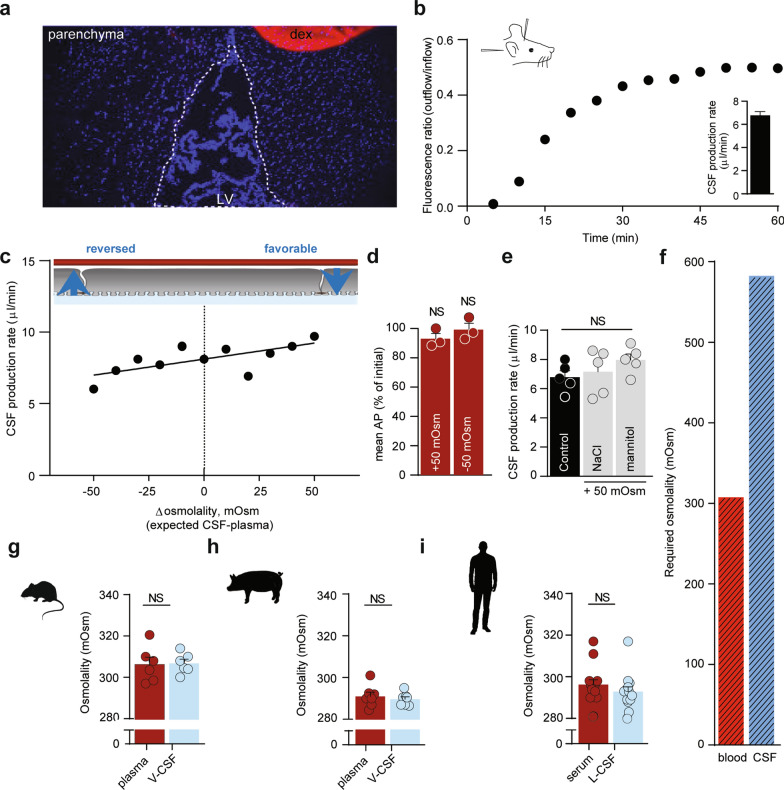
Experimental rats were employed for in vivo determinations of CSF secretion rates, ICP, blood pressure and ex vivo excised choroid plexus for morphological analysis and quantification of expression and activity of various transport proteins. CSF and blood extractions from rats, pigs, and humans were employed for osmolality determinations and a mathematical model employed to determine a contribution from potential local gradients at the surface of choroid plexus.
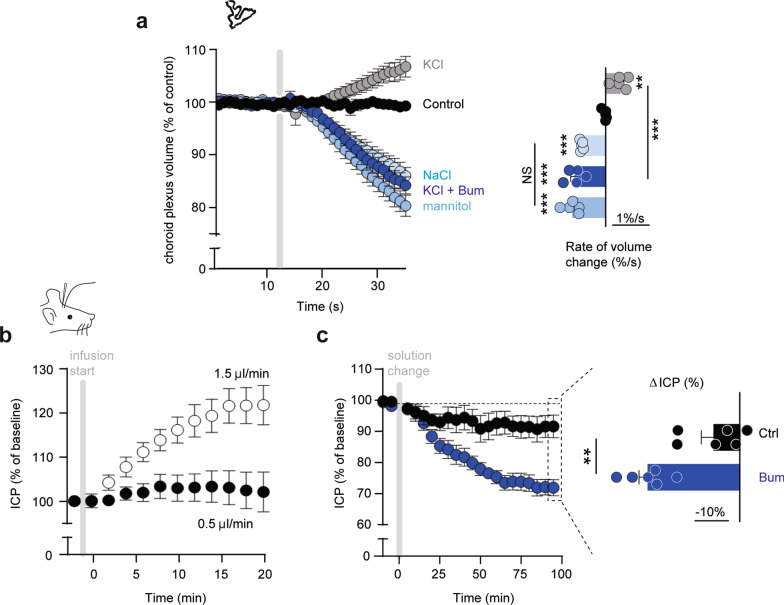
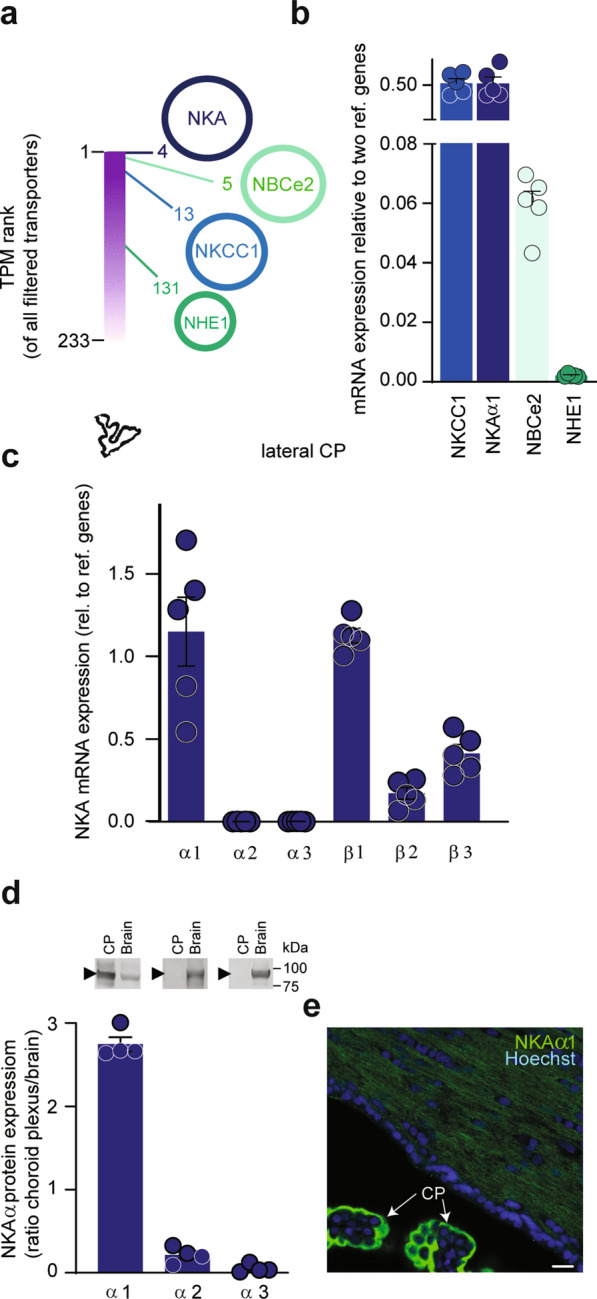
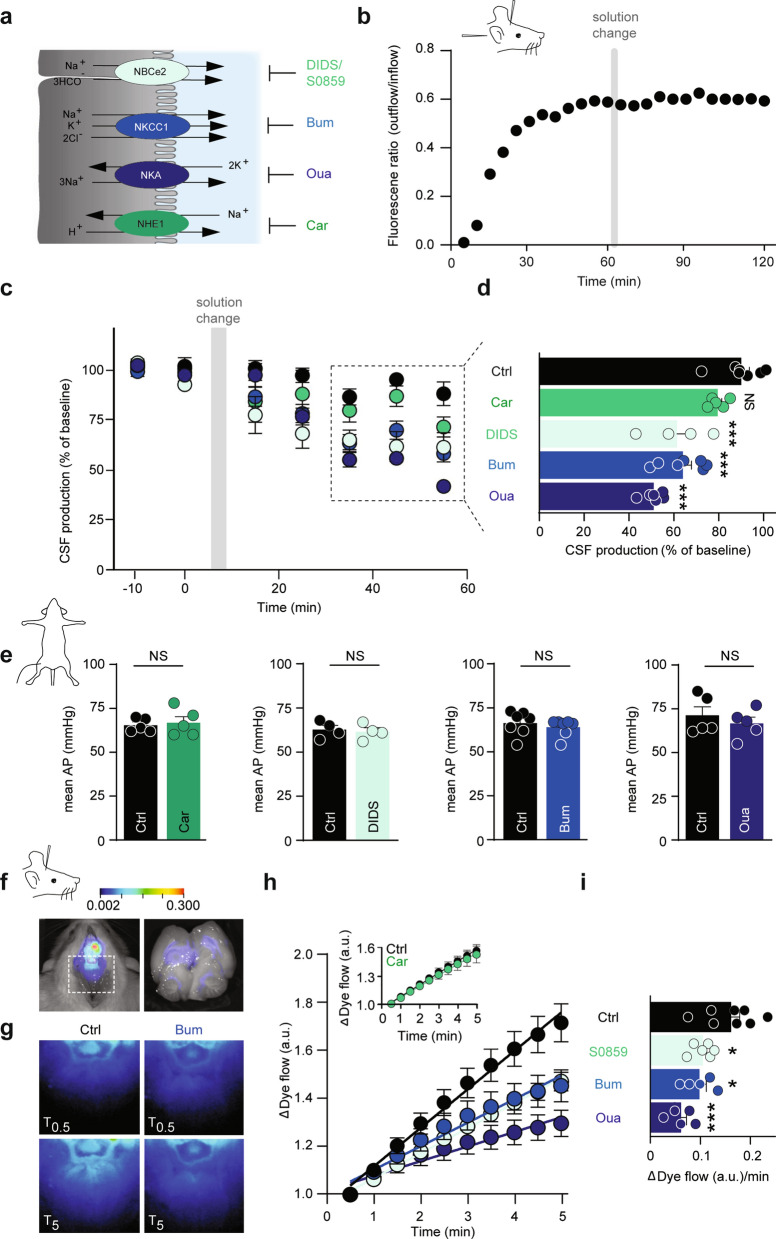
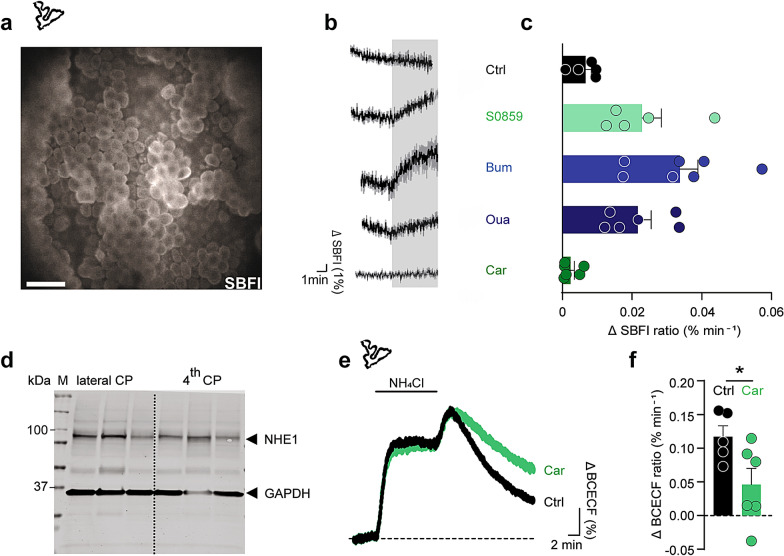
We demonstrate that CSF secretion can occur independently of conventional osmosis and that local osmotic gradients do not suffice to support CSF secretion. Instead, the CSF secretion across the luminal membrane of choroid plexus relies approximately equally on the Na/K/2Cl cotransporter NKCC1, the Na/HCO cotransporter NBCe2, and the Na/K-ATPase, but not on the Na/H exchanger NHE1. We demonstrate that pharmacological modulation of CSF secretion directly affects the ICP.
CSF secretion appears to not rely on conventional osmosis, but rather occur by a concerted effort of different choroidal transporters, possibly via a molecular mode of water transport inherent in the proteins themselves. Therapeutic modulation of the rate of CSF secretion may be employed as a strategy to modulate ICP. These insights identify new promising therapeutic targets against brain pathologies associated with elevated ICP.
脑液平衡紊乱可导致危及生命的颅内压(ICP)升高,这是一个巨大的临床挑战。然而,控制脑脊液(CSF)分泌的分子机制的细节在很大程度上仍未解决,从而阻止了针对涉及 ICP 升高的脑病理学的靶向和有效的药物治疗。
实验大鼠用于体内 CSF 分泌率、ICP、血压的测定和体外切除脉络丛进行形态分析和各种转运蛋白表达和活性的定量。从大鼠、猪和人提取 CSF 和血液,用于渗透压测定,并采用数学模型确定脉络丛表面潜在局部梯度的贡献。
我们证明 CSF 分泌可以独立于传统渗透压发生,并且局部渗透压梯度不足以支持 CSF 分泌。相反,脉络丛腔膜的 CSF 分泌大约同样依赖于 Na/K/2Cl 共转运蛋白 NKCC1、Na/HCO 共转运蛋白 NBCe2 和 Na/K-ATP 酶,而不依赖于 Na/H 交换器 NHE1。我们证明 CSF 分泌的药物调节直接影响 ICP。
CSF 分泌似乎不依赖于传统渗透压,而是通过不同脉络丛转运蛋白的协同作用发生,可能通过蛋白质本身固有的分子水运输模式。CSF 分泌率的治疗性调节可作为调节 ICP 的策略。这些见解确定了针对与 ICP 升高相关的脑病理学的新的有前途的治疗靶点。