Jensen Dennis Bo, Toft-Bertelsen Trine L, Barbuskaite Dagne, Stubbe Jane, Nietzsche Sandor, Capion Tenna, Norager Nicolas H, Olsen Markus H, Sørensen Andreas T, Dimke Henrik, Hübner Christian A, Juhler Marianne, MacAulay Nanna
Department of Neuroscience, University of Copenhagen, Blegdamsvej 3, Copenhagen N, 2200, Denmark.
Department of Molecular Medicine, University of Southern Denmark, Campusvej 55, Odense, 5230, Denmark.
Adv Sci (Weinh). 2025 Feb;12(6):e2409120. doi: 10.1002/advs.202409120. Epub 2024 Dec 18.
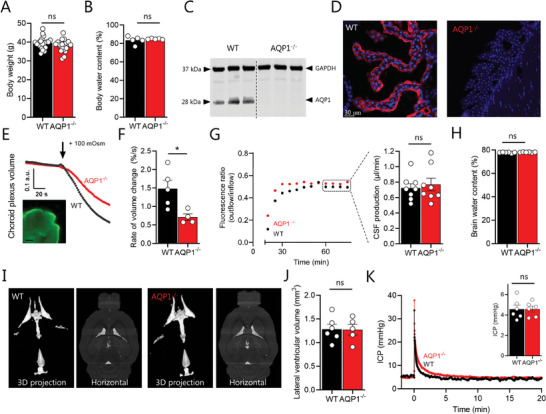
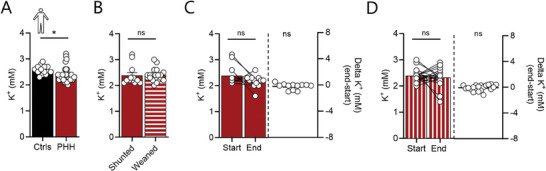
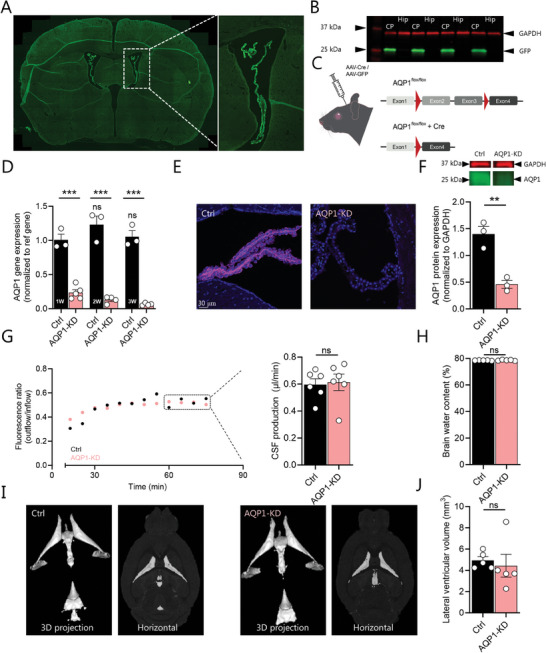
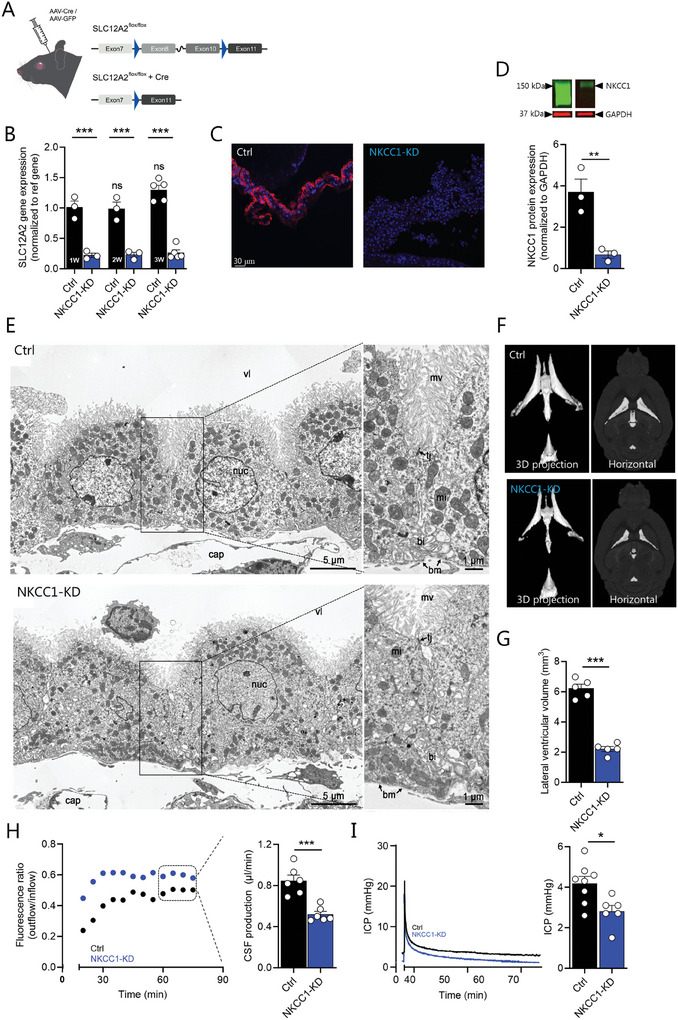
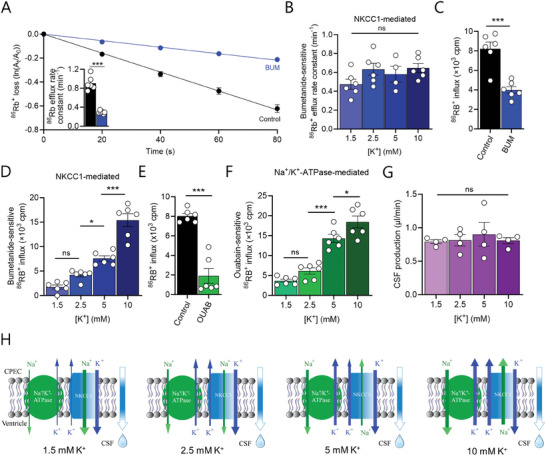
Disturbances in the brain fluid balance can lead to life-threatening elevation in intracranial pressure (ICP), which represents a vast clinical challenge. Targeted and efficient pharmaceutical therapy of elevated ICP is not currently available, as the molecular mechanisms governing cerebrospinal fluid (CSF) secretion are largely unresolved. To resolve the quantitative contribution of key choroid plexus transport proteins, this study employs mice with genetic knockout and/or viral choroid plexus-specific knockdown of aquaporin 1 (AQP1) and the Na, K, 2Cl cotransporter 1 (NKCC1) for in vivo determinations of CSF dynamics, ex vivo choroid plexus for transporter-mediated clearance of a CSF K load, and patient CSF for [K] quantification. CSF secretion and ICP management occur independently of choroid plexus AQP1 expression, whereas both parameters are reduced by 40% upon choroid plexus NKCC1 knockdown. Elevation of [K] increases the choroid plexus Na/K-ATPase activity, and favors inwardly-directed net NKCC1 transport, which, together, promote CSF K clearance, while maintaining undisturbed CSF secretion rates. CSF from patients with post-hemorrhagic hydrocephalus does not display elevated [K], suggesting that NKCC1 maintains net outward transport direction during post-hemorrhagic hydrocephalus formation. Direct or indirect therapeutic modulation of choroid plexus NKCC1 can thus be a potential promising pharmacological approach against brain pathologies associated with elevated ICP.
脑液平衡紊乱可导致危及生命的颅内压(ICP)升高,这是一个巨大的临床挑战。目前尚无针对ICP升高的靶向且有效的药物治疗方法,因为脑脊液(CSF)分泌的分子机制在很大程度上尚未明确。为了确定关键脉络丛转运蛋白的定量贡献,本研究采用基因敲除和/或病毒介导的脉络丛特异性敲低水通道蛋白1(AQP1)和钠钾氯协同转运蛋白1(NKCC1)的小鼠,用于体内测定脑脊液动力学,采用离体脉络丛进行转运体介导的脑脊液钾负荷清除,以及采用患者脑脊液进行钾浓度定量。脑脊液分泌和颅内压管理与脉络丛AQP1表达无关,而脉络丛NKCC1敲低后这两个参数均降低40%。钾浓度升高会增加脉络丛钠钾ATP酶活性,并有利于内向的净NKCC1转运,二者共同促进脑脊液钾清除,同时维持脑脊液分泌速率不受影响。出血后脑积水患者的脑脊液钾浓度并未升高,这表明NKCC1在出血后脑积水形成过程中维持净外向转运方向。因此,直接或间接治疗性调节脉络丛NKCC1可能是一种有前景的药理学方法,可用于治疗与颅内压升高相关的脑部疾病。