Department of Pharmacy, Universidad Nacional de Colombia, Bogotá, Colombia.
Pan American Health Organization, Washington, DC, USA.
J Palliat Med. 2023 Feb;26(2):199-209. doi: 10.1089/jpm.2022.0122. Epub 2022 Aug 29.
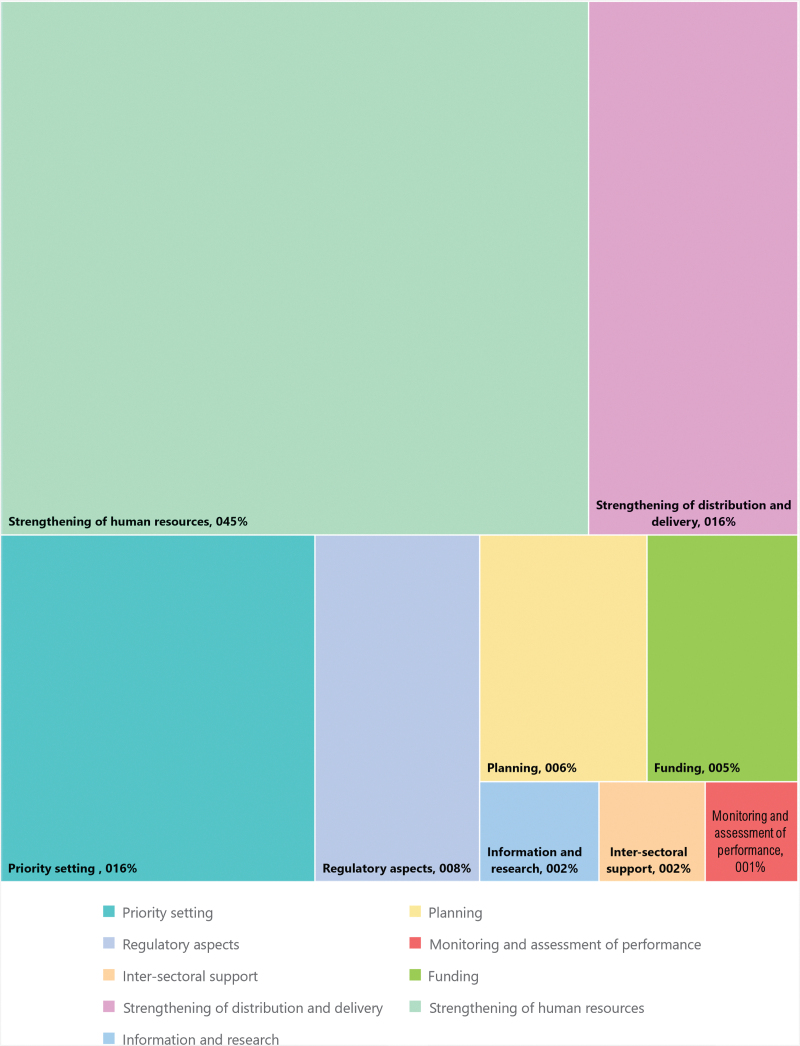
Different sets of barriers have been identified to explain the difficulties in the access and availability of opioid analgesics in palliative care, particularly in low- and middle-income countries, including Latin America. To validate a structured questionnaire for the access to opioid medicines and to investigate the perception of health professionals regarding access barriers to opioid analgesics in 17 countries of the Latin American Region. Survey to identify the domains and barriers of access to opioid medicines according to health professionals, including physicians, nurses, and pharmacists affiliated to institutions that provide palliative care in Latin America between August 2019 and October 2020. We analyzed responses from 426 health professionals. The median age was 44 years old (ranging from 23 to 73 years) with an average experience in palliative care of 10 years (range: 1-35), 71.8% were women, and 49.8% were affiliated to specialized health care facilities of urban areas (94.6%). The main barriers perceived to be extremely relevant by the respondents were "belief that patients can develop addiction" and "financial limitations of patients" for the patient's domain and the "appropriate education, instruction, and training of professionals" for health professional's domain. It is necessary to develop strategies to strengthen less-developed health systems of the region to review legal frameworks, ensure integrated palliative care systems, and deploy multidisciplinary strategies for sensitizing, training, and raising the awareness of patients, caregivers and, particularly, health professionals regarding appropriate prescription and rational use of opioid analgesics.
已经确定了不同的障碍因素来解释在姑息治疗中获得和提供阿片类镇痛药的困难,特别是在中低收入国家,包括拉丁美洲。为了验证一种用于评估阿片类药物获取的结构化问卷,并调查拉丁美洲 17 个国家的卫生专业人员对阿片类镇痛药获取障碍的看法。这项调查旨在根据卫生专业人员(包括医生、护士和药剂师)的意见,确定获取阿片类药物的障碍领域和障碍,这些卫生专业人员隶属于在拉丁美洲提供姑息治疗的机构。我们分析了来自 426 名卫生专业人员的回复。中位年龄为 44 岁(范围为 23 至 73 岁),平均姑息治疗经验为 10 年(范围:1 至 35 年),71.8%为女性,49.8%隶属于城市地区的专门医疗保健机构(94.6%)。受访者认为非常相关的主要障碍包括“认为患者可能成瘾”和“患者的经济限制”(针对患者),以及“专业人员的适当教育、指导和培训”(针对卫生专业人员)。有必要制定策略来加强该地区欠发达的卫生系统,审查法律框架,确保综合姑息治疗系统,并采取多学科策略,对患者、护理人员,特别是卫生专业人员进行敏感性、培训和提高认识,以确保合理处方和合理使用阿片类镇痛药。