FHI 360, Washington DC, USA.
FHI 360, Durham, NC, USA.
Glob Health Sci Pract. 2022 Aug 30;10(4). doi: 10.9745/GHSP-D-22-00063.
We conducted an assessment in Malawi, Nepal, Niger, and Uganda to document access-related reasons for not using contraceptive methods during the COVID-19 pandemic that led to unintended pregnancies, describe use of modern contraception among women in potential need of contraception compared to before the pandemic, examine method choice, and describe barriers to contraceptive access and use.
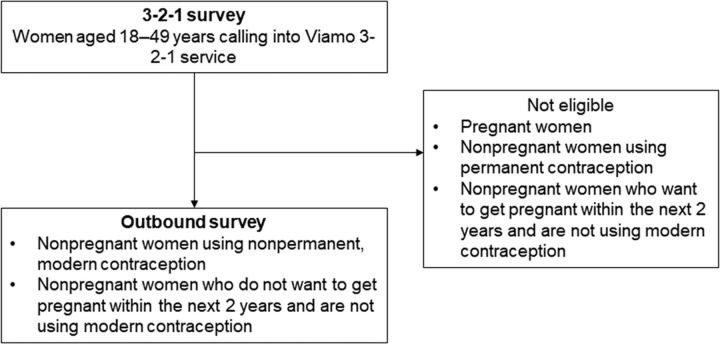
Between December 2020 and May 2021, we conducted an opt-in phone survey with 21,692 women, followed by an outbound survey with 5,124 women who used modern nonpermanent contraceptive methods or who did not want to get pregnant within 2 years but were not using a modern contraceptive method. The surveys examined current behaviors and documented behaviors before the pandemic retrospectively. We used multivariable logistic regression models to examine factors associated with contraceptive use dynamics during COVID-19.
Pregnant women surveyed reported that the pandemic had affected their ability to delay or avoid getting pregnant, ranging from 27% in Nepal to 44% in Uganda. The percentage of respondents to the outbound survey using modern contraception decreased during the pandemic in all countries except Niger. Fear of COVID-19 infection was associated with discontinuing modern contraception in Malawi and with not adopting a modern method among nonusers in Niger. Over 79% of surveyed users were using their preferred method. Among nonusers who tried obtaining a method, reasons for nonuse included unavailability of the preferred method or of providers and lack of money; nonusers who wanted a method but did not try to obtain one cited fear of COVID-19 infection.
We found evidence of surveyed women attributing unintended pregnancies to the pandemic and examples of constraints to contraceptive access and use on the supply and demand side. The effects of the pandemic must be interpreted within the local contraceptive, health system, and epidemiological context.
我们在马拉维、尼泊尔、尼日尔和乌干达进行了一项评估,记录了在 COVID-19 大流行期间因无法获得避孕方法而导致意外怀孕的与获取途径相关的原因,描述了与大流行前相比,有避孕需求的女性对现代避孕方法的使用情况,分析了方法选择,并描述了避孕获取和使用方面的障碍。
2020 年 12 月至 2021 年 5 月,我们通过电话对 21692 名妇女进行了自愿参与调查,随后对 5124 名使用现代非永久性避孕方法或在未来 2 年内不打算怀孕但未使用现代避孕方法的妇女进行了外展调查。调查研究了当前的行为,并回顾性地记录了大流行前的行为。我们使用多变量逻辑回归模型来研究与 COVID-19 期间避孕使用动态相关的因素。
接受调查的孕妇报告称,大流行影响了她们延迟或避免怀孕的能力,在尼泊尔为 27%,在乌干达为 44%。除尼日尔外,所有国家在外展调查中使用现代避孕方法的受访者比例在大流行期间均有所下降。对 COVID-19 感染的恐惧与马拉维停止使用现代避孕方法以及尼日尔非使用者未采用现代方法有关。超过 79%的被调查使用者正在使用他们首选的方法。在试图获取方法但未使用的非使用者中,不使用的原因包括无法获得首选方法或提供者以及缺乏资金;那些想要方法但未尝试获取方法的人则提到了对 COVID-19 感染的恐惧。
我们发现有证据表明,接受调查的妇女将意外怀孕归因于大流行,并举例说明了避孕获取和使用方面在供应和需求方面的限制。必须根据当地的避孕、卫生系统和流行病学背景来解释大流行的影响。