Centre for Research on Brain, Language and Music, Montreal, Canada.
Department of Psychology, New York University, New York City, NY, USA.
Sci Rep. 2022 Aug 30;12(1):14759. doi: 10.1038/s41598-022-18162-3.
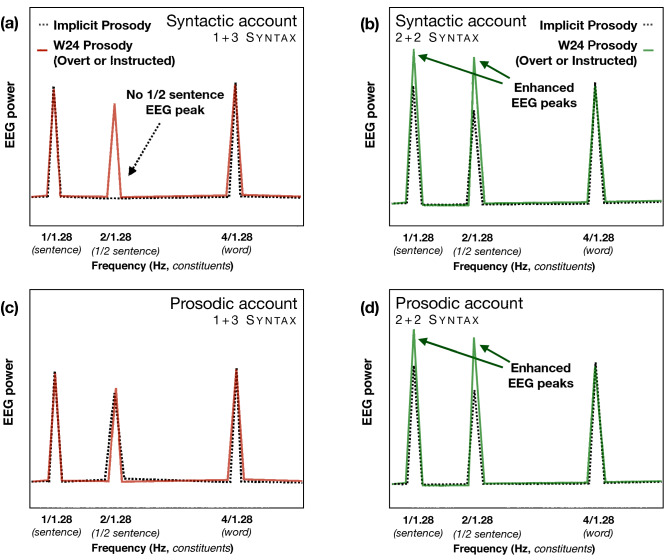
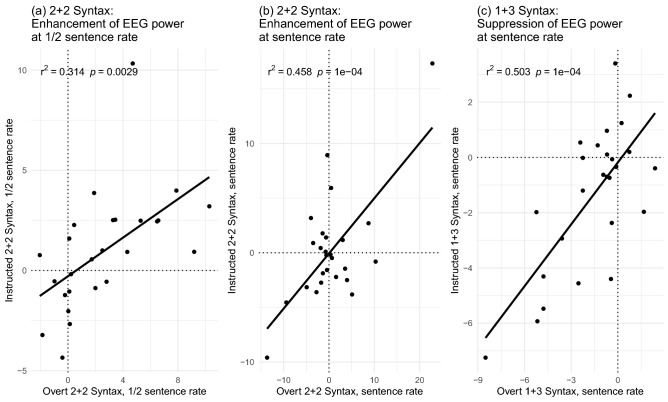
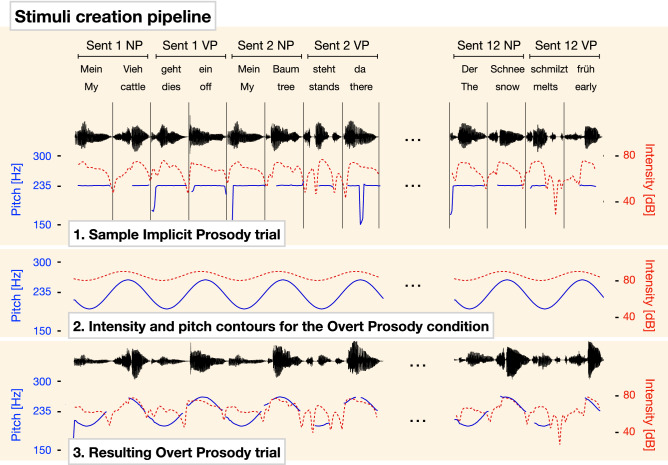
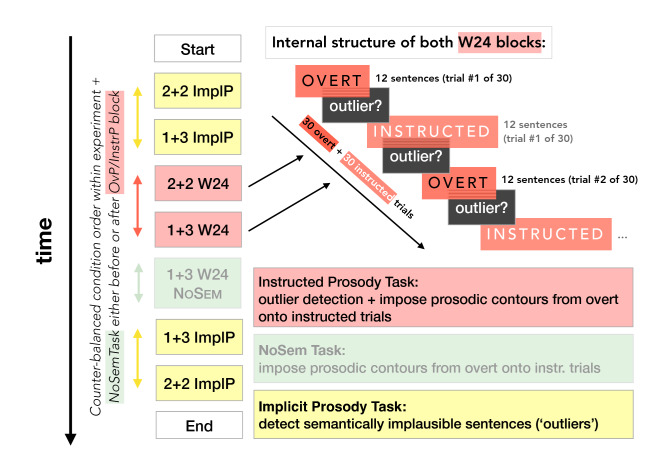
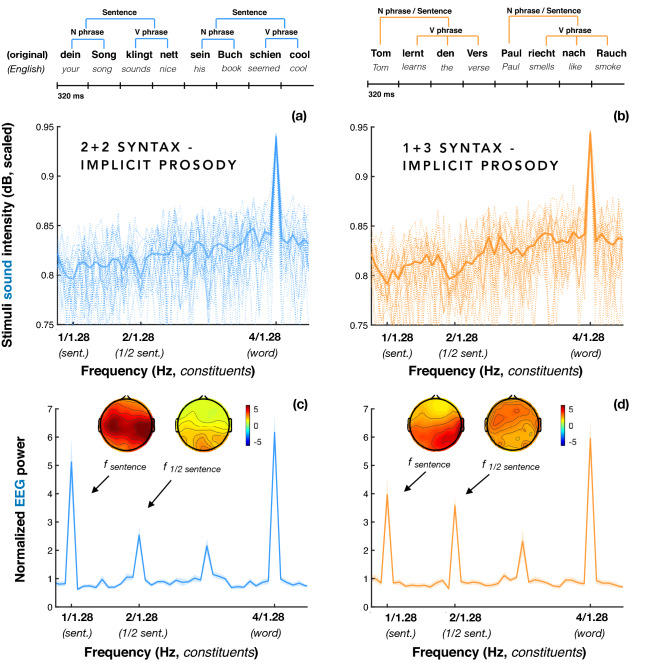
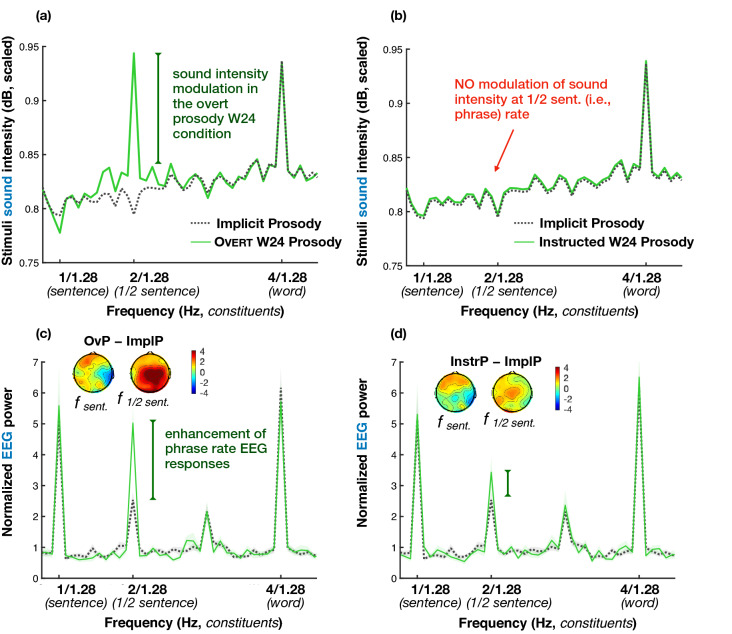
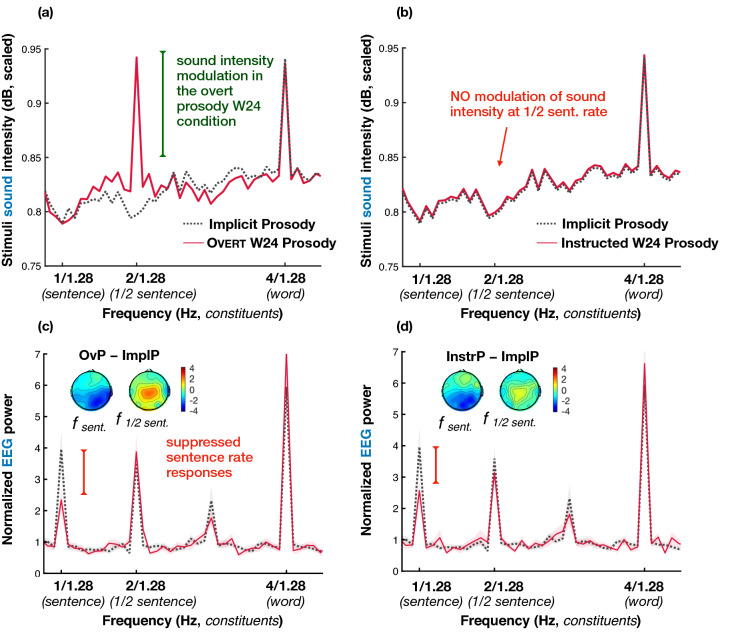
Recent neurophysiological research suggests that slow cortical activity tracks hierarchical syntactic structure during online sentence processing. Here we tested an alternative hypothesis: electrophysiological activity peaks at constituent phrase as well as sentence frequencies reflect cortical tracking of overt or covert (implicit) prosodic grouping. Participants listened to series of sentences presented in three conditions while electroencephalography (EEG) was recorded. First, prosodic cues in the sentence materials were neutralized. We found an EEG spectral power peak elicited at a frequency that only 'tagged' covert, implicit prosodic change, but not any major syntactic constituents. In the second condition, participants listened to a series of sentences with overt prosodic grouping cues that either aligned or misaligned with the syntactic phrasing in the sentences (initial overt prosody trials). Following each overt prosody trial, participants were presented with a second series of sentences lacking overt prosodic cues (instructed prosody trial) and were instructed to imagine the prosodic contour present in the previous, overt prosody trial. The EEG responses reflected an interactive relationship between syntactic processing and prosodic tracking at the frequencies of syntactic constituents (sentences and phrases): alignment of syntax and prosody boosted EEG responses, whereas their misalignment had an opposite effect. This was true for both overt and imagined prosody conditions. We conclude that processing of both overt and covert prosody is reflected in the frequency-tagged neural responses at sentence constituent frequencies. These findings need to be incorporated in any account that aims to identify neural markers reflecting syntactic processing.
最近的神经生理学研究表明,在在线句子处理过程中,缓慢的皮质活动跟踪层次句法结构。在这里,我们测试了另一个假设:电生理活动在成分短语和句子频率处的峰值反映了皮质对显性或隐性(内隐)韵律分组的跟踪。参与者在三种条件下听一系列句子,并记录脑电图(EEG)。首先,句子材料中的韵律提示被中和。我们发现,在一个频率处诱发了 EEG 光谱功率峰值,该频率仅“标记”隐性、内隐韵律变化,而不标记任何主要句法成分。在第二种情况下,参与者听一系列具有显性韵律分组提示的句子,这些提示要么与句子中的句法短语对齐,要么不对齐(初始显性韵律试验)。在每个显性韵律试验之后,参与者会收到第二个没有显性韵律提示的句子系列(指令性韵律试验),并被要求想象前一个显性韵律试验中的韵律轮廓。脑电图反应反映了句法处理和韵律跟踪之间在句法成分(句子和短语)频率处的互动关系:句法和韵律的对齐会增强脑电图反应,而它们的不对齐则会产生相反的效果。这对于显性和想象的韵律条件都是如此。我们得出结论,显性和隐性韵律的处理都反映在句子成分频率处的频率标记神经反应中。在试图确定反映句法处理的神经标记时,这些发现需要被纳入考虑。