Health Human Resources Research Center, School of Management and Information Sciences, Shiraz University of Medical Sciences, Shiraz, Iran.
Health Human Resources Research Center, School of Health Management and Information Sciences, Shiraz University of Medical Sciences, Shiraz, Iran.
Int J Equity Health. 2022 Aug 30;21(1):122. doi: 10.1186/s12939-022-01729-x.
The equality in the distribution of vaccines between and within countries along with follow sanitation tips and observe social distance, are effective strategies to rid the world of COVID-19 pandemic. Inequality in the distribution of COVID-19 vaccine, in addition to causing inequity to the population health, has a significant impact on the process of economic recovery.
All published original papers on the inequality of Covid-19 vaccine distribution and the factors affecting it were searched in PubMed, Web of Science, Scopus and ProQuest databases between December 2020 to 30 May 2022. Selection of articles, extraction of their data and qualitative assessment (by STROBE) were performed by two researchers separately. Data graphing form was used to extract detailed data from each study and then, the collected data were classified.
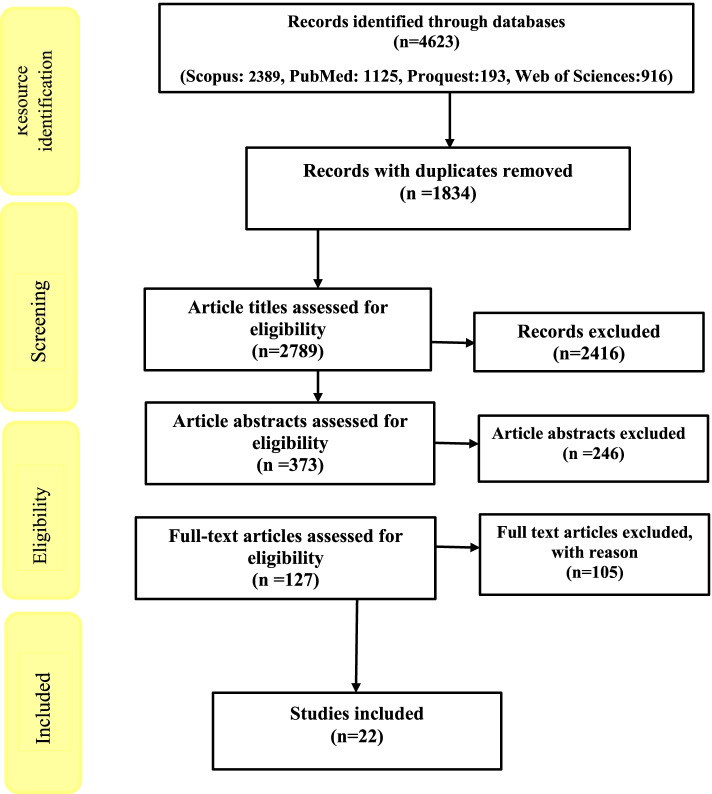
A total of 4623 articles were evaluated. After removing duplicates and screening the title, abstract and full text of articles, 22 articles were selected and entered into the study. Fifteen (68.17%) studies were conducted in the United States, three (13.64%) in Europe, three (13.64%) in Asia and one (6.66%) in Oceania. Factors affecting the inequality in the distribution of COVID-19 vaccine were classified into macro and micro levels determinants.
Macro determinants of inequality in the Covid-19 vaccine distribution were consisted of economic (stability and country's economic status, Gross Domestic Product (GDP) per capita, financial support and human development index), infrastructure and health system (appropriate information system, functional cold chains in vaccine transport, transport infrastructure, medical and non-medical facilities per capita, healthcare access and quality), legal and politics (vaccination allocation rules, health policies, political ideology and racial bias), and epidemiologic and demographic factors (Covid-19 incidence and deaths rate, life expectancy, vulnerability to Covid-19, working in medical setting, comorbidities, social vulnerability, incarceration and education index). Moreover, micro/ individual level factors were included in economic (household's income, home ownership, employment, poverty, access to healthy food and residency in the deprived areas) and demographic and social characteristics (sex, age, race, ethnic, religion, disability, location (urban/rural) and insurance coverage).
国家间和国家内疫苗分配的平等,以及遵循卫生提示和遵守社会距离,是消除 COVID-19 大流行的有效策略。COVID-19 疫苗分配不平等除了对人口健康造成不公平外,还对经济复苏进程产生重大影响。
在 2020 年 12 月至 2022 年 5 月 30 日期间,我们在 PubMed、Web of Science、Scopus 和 ProQuest 数据库中搜索了所有关于 COVID-19 疫苗分配不平等及其影响因素的已发表原始论文。两名研究人员分别进行了文章选择、数据提取和定性评估(STROBE)。我们使用数据图表形式从每项研究中提取详细数据,然后对收集的数据进行分类。
共评估了 4623 篇文章。在去除重复项并筛选文章的标题、摘要和全文后,选择了 22 篇文章并纳入研究。其中 15 项(68.17%)研究在美国进行,3 项(13.64%)在欧洲进行,3 项(13.64%)在亚洲进行,1 项(6.66%)在大洋洲进行。影响 COVID-19 疫苗分配不平等的因素分为宏观和微观层面的决定因素。
COVID-19 疫苗分配不平等的宏观决定因素包括经济(稳定性和国家经济状况、人均国内生产总值、财政支持和人类发展指数)、基础设施和卫生系统(适当的信息系统、疫苗运输中的功能冷链、运输基础设施、人均医疗和非医疗设施、医疗保健获取和质量)、法律和政治(疫苗分配规则、卫生政策、政治意识形态和种族偏见)以及流行病学和人口统计学因素(COVID-19 发病率和死亡率、预期寿命、对 COVID-19 的易感性、在医疗环境中工作、合并症、社会脆弱性、监禁和教育指数)。此外,微观/个体层面的因素包括经济(家庭收入、住房所有权、就业、贫困、获得健康食品和居住在贫困地区)和人口统计学和社会特征(性别、年龄、种族、民族、宗教、残疾、地点(城市/农村)和保险覆盖范围)。