Kazemi Mehrdad, Bragazzi Nicola Luigi, Kong Jude Dzevela
Africa-Canada Artificial Intelligence and Data Innovation Consortium (ACADIC), Department of Mathematics and Statistics, Faculty of Science, York University, Toronto, ON M3J 1P3, Canada.
Vaccines (Basel). 2022 Jan 26;10(2):194. doi: 10.3390/vaccines10020194.
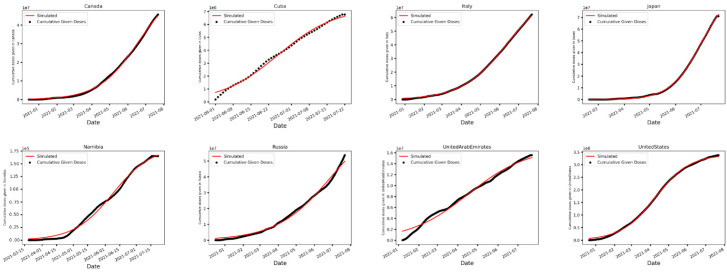
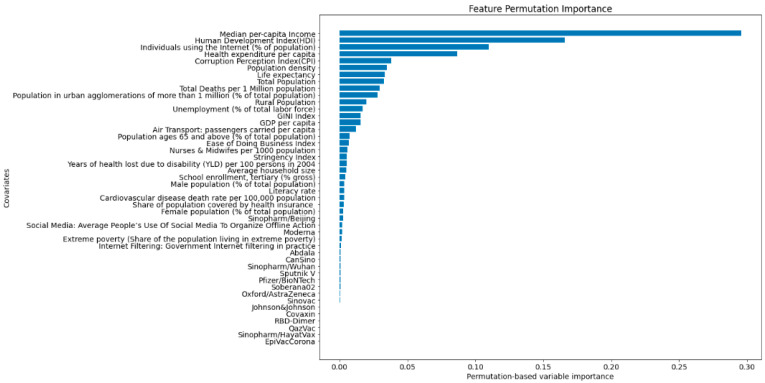
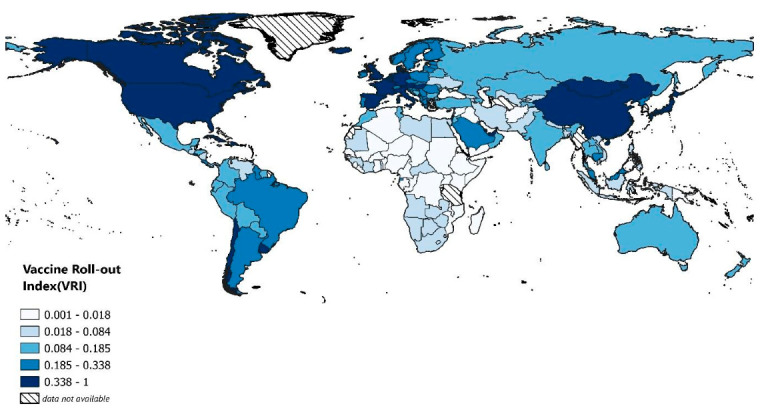
After the start of the COVID-19 pandemic and its spread across the world, countries have adopted containment measures to stop its transmission, limit fatalities, and relieve hospitals from straining and overwhelming conditions imposed by the virus. Many countries implemented social distancing and lockdown strategies that negatively impacted their economies and the psychological wellbeing of their citizens, even though they contributed to saving lives. Recently approved and available, COVID-19 vaccines can provide a really viable and sustainable option for controlling the pandemic. However, their uptake represents a global challenge due to vaccine hesitancy and logistic-organizational hurdles that have made its distribution stagnant in several developed countries despite several appeals by the media, policy- and decision-makers, and community leaders. Vaccine distribution is also a concern in developing countries, where there is a scarcity of doses. The objective of the present study was to set up a metric to assess vaccination uptake and identify national socio-economic factors influencing this indicator. We conducted a cross-country study. We first estimated the vaccination uptake rate across countries by fitting a logistic model to reported daily case numbers. Using the uptake rate, we estimated the vaccine roll-out index. Next, we used Random Forest, an "off-the-shelf" machine learning algorithm, to study the association between vaccination uptake rate and socio-economic factors. We found that the mean vaccine roll-out index is 0.016 (standard deviation 0.016), with a range between 0.0001 (Haiti) and 0.0829 (Mongolia). The top four factors associated with the vaccine roll-out index are the median per capita income, human development index, percentage of individuals who have used the internet in the last three months, and health expenditure per capita. The still-ongoing COVID-19 pandemic has shed light on the disparity in vaccine adoption across low- and high-income countries, which represents a global public health challenge. We must pave the way for universal access to vaccines and other approved treatments, regardless of demographic structures and underlying health conditions. Income disparity remains, instead, an important cause of vaccine inequity, which restricts the functioning of the global vaccine allocation framework and, thus, the ending of the pandemic. Stronger mechanisms are needed to foster countries' political willingness to promote vaccine and drug access equity in a globalized society where future pandemics and other global health crises can be anticipated.
在新冠疫情爆发并蔓延至全球后,各国纷纷采取防控措施以阻止病毒传播、减少死亡人数,并缓解医院因病毒造成的紧张和不堪重负的状况。许多国家实施了社交距离和封锁策略,这些措施对其经济和公民的心理健康产生了负面影响,尽管它们有助于拯救生命。最近获批并可供使用的新冠疫苗为控制疫情提供了一个切实可行且可持续的选择。然而,由于疫苗犹豫以及后勤组织方面的障碍,疫苗接种成为一项全球挑战,尽管媒体、政策制定者、决策者和社区领袖多次呼吁,但在一些发达国家,疫苗分发仍陷入停滞。疫苗分发在发展中国家也是一个问题,那里疫苗剂量短缺。本研究的目的是建立一个指标来评估疫苗接种情况,并确定影响该指标的国家社会经济因素。我们进行了一项跨国研究。我们首先通过对报告的每日病例数拟合逻辑模型来估计各国的疫苗接种率。利用接种率,我们估计了疫苗推广指数。接下来,我们使用随机森林这一“现成的”机器学习算法来研究疫苗接种率与社会经济因素之间的关联。我们发现,疫苗推广指数的平均值为0.016(标准差为0.016),范围在0.0001(海地)至0.0829(蒙古)之间。与疫苗推广指数相关的前四大因素是人均收入中位数、人类发展指数、过去三个月使用过互联网的个人百分比以及人均卫生支出。仍在持续的新冠疫情揭示了低收入和高收入国家在疫苗接种方面的差距,这是一项全球公共卫生挑战。我们必须为普遍获得疫苗和其他获批治疗方法铺平道路,无论人口结构和潜在健康状况如何。相反,收入差距仍然是疫苗不公平的一个重要原因,它限制了全球疫苗分配框架的运作,从而也限制了疫情的结束。需要更有力的机制来促使各国在一个可以预见未来会有大流行和其他全球健康危机的全球化社会中,产生促进疫苗和药物获取公平的政治意愿。