Adibfar Alireza, Gulhare Siddhartha, Srinivasan Siva, Costin Aaron
Department of Civil and Coastal Engineering, University of Florida, United States.
M.E. Rinker Sr, School of Construction Management, University of Florida, United States.
Transp Policy (Oxf). 2022 Sep;126:162-176. doi: 10.1016/j.tranpol.2022.07.003. Epub 2022 Jul 18.
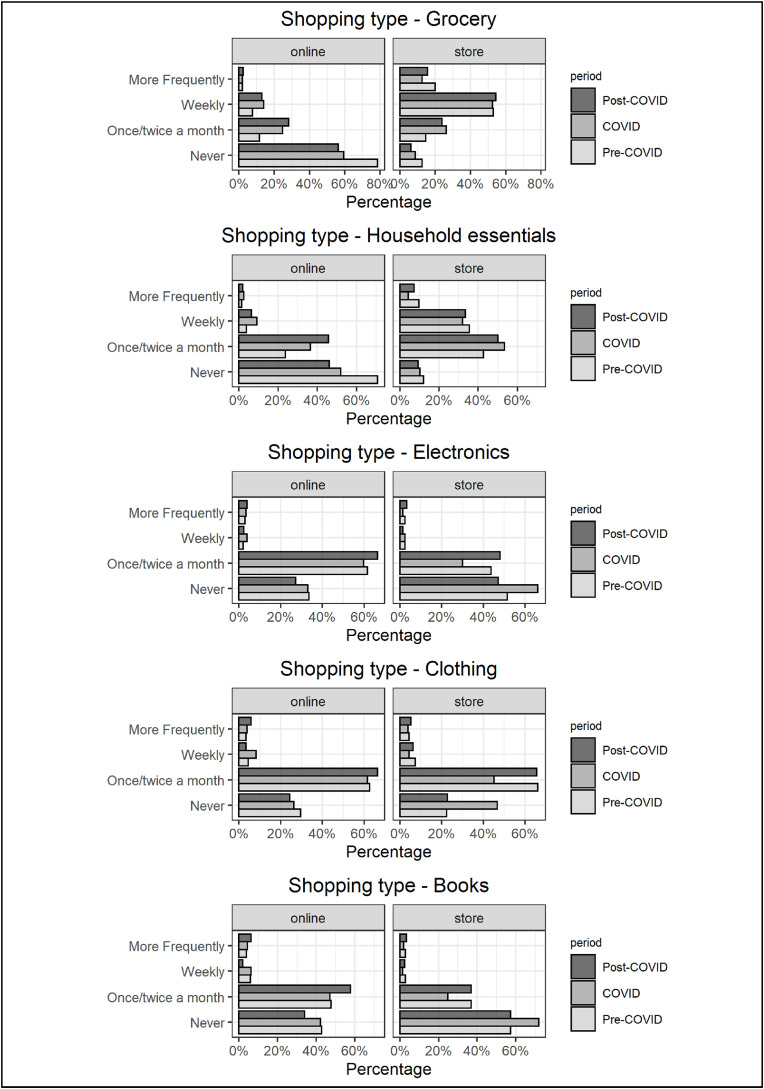
The emergence of eCommerce and online shopping commenced a new episode in human life and changed trading patterns. Online shopping provided access to a broader range of products and facilitated their delivery, which increased demand. To respond to the increased demand, more heavy commercial vehicles need to be on the roads to deliver orders. This is while the road infrastructure is not ready for such a swift shift, and most roads and bridges were planned and constructed during the 19s when online shopping was not coined yet. The continued increase of heavy vehicles on roads can intensify the deterioration of roads and structures such as bridges. Therefore, there is a significant need for an update on new shopping trends, especially changes in people's behavior due to the ongoing Covid-19 pandemic, and to assess if the pandemic permanently changed the trends of in-store and online shopping. This study first examines the NHTS 2017 data to find the attributes that are significant to online shoppers' behavior. Then a survey is developed to scrutinize Covid-19 effects on the online shopping behavior of users before, during, and after the Covid-19 pandemic. 206 records of data are interpreted through descriptive analysis and discrete choice modeling of users' responses to find the most significant attributes affecting their online shopping behavior. The findings of discrete choice modeling and descriptive analysis support that people tend to go back to stores after the pandemic. The findings of this study show that online and in-store shopping would be balanced after the pandemic and would pursue their normal trends as they were before the pandemic. Based on the findings of this study, it is hard to state that online shopping can vanish in-store shopping due to Covid-19. People still need to go to stores to fulfill their needs for the joy of shopping, interactions with other people, and touching the products they would like to buy. Therefore, transportation stakeholders need to pay special attention to both in-store and online shopping for their planning and operation management of ground transportation infrastructure.
电子商务和网上购物的出现开启了人类生活的新篇章,改变了交易模式。网上购物提供了更广泛的产品选择,并便利了商品配送,从而增加了需求。为了应对增长的需求,需要更多重型商用车上路送货。然而,道路基础设施尚未准备好应对如此迅速的转变,大多数道路和桥梁都是在20世纪规划和建造的,那时网上购物的概念尚未出现。道路上重型车辆的持续增加会加剧道路和桥梁等结构的恶化。因此,迫切需要了解新的购物趋势,尤其是新冠疫情导致的人们行为变化,并评估疫情是否永久性地改变了实体店和网上购物的趋势。本研究首先分析2017年美国国家个人交通调查(NHTS)数据,以找出对网上购物者行为有重要影响的因素。然后开展一项调查,以审视新冠疫情对用户在疫情前、疫情期间和疫情后的网上购物行为的影响。通过对206条数据记录进行描述性分析和用户回答的离散选择建模,找出影响其网上购物行为的最重要因素。离散选择建模和描述性分析的结果表明,疫情过后人们倾向于回归实体店购物。本研究结果表明,疫情过后网上购物和实体店购物将趋于平衡,并将恢复到疫情前的正常趋势。基于本研究结果,很难说新冠疫情会使网上购物取代实体店购物。人们仍然需要前往实体店,以满足他们对购物乐趣、与他人互动以及触摸心仪商品的需求。因此,交通领域的相关利益者在规划和运营地面交通基础设施时,需要特别关注实体店购物和网上购物这两种模式。