Department of Neurology, The First Affiliated Hospital of Zhengzhou University, Zhengzhou, 450052, Henan, China.
Department of Urinary Surgery, The First Affiliated Hospital of Zhengzhou University, Zhengzhou, 450052, Henan, China.
J Nanobiotechnology. 2022 Aug 31;20(1):397. doi: 10.1186/s12951-022-01602-7.
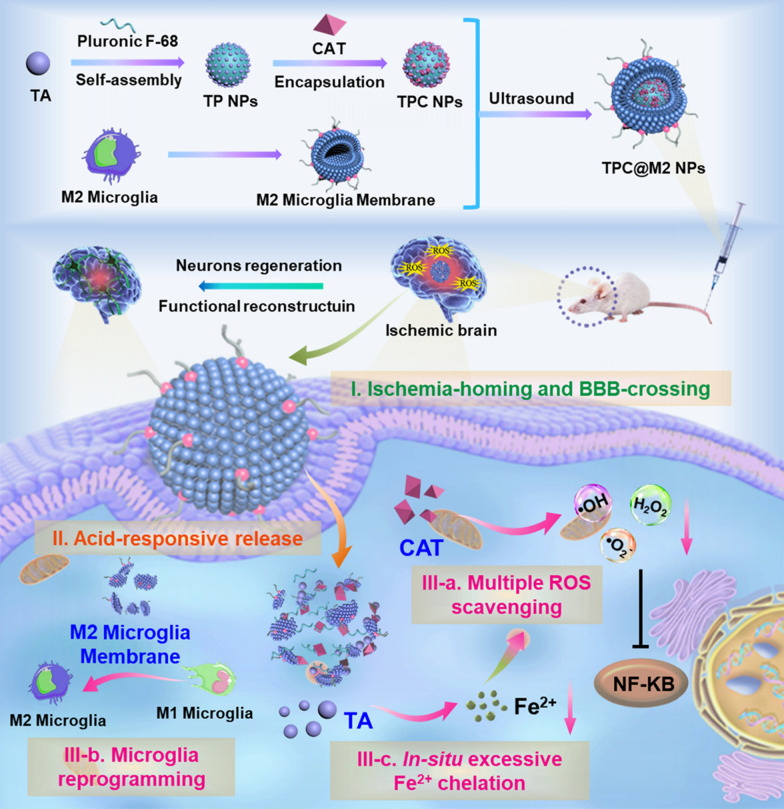
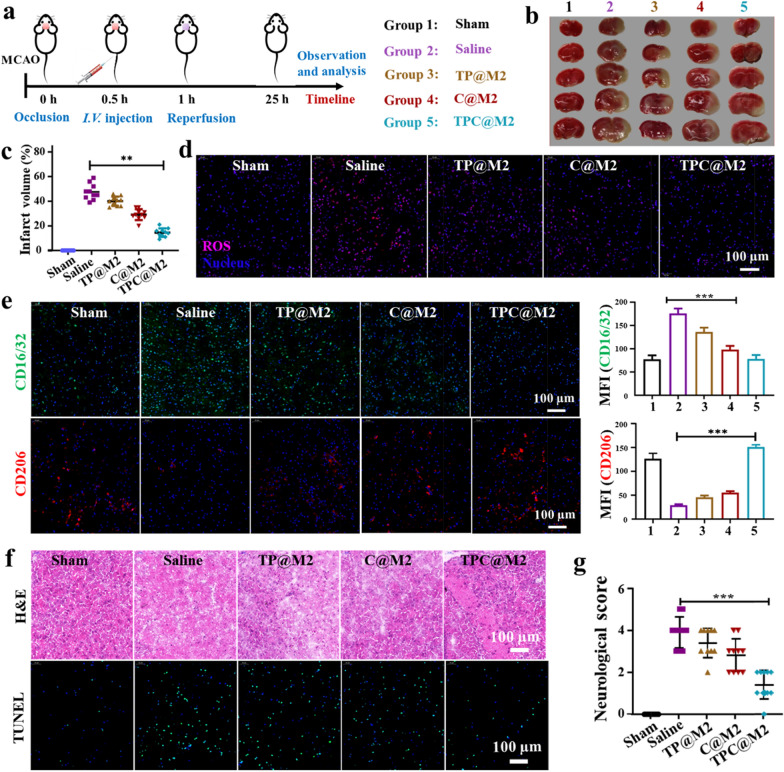
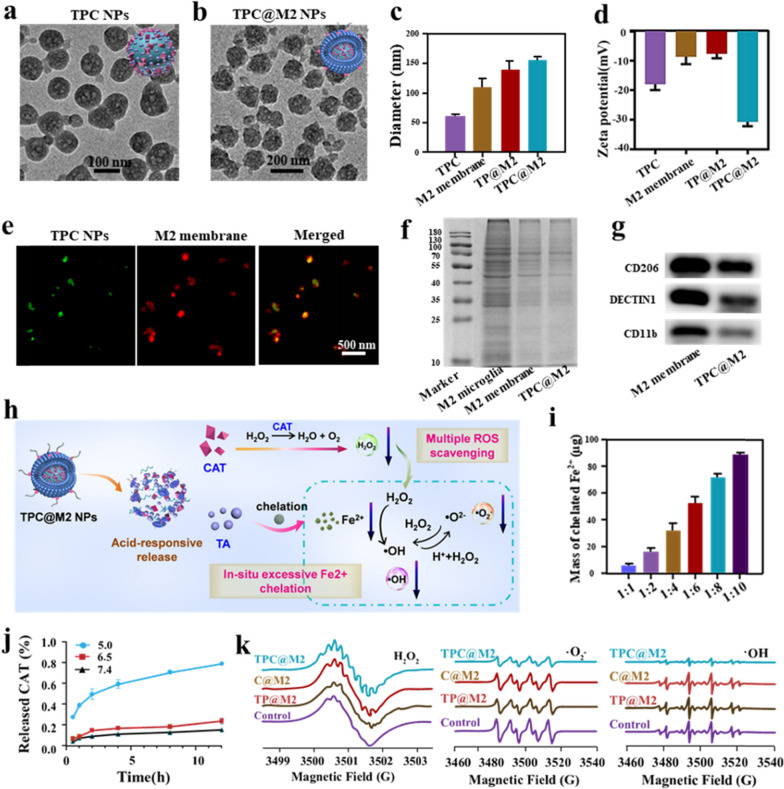
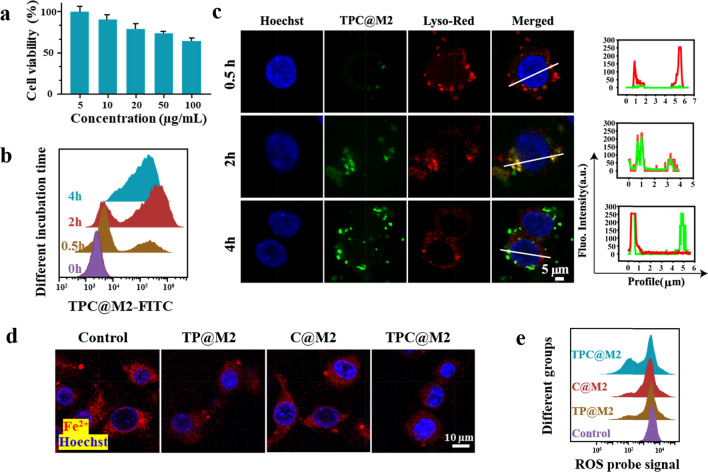
Ischemic stroke is one of the most serious global public health problems. However, the performance of current therapeutic regimens is limited due to their poor target specificity, narrow therapeutic time window, and compromised therapeutic effect. To overcome these barriers, we designed an ischemia-homing bioengineered nano-scavenger by camouflaging a catalase (CAT)-loaded self-assembled tannic acid (TA) nanoparticle with a M2-type microglia membrane (TPC@M2 NPs) for ischemic stroke treatment.
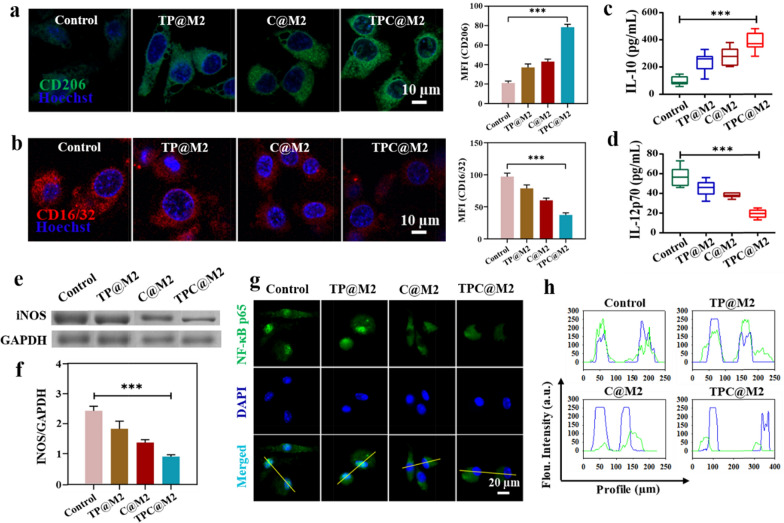
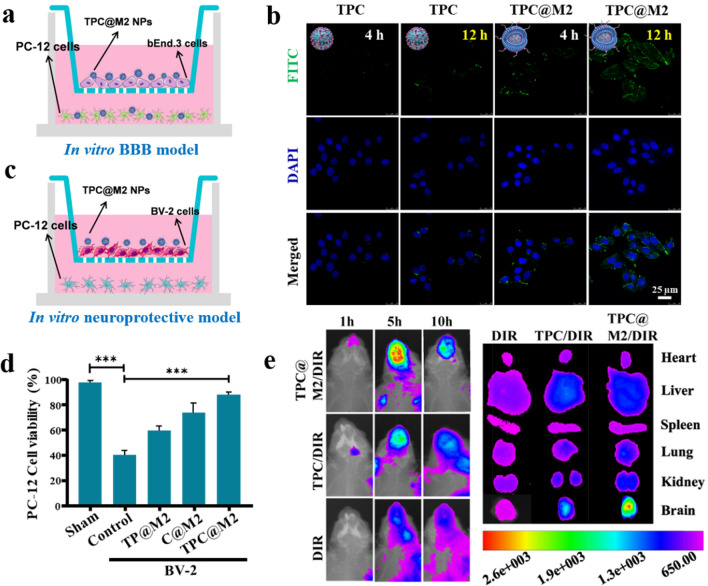
The TPC@M2 NPs can on-demand release TA molecules to chelate excessive Fe, while acid-responsively liberating CAT to synergistically scavenge multiple ROS (·OH, ·O, and HO). Besides, the M2 microglia membrane not only can be served as bioinspired therapeutic agents to repolarize M1 microglia into M2 phenotype but also endows the nano-scavenger with ischemia-homing and BBB-crossing capabilities.
The nano-scavenger for specific clearance of multiple pathogenic elements to alleviate inflammation and protect neurons holds great promise for combating ischemic stroke and other inflammation-related diseases.
缺血性脑卒中是全球最严重的公共卫生问题之一。然而,由于目前治疗方案的靶向特异性差、治疗时间窗窄、治疗效果受损,其疗效有限。为了克服这些障碍,我们设计了一种缺血归巢生物工程纳米清除剂,方法是用 M2 型小胶质细胞膜伪装载有过氧化氢酶(CAT)的自组装鞣酸(TA)纳米颗粒(TPC@M2 NPs),用于治疗缺血性脑卒中。
TPC@M2 NPs 可以按需释放 TA 分子来螯合过多的 Fe,同时酸响应性地释放 CAT 以协同清除多种 ROS(·OH、·O 和 HO)。此外,M2 小胶质细胞膜不仅可以作为仿生治疗剂将 M1 小胶质细胞重极化为 M2 表型,还赋予纳米清除剂缺血归巢和 BBB 穿透能力。
这种用于特异性清除多种致病因子以减轻炎症和保护神经元的纳米清除剂有望用于治疗缺血性脑卒中及其他炎症相关疾病。