Department of Pharmacy, Institute of Metabolic Diseases and Pharmacotherapy, West China Hospital, Sichuan University, Chengdu, China.
Front Immunol. 2022 Aug 15;13:958790. doi: 10.3389/fimmu.2022.958790. eCollection 2022.
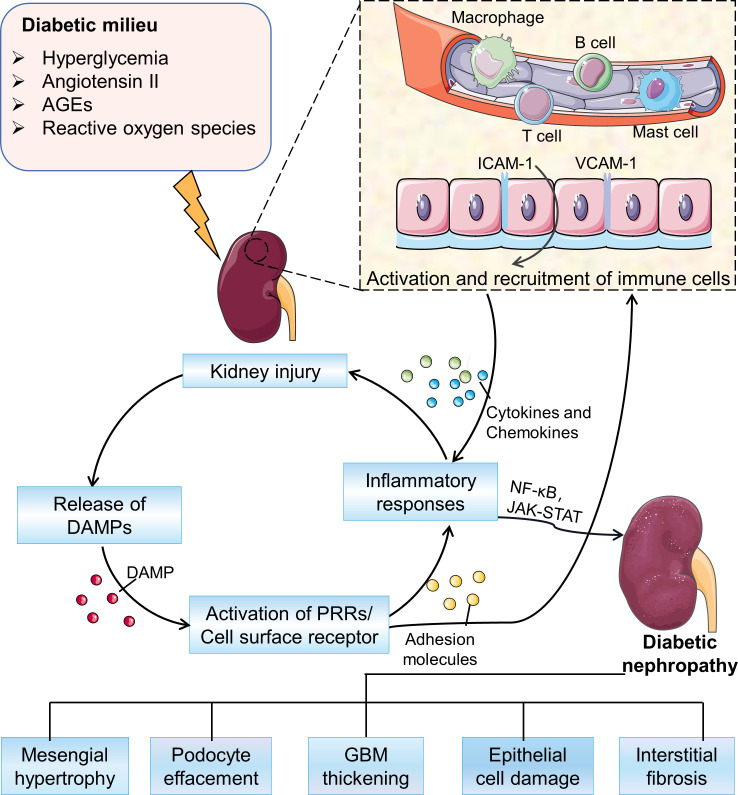
Diabetic nephropathy (DN) is a chronic, inflammatory disease affecting millions of diabetic patients worldwide. DN is associated with proteinuria and progressive slowing of glomerular filtration, which often leads to end-stage kidney diseases. Due to the complexity of this metabolic disorder and lack of clarity about its pathogenesis, it is often more difficult to diagnose and treat than other kidney diseases. Recent studies have highlighted that the immune system can inadvertently contribute to DN pathogenesis. Cells involved in innate and adaptive immune responses can target the kidney due to increased expression of immune-related localization factors. Immune cells then activate a pro-inflammatory response involving the release of autocrine and paracrine factors, which further amplify inflammation and damage the kidney. Consequently, strategies to treat DN by targeting the immune responses are currently under study. In light of the steady rise in DN incidence, this timely review summarizes the latest findings about the role of the immune system in the pathogenesis of DN and discusses promising preclinical and clinical therapies.
糖尿病肾病(DN)是一种影响全球数百万糖尿病患者的慢性炎症性疾病。DN 与蛋白尿和肾小球滤过率逐渐降低有关,这通常会导致终末期肾病。由于这种代谢紊乱的复杂性以及对其发病机制的认识不清,它通常比其他肾脏疾病更难诊断和治疗。最近的研究强调,免疫系统可能会无意中导致 DN 的发病机制。由于免疫相关定位因子的表达增加,参与固有和适应性免疫反应的细胞可以靶向肾脏。免疫细胞随后激活涉及自分泌和旁分泌因子释放的促炎反应,这进一步放大炎症并损害肾脏。因此,目前正在研究通过靶向免疫反应来治疗 DN 的策略。鉴于 DN 的发病率稳步上升,本及时综述总结了免疫系统在 DN 发病机制中的作用的最新发现,并讨论了有前途的临床前和临床治疗方法。