Aghaways Ismaeel, Ibrahim Rebaz, Bapir Rawa, Salih Rawezh Q, Salih Karzan M, Abdulla Berwn A
Department of Surgery, College of Medicine, University of Sulaymaniyah, Sulaymaniyah, Iraq.
Department of Urology, Sulaymaniyah Surgical Teaching Hospital, Sulaymaniyah, Iraq.
Ann Med Surg (Lond). 2022 Jul 16;80:104198. doi: 10.1016/j.amsu.2022.104198. eCollection 2022 Aug.
Ureteral stone is a worldwide disease and accounts for 20% of all urolithiasis. There is a widespread discussion on the preferred initial treatment method, whether medical or surgical, and each has its pros and cons. In this study, we aimed to assess the role of both ureteral wall thickness around the stone and inflammatory markers in guiding the decision-making process.
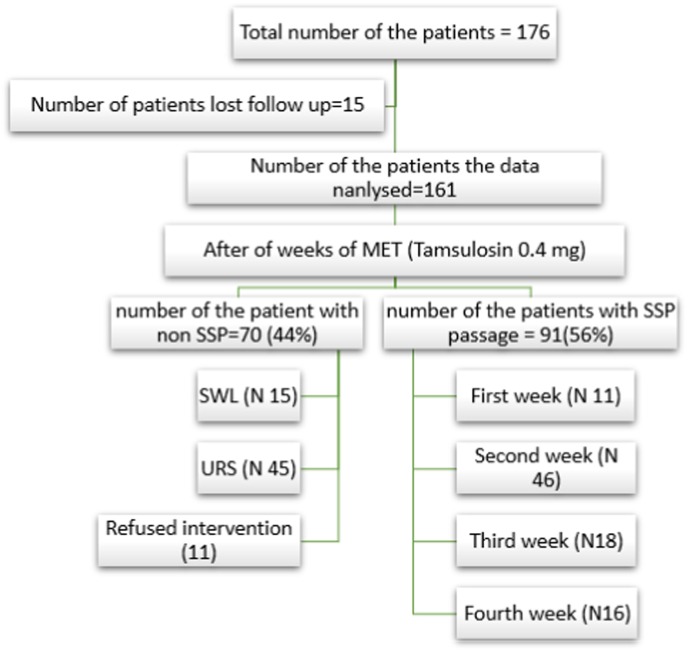
In this prospective study, 161 patients who presented with ureteric colic and were diagnosed with ureteral stone with NCCT were included. UWT around the stone was measured, and the NLR and PLR were calculated. The patients were given a single daily dose of tamsulosin 0.4 mg for 4 weeks with weekly follow-up to determine SSP or failure.
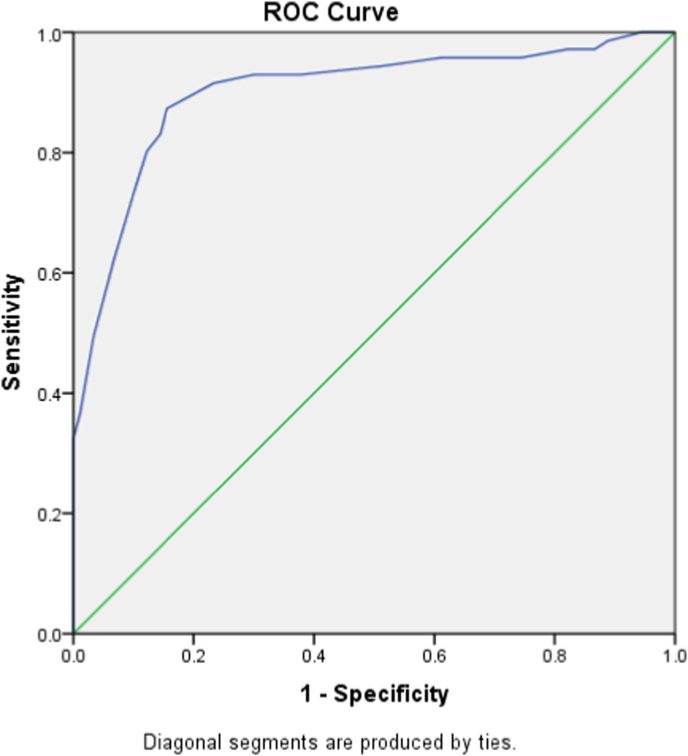
Of the 161 patients with a mean age 40.12 ± 12.36 SD, 55.9% had a spontaneous stone passage. Receiver operating characteristics showed a cut off value of 2.45 mm UWT of non SSP patients with an 83% sensitivity and 86% specificity. Moreover, there was a significant correlation between higher NLR, PLR and increased UWT (Pearson correlation of 0.314 and 0.426 respectively). The combined higher NLR, PLR and increased UWT were associated with failure of SSP (p-value <0.001).
Many factors play a role in decision making for management of ureteral stones. Our study concludes that patients with high NLR, PLR, and UWT around the stone have lesser chance of SSP using MET. Their rise can be used as predictors to decide early intervention.
输尿管结石是一种全球性疾病,占所有尿路结石的20%。关于首选的初始治疗方法是内科治疗还是外科治疗,存在广泛的讨论,且每种方法都有其优缺点。在本研究中,我们旨在评估结石周围输尿管壁厚度和炎症标志物在指导决策过程中的作用。
在这项前瞻性研究中,纳入了161例因输尿管绞痛就诊并经非增强CT诊断为输尿管结石的患者。测量结石周围的输尿管壁厚度(UWT),并计算中性粒细胞与淋巴细胞比值(NLR)和血小板与淋巴细胞比值(PLR)。患者每天服用一次0.4mg坦索罗辛,持续4周,并每周进行随访以确定结石自行排出(SSP)或失败情况。
161例患者的平均年龄为40.12±12.36标准差,其中55.9%的患者结石自行排出。受试者工作特征曲线显示,非结石自行排出患者的输尿管壁厚度截断值为2.45mm,敏感性为83%,特异性为86%。此外,较高的NLR、PLR与输尿管壁厚度增加之间存在显著相关性(Pearson相关性分别为0.314和0.426)。较高的NLR、PLR和输尿管壁厚度增加共同与结石自行排出失败相关(p值<0.001)。
许多因素在输尿管结石治疗的决策中起作用。我们的研究得出结论,结石周围NLR、PLR和输尿管壁厚度较高的患者采用药物排石治疗结石自行排出的机会较小。它们的升高可作为决定早期干预的预测指标。