Department of Orthopedics, Ningbo Medical Center Lihuili Hospital, Ningbo 315040, Zhejiang, China.
J Healthc Eng. 2022 Aug 22;2022:8431946. doi: 10.1155/2022/8431946. eCollection 2022.
The aim of this study is to design a weighted co-expression network and build gene expression signature-based nomogram (GESBN) models for predicting the likelihood of bone metastasis in breast cancer (BC) patients.
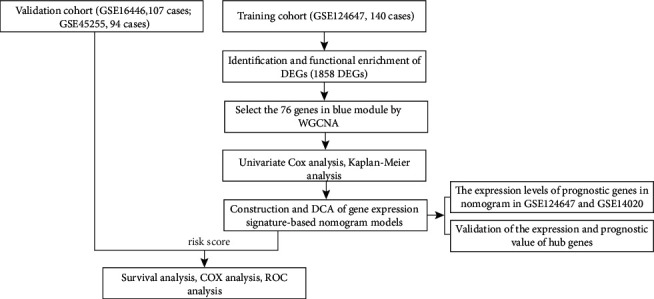
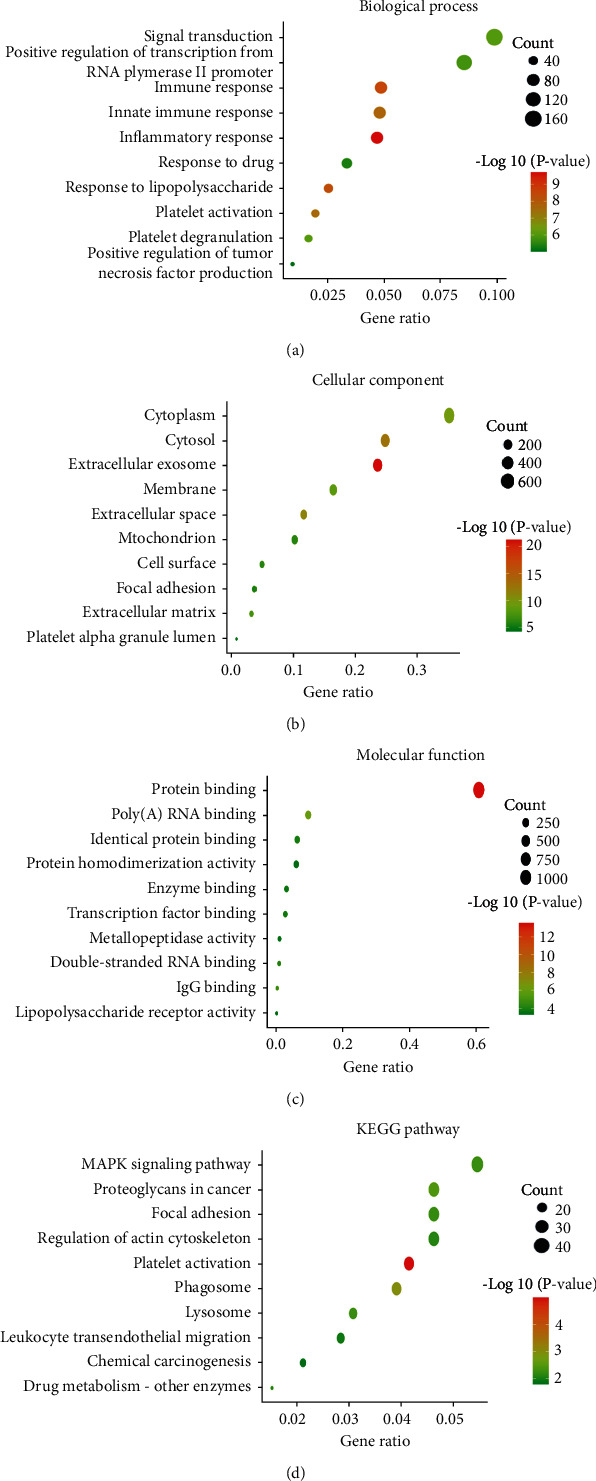
Dataset GSE124647 was used as a training set, while GSE16446, GSE45255, and GSE14020 were taken as validation sets. In the training cohort, the limma package in was adopted to obtain differentially expressed genes (DEGs) between BC nonbone metastasis and bone metastasis patients, which were used for functional enrichment analysis. After weighted co-expression network analysis (WGCNA), univariate Cox regression and Kaplan-Meier plotter analyses were performed to screen potential prognosis-related genes. Then, GESBN models were constructed and evaluated. The prognostic value of the GESBN models was investigated in the GSE124647 dataset, which was validated in GSE16446 and GSE45255 datasets. Further, the expression levels of genes in the models were explored in the training set, which was validated in GSE14020. Finally, the expression and prognostic value of hub genes in BC were explored.
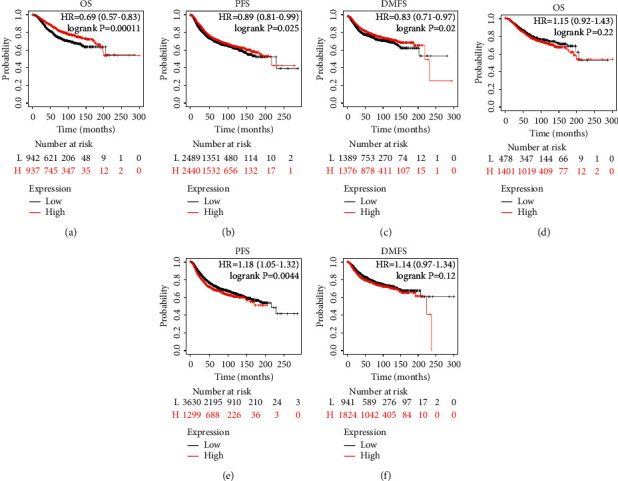
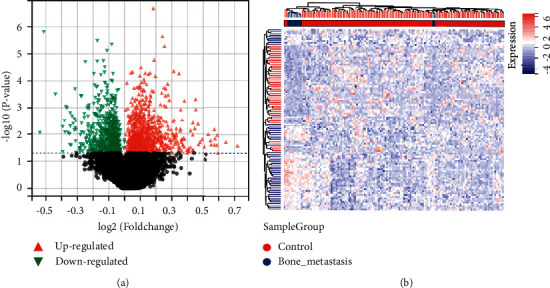
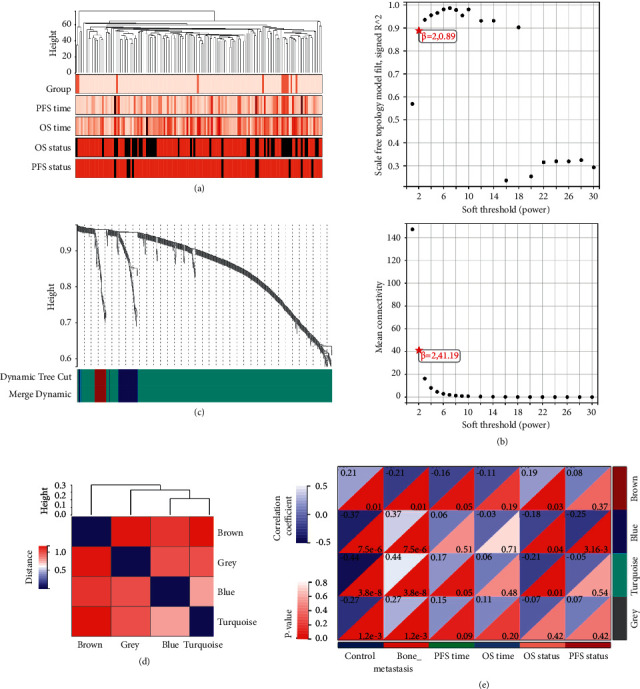
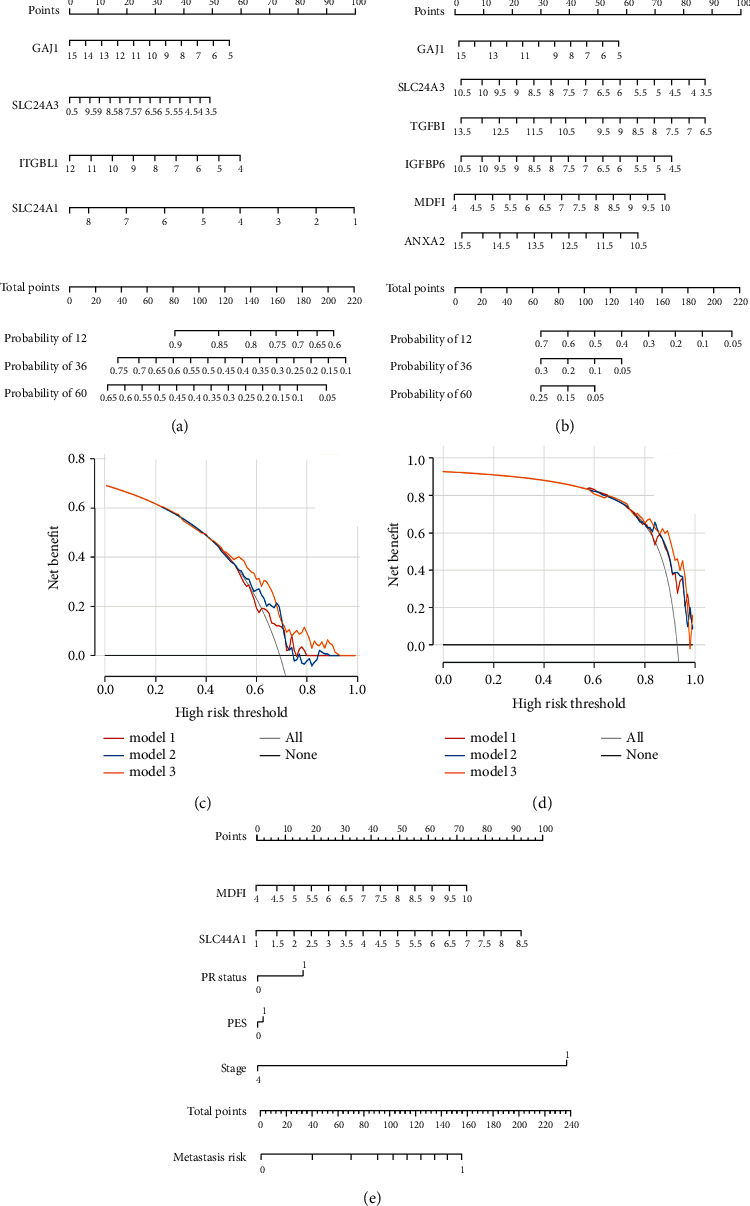
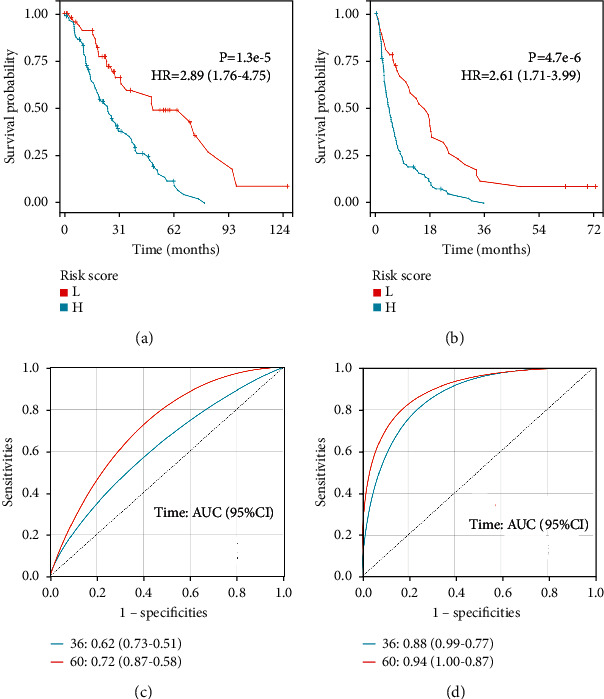
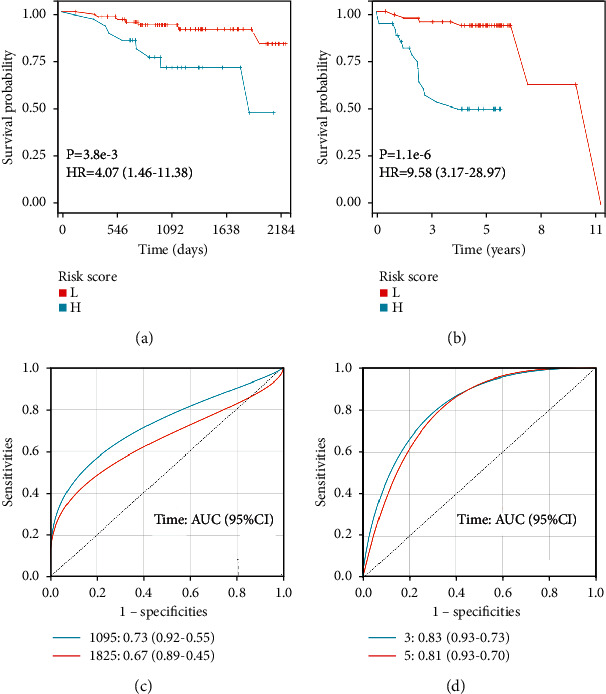
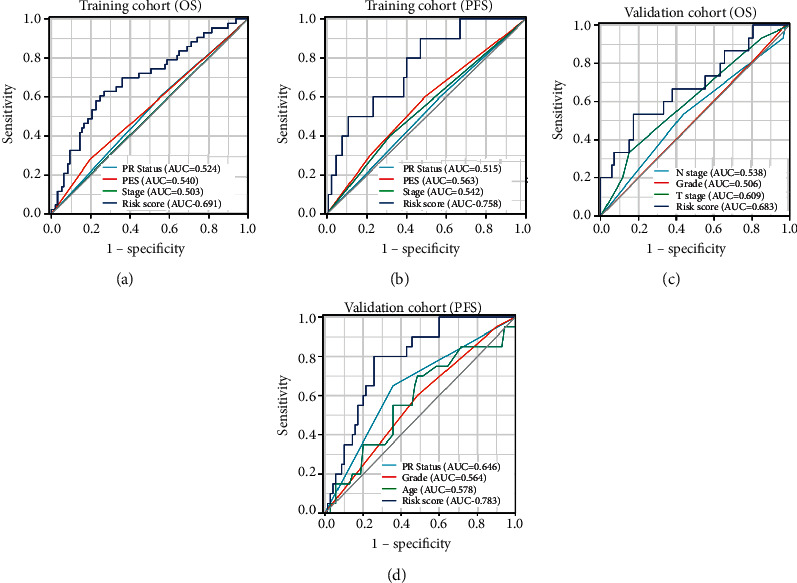
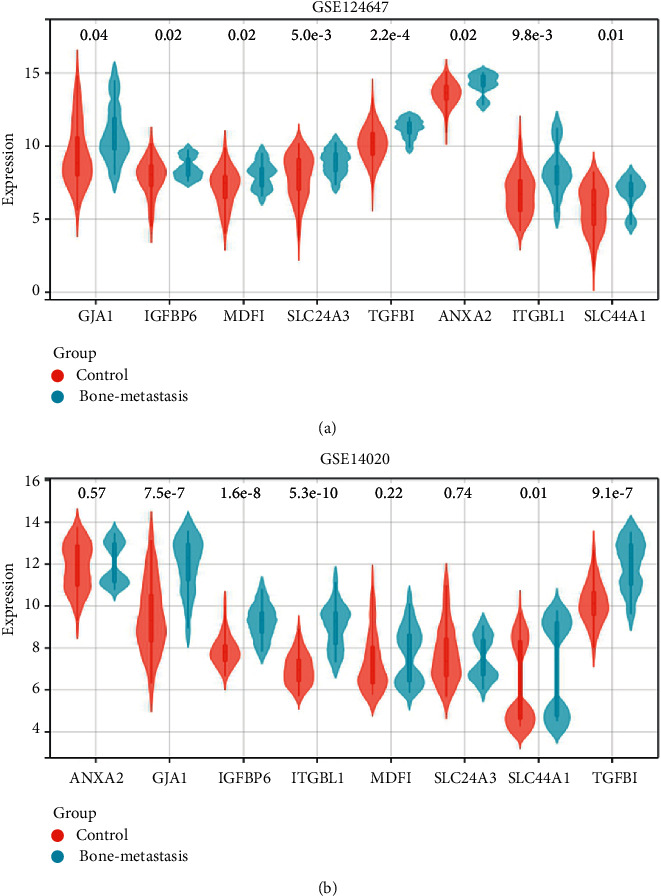
A total of 1858 DEGs were obtained. The WGCNA result showed that the blue module was most significantly related to bone metastasis and prognosis. After survival analyses, GAJ1, SLC24A3, ITGBL1, and SLC44A1 were subjected to construct a GESBN model for overall survival (OS). While GJA1, IGFBP6, MDFI, TGFBI, ANXA2, and SLC24A3 were subjected to build a GESBN model for progression-free survival (PFS). Kaplan-Meier plotter and receiver operating characteristic analyses presented the reliable prediction ability of the models. Cox regression analysis further revealed that GESBN models were independent prognostic predictors for OS and PFS in BC patients. Besides, GJA1, IGFBP6, ITGBL1, SLC44A1, and TGFBI expressions were significantly different between the two groups in GSE124647 and GSE14020. The hub genes had a significant impact on patient prognosis.
Both the four-gene signature and six-gene signature could accurately predict patient prognosis, which may provide novel treatment insights for BC bone metastasis.
本研究旨在设计加权共表达网络并构建基于基因表达特征的列线图(GESBN)模型,以预测乳腺癌(BC)患者发生骨转移的可能性。
使用数据集 GSE124647 作为训练集,GSE16446、GSE45255 和 GSE14020 作为验证集。在训练队列中,采用 limma 包 进行差异表达基因(DEGs)分析,筛选 BC 非骨转移和骨转移患者之间的差异表达基因,进行功能富集分析。通过加权共表达网络分析(WGCNA)后,进行单因素 Cox 回归和 Kaplan-Meier 分析筛选潜在的预后相关基因。然后,构建并评估 GESBN 模型。在 GSE124647 数据集上验证 GESBN 模型的预后价值,并在 GSE16446 和 GSE45255 数据集上进行验证。进一步,在训练集中探索模型中基因的表达水平,并在 GSE14020 中进行验证。最后,探索 BC 中关键基因的表达和预后价值。
共获得 1858 个 DEGs。WGCNA 结果显示,蓝色模块与骨转移和预后最显著相关。生存分析后,GAJ1、SLC24A3、ITGBL1 和 SLC44A1 用于构建总生存期(OS)的 GESBN 模型。而 GJA1、IGFBP6、MDFI、TGFBI、ANXA2 和 SLC24A3 用于构建无进展生存期(PFS)的 GESBN 模型。Kaplan-Meier 分析和受试者工作特征(ROC)曲线分析显示模型具有可靠的预测能力。Cox 回归分析进一步表明,GESBN 模型是 BC 患者 OS 和 PFS 的独立预后预测因子。此外,在 GSE124647 和 GSE14020 中,GJA1、IGFBP6、ITGBL1、SLC44A1 和 TGFBI 的表达在两组间有显著差异。关键基因对患者预后有显著影响。
四基因签名和六基因签名均能准确预测患者的预后,为 BC 骨转移的治疗提供了新的思路。