Wang Yi, Zhou Chuan, Luo Huan, Cao Jing, Ma Chao, Cheng Lulu, Yang Yang
Department of Neonatology and Neonatal Intensive Care, Zhumadian Central Hospital, Zhumadian, China.
Neonatal Intensive Care Unit, The Second Affiliated Hospital of Zhengzhou University, Zhengzhou, China.
Braz J Med Biol Res. 2021 May 17;54(7):e10612. doi: 10.1590/1414-431X2020e10612. eCollection 2021.
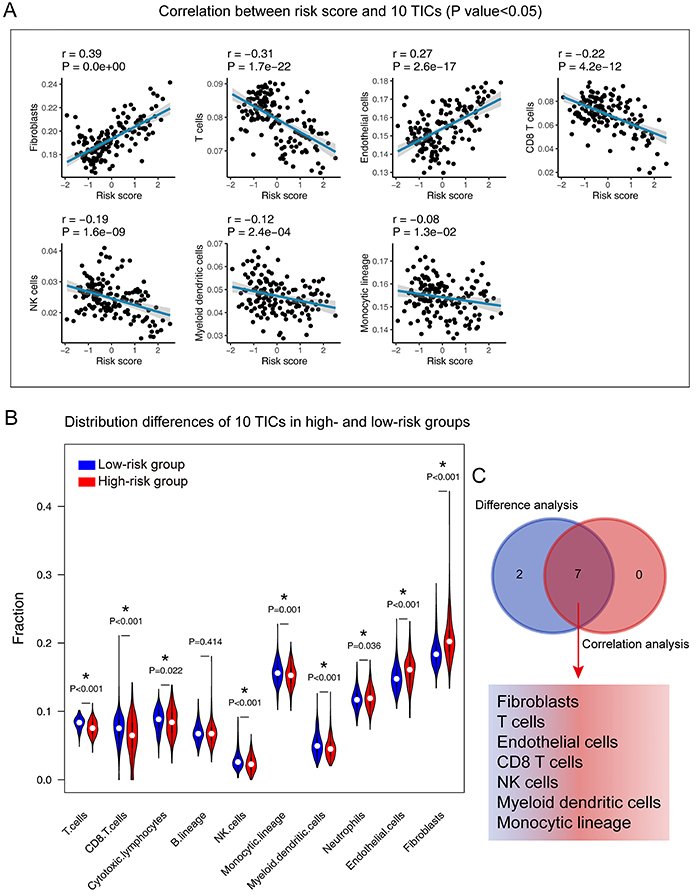
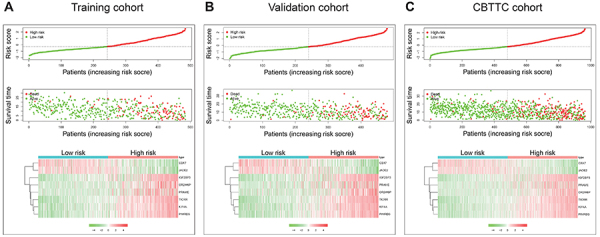
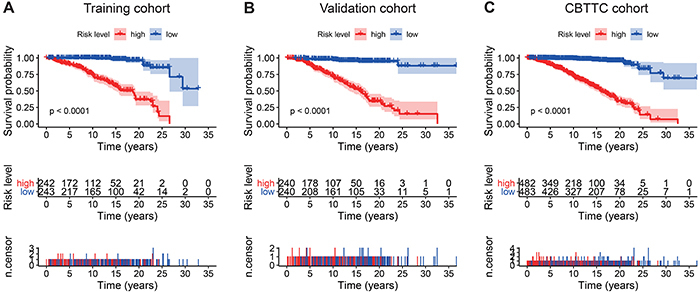
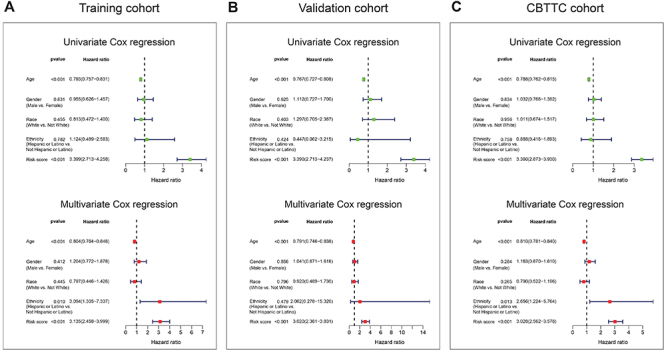
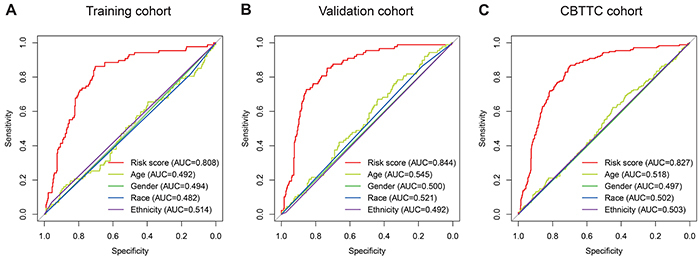
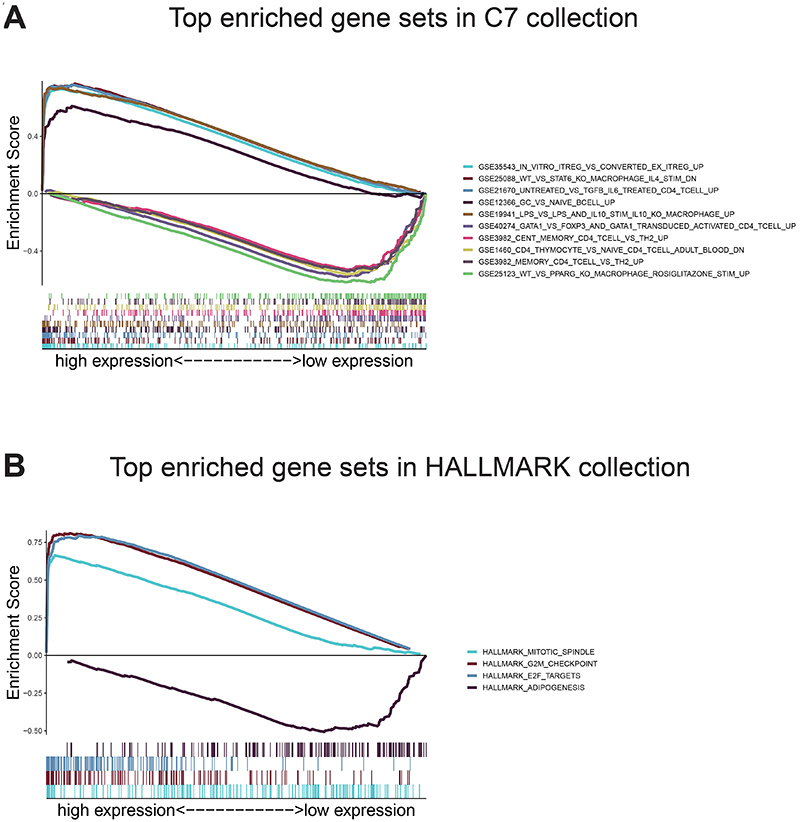
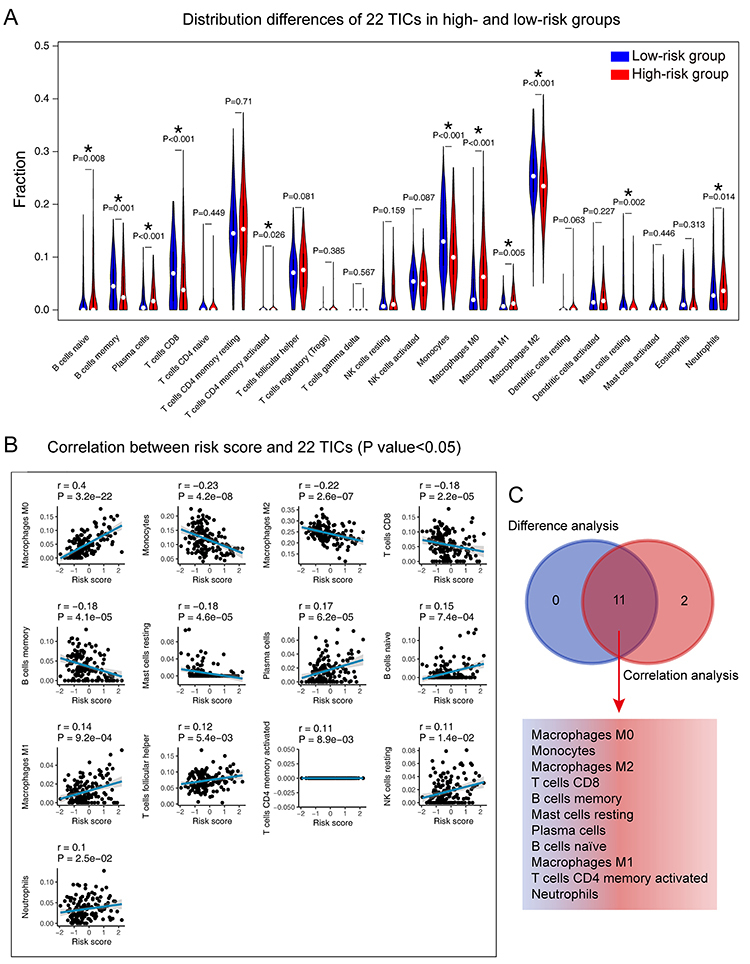
Genomic studies have provided insights into molecular subgroups and oncogenic drivers of pediatric brain tumors (PBT) that may lead to novel therapeutic strategies. Participants of the cohort Pediatric Brain Tumor Atlas: CBTTC (CBTTC cohort), were randomly divided into training and validation cohorts. In the training cohort, Kaplan-Meier analysis and univariate Cox regression model were applied to preliminary screening of prognostic genes. The LASSO Cox regression model was implemented to build a multi-gene signature, which was then validated in the validation and CBTTC cohorts through Kaplan-Meier, Cox, and receiver operating characteristic curve (ROC) analyses. Also, gene set enrichment analysis (GSEA) and immune infiltrating analyses were conducted to understand function annotation and the role of the signature in the tumor microenvironment. An eight-gene signature was built, which was examined by Kaplan-Meier analysis, revealing that a significant overall survival difference was seen, either in the training or validation cohorts. The eight-gene signature was further proven to be independent of other clinic-pathologic parameters via the Cox regression analyses. Moreover, ROC analysis demonstrated that this signature owned a better predictive power of PBT prognosis. Furthermore, GSEA and immune infiltrating analyses showed that the signature had close interactions with immune-related pathways and was closely related to CD8 T cells and monocytes in the tumor environment. Identifying the eight-gene signature (CBX7, JADE2, IGF2BP3, OR2W6P, PRAME, TICRR, KIF4A, and PIMREG) could accurately identify patients' prognosis and the signature had close interactions with the immunodominant tumor environment, which may provide insight into personalized prognosis prediction and new therapies for PBT patients.
基因组研究为小儿脑肿瘤(PBT)的分子亚群和致癌驱动因素提供了见解,这可能会带来新的治疗策略。小儿脑肿瘤图谱队列研究(CBTTC队列)的参与者被随机分为训练队列和验证队列。在训练队列中,应用Kaplan-Meier分析和单变量Cox回归模型对预后基因进行初步筛选。采用LASSO Cox回归模型构建多基因特征,然后通过Kaplan-Meier分析、Cox分析和受试者工作特征曲线(ROC)分析在验证队列和CBTTC队列中进行验证。此外,还进行了基因集富集分析(GSEA)和免疫浸润分析,以了解功能注释以及该特征在肿瘤微环境中的作用。构建了一个八基因特征,通过Kaplan-Meier分析进行检验,结果显示在训练队列或验证队列中均观察到显著的总生存差异。通过Cox回归分析进一步证明该八基因特征独立于其他临床病理参数。此外,ROC分析表明该特征对PBT预后具有更好的预测能力。此外,GSEA和免疫浸润分析表明,该特征与免疫相关途径密切相关,并且在肿瘤环境中与CD8 T细胞和单核细胞密切相关。识别八基因特征(CBX7、JADE2、IGF2BP3、OR2W6P、PRAME、TICRR、KIF4A和PIMREG)可以准确识别患者的预后,并且该特征与免疫主导的肿瘤环境密切相关,这可能为PBT患者的个性化预后预测和新疗法提供思路。