Müller Patrick, Leow Melvin Khee-Shing, Dietrich Johannes W
Department for Electrophysiology, Medical Hospital I, Klinikum Vest, Recklinghausen, NRW, Germany.
Singapore Institute for Clinical Sciences (SICS), Agency for Science, Technology and Research (ASTAR), Singapore, Singapore.
Front Cardiovasc Med. 2022 Aug 15;9:942971. doi: 10.3389/fcvm.2022.942971. eCollection 2022.
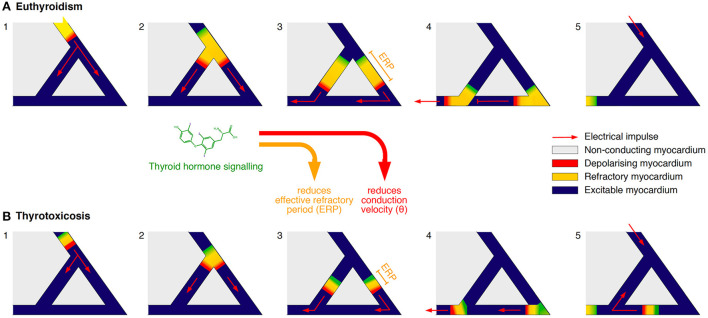
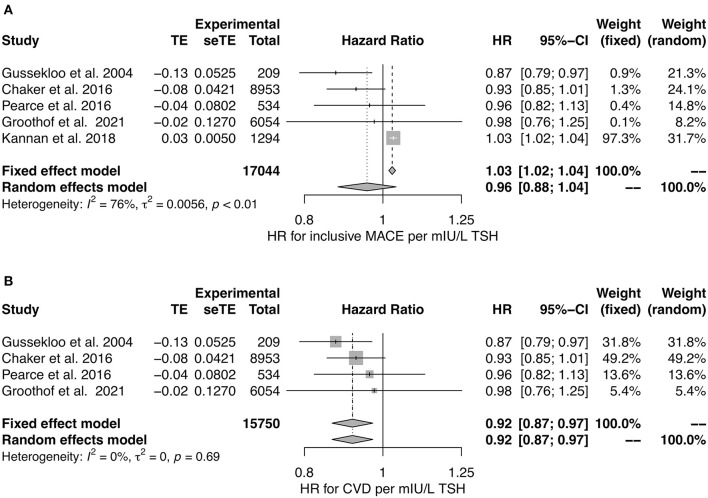
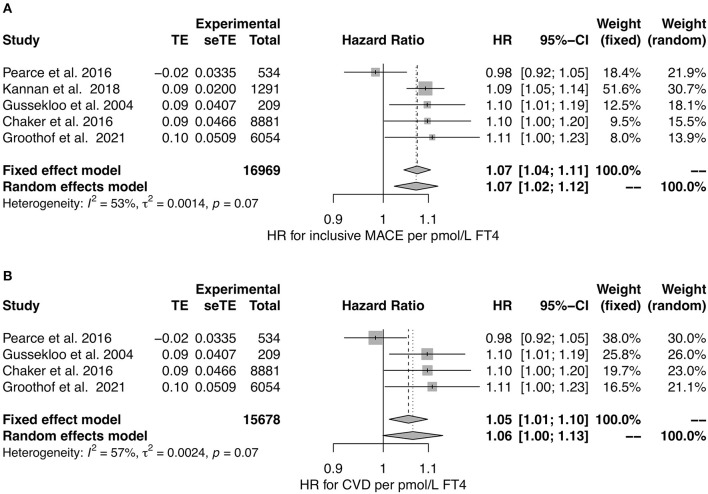
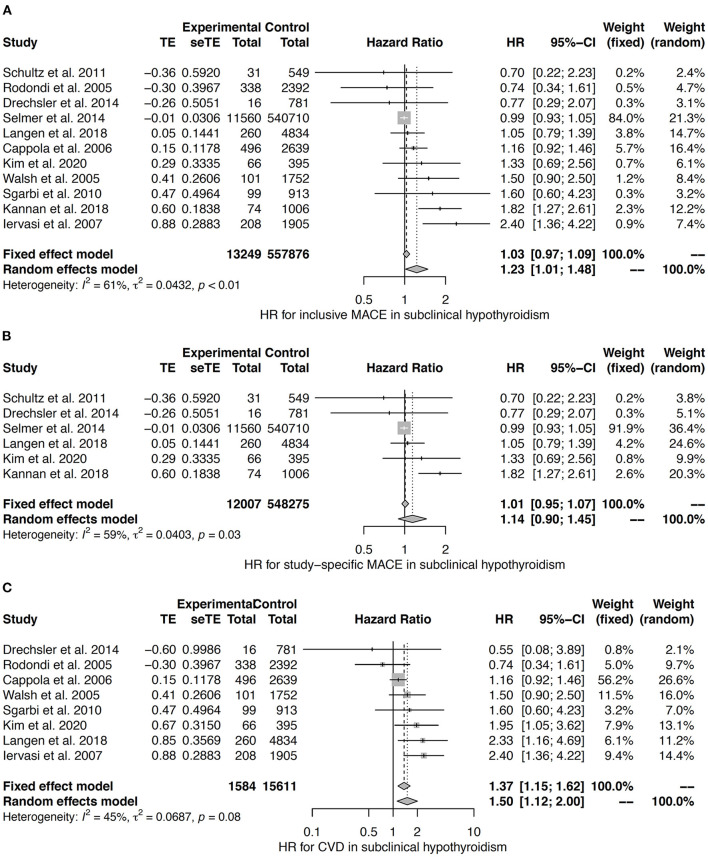
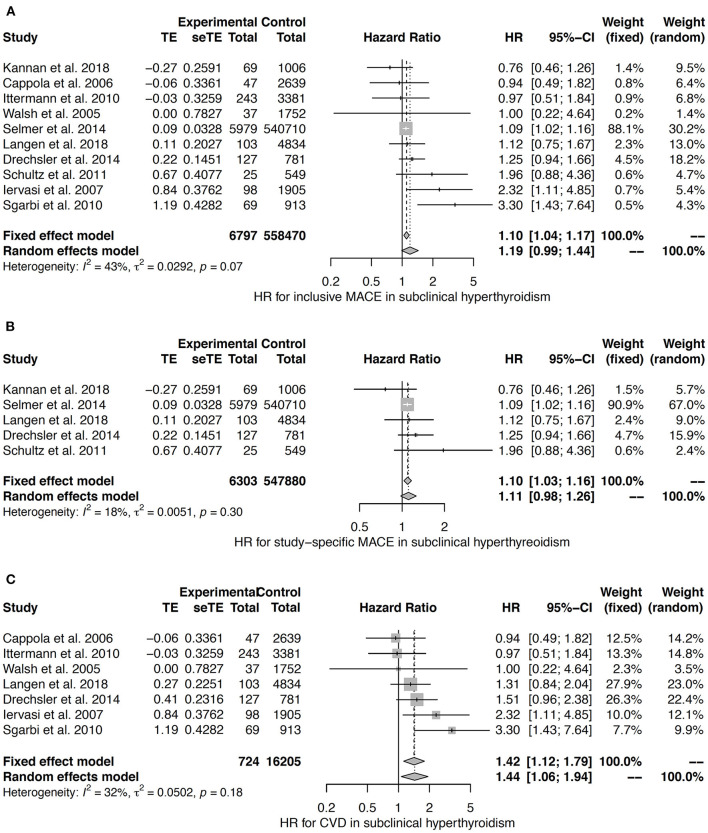
It is well established that thyroid dysfunction is linked to an increased risk of cardiovascular morbidity and mortality. The pleiotropic action of thyroid hormones strongly impacts the cardiovascular system and affects both the generation of the normal heart rhythm and arrhythmia. A meta-analysis of published evidence suggests a positive association of FT4 concentration with major adverse cardiovascular end points (MACE), but this association only partially extends to TSH. The risk for cardiovascular death is increased in both subclinical hypothyroidism and subclinical thyrotoxicosis. Several published studies found associations of TSH and FT4 concentrations, respectively, with major cardiovascular endpoints. Both reduced and elevated TSH concentrations predict the cardiovascular risk, and this association extends to TSH gradients within the reference range. Likewise, increased FT4 concentrations, but high-normal FT4 within its reference range as well, herald a poor outcome. These observations translate to a monotonic and sensitive effect of FT4 and a U-shaped relationship between TSH and cardiovascular risk. Up to now, the pathophysiological mechanism of this complex pattern of association is poorly understood. Integrating the available evidence suggests a dual etiology of elevated FT4 concentration, comprising both ensuing primary hypothyroidism and a raised set point of thyroid function, e. g. in the context of psychiatric disease, chronic stress and type 2 allostatic load. Addressing the association between thyroid homeostasis and cardiovascular diseases from a systems perspective could pave the way to new directions of research and a more personalized approach to the treatment of patients with cardiovascular risk.
甲状腺功能障碍与心血管疾病发病率和死亡率增加有关,这一点已得到充分证实。甲状腺激素的多效作用对心血管系统有强烈影响,既影响正常心律的产生,也影响心律失常。对已发表证据的荟萃分析表明,FT4浓度与主要不良心血管终点(MACE)呈正相关,但这种关联仅部分延伸至TSH。亚临床甲状腺功能减退和亚临床甲状腺毒症患者的心血管死亡风险均增加。几项已发表的研究分别发现TSH和FT4浓度与主要心血管终点之间存在关联。TSH浓度降低和升高均预示着心血管风险,这种关联延伸至参考范围内的TSH梯度。同样,FT4浓度升高,但参考范围内FT4处于高正常水平时,也预示着预后不良。这些观察结果转化为FT4的单调和敏感效应以及TSH与心血管风险之间的U形关系。到目前为止,这种复杂关联模式的病理生理机制尚不清楚。综合现有证据表明,FT4浓度升高有双重病因,包括随之而来的原发性甲状腺功能减退以及甲状腺功能设定点升高,例如在精神疾病、慢性应激和2型适应性负荷的情况下。从系统角度探讨甲状腺稳态与心血管疾病之间的关联,可能为新的研究方向以及更个性化的心血管风险患者治疗方法铺平道路。