Li Bingbing, Xu Yiran, Pang Dizhou, Zhao Qiang, Zhang Lingling, Li Ming, Li Wenhua, Duan Guiqin, Zhu Changlian
Henan Key Laboratory of Child Brain Injury and Henan Pediatric Clinical Research Center, Third Affiliated Hospital and Institute of Neuroscience, Zhengzhou University, Zhengzhou, China.
Center for Child Behavioral Development, Third Affiliated Hospital of Zhengzhou University, Zhengzhou, China.
Front Mol Neurosci. 2022 Aug 15;15:947513. doi: 10.3389/fnmol.2022.947513. eCollection 2022.
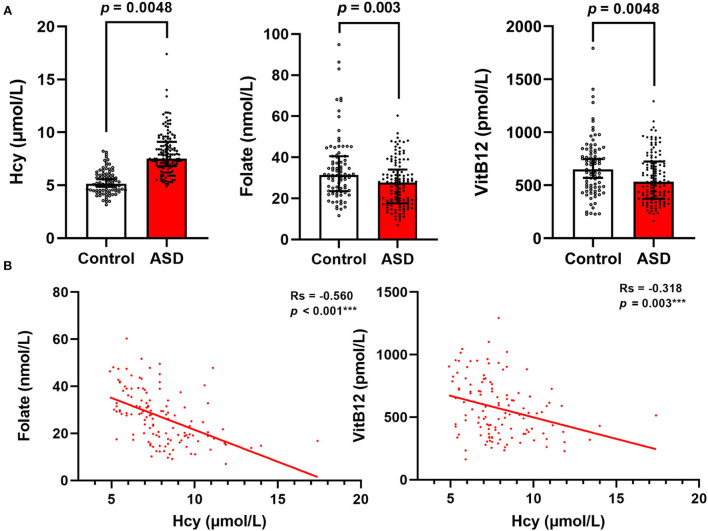
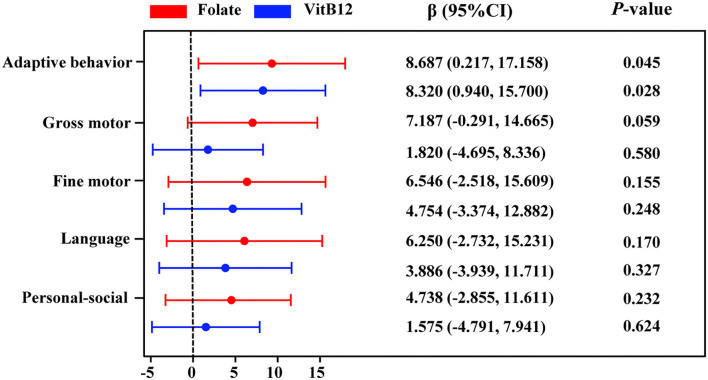
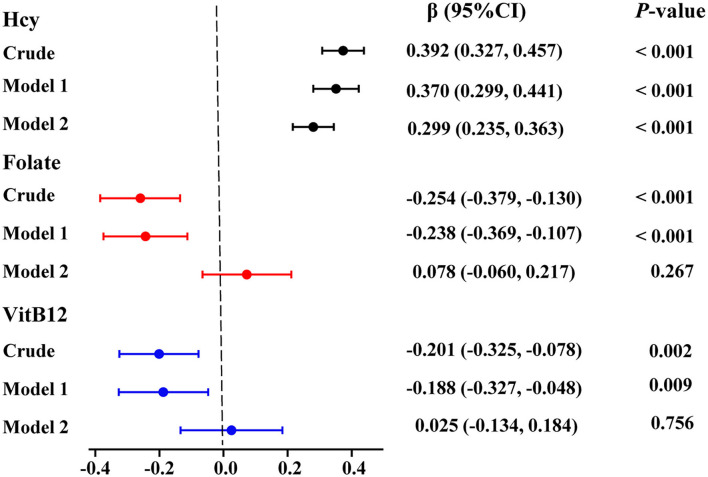
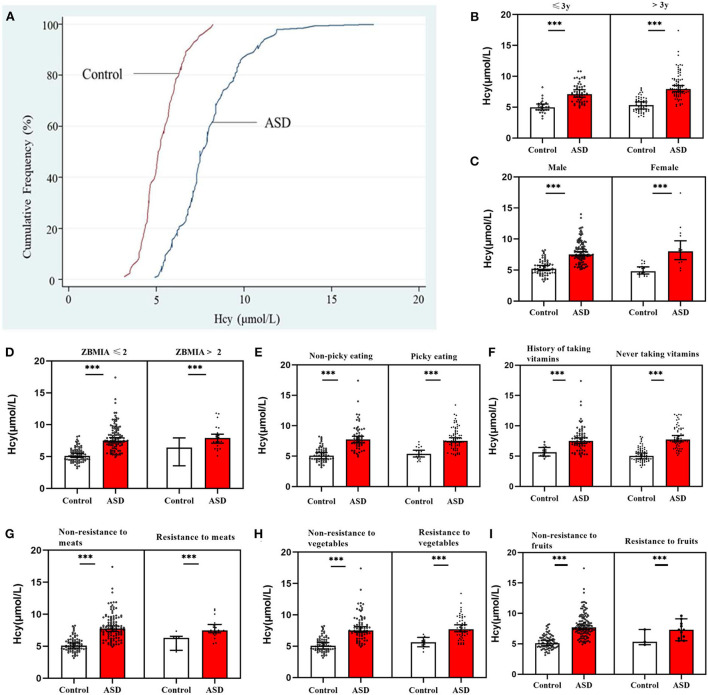
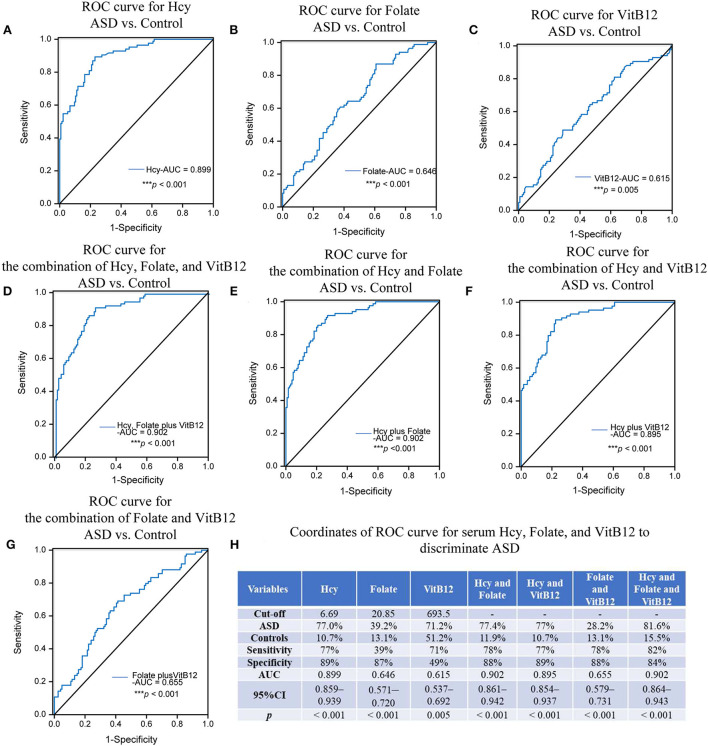
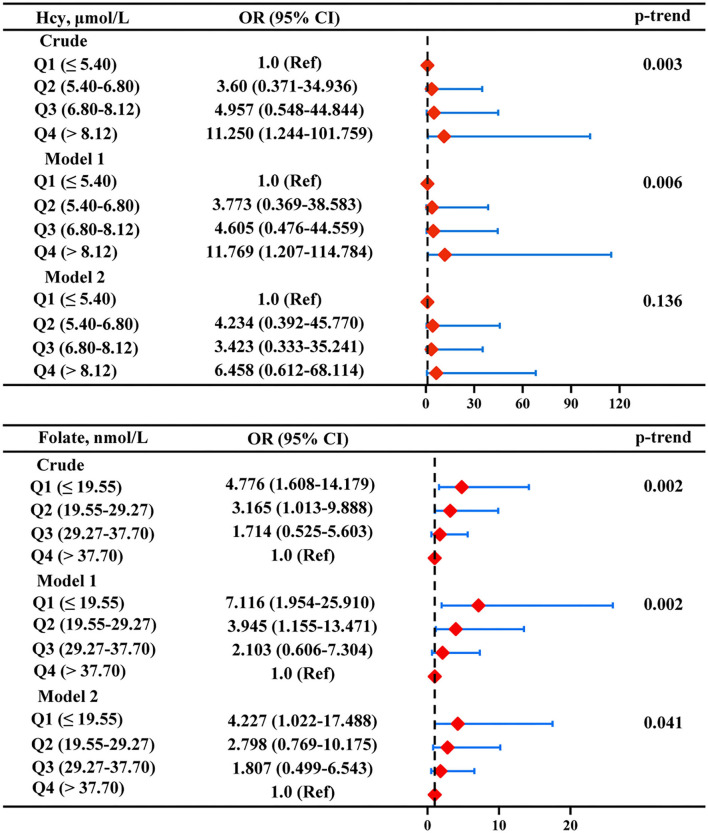
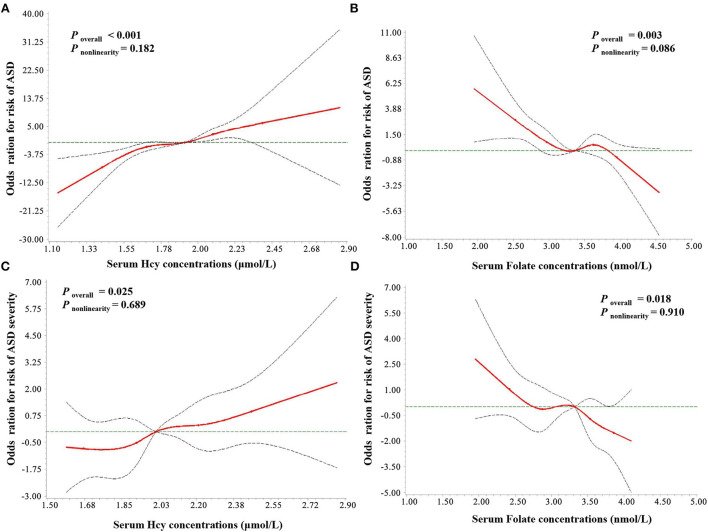
Evidence is emerging that dysregulation of circulating concentrations of homocysteine, an important intermediate in folate and vitamin B12 metabolism, is associated with autism spectrum disorder (ASD), but comprehensive assessments and correlations with disease characteristics have not been reported. Multivariate ordinal regression and restricted cubic spline (RCS) models were used to estimate independent correlations between serum homocysteine, folate, and vitamin B12 levels and clinical outcomes and severity of children with ASD. After adjusting for confounding factors, serum homocysteine levels were significantly higher in children with ASD than in healthy controls (β: 0.370; 95% CI: 0.2990.441, < 0.001). Moreover, homocysteine had a good diagnostic ability for distinguishing children with ASD from healthy subjects (AUC: 0.899, < 0.001). The RCS model indicated a positive and linear association between serum homocysteine and the risk of ASD. The lowest quartile of folate was positively associated with ASD severity (OR: 4.227, 95% CI: 1.02217.488, = 0.041) compared to the highest quartile, and serum folate showed a negative and linear association with ASD severity. In addition, decreased concentrations of folate and vitamin B12 were associated with poor adaptive behavior developmental quotients of the Gesell Developmental Schedules ( < 0.05). Overall, an increased homocysteine level was associated with ASD in a linear manner and is thus a novel diagnostic biomarker for ASD. Decreased concentrations of folate and vitamin B12 were associated with poor clinical profiles of children with ASD. These findings suggest that homocysteine-lowering interventions or folate and vitamin B12 supplementation might be a viable treatment strategy for ASD.
越来越多的证据表明,同型半胱氨酸(叶酸和维生素B12代谢中的一种重要中间产物)循环浓度失调与自闭症谱系障碍(ASD)有关,但尚未有全面评估以及与疾病特征的相关性报道。采用多变量有序回归和受限立方样条(RCS)模型来估计血清同型半胱氨酸、叶酸和维生素B12水平与ASD患儿临床结局及严重程度之间的独立相关性。在调整混杂因素后,ASD患儿的血清同型半胱氨酸水平显著高于健康对照组(β:0.370;95%置信区间:0.2990.441,P<0.001)。此外,同型半胱氨酸对区分ASD患儿和健康受试者具有良好的诊断能力(曲线下面积:0.899,P<0.001)。RCS模型表明血清同型半胱氨酸与ASD风险呈正线性相关。与最高四分位数相比,叶酸最低四分位数与ASD严重程度呈正相关(比值比:4.227,95%置信区间:1.02217.488,P = 0.041),且血清叶酸与ASD严重程度呈负线性相关。此外,叶酸和维生素B12浓度降低与格塞尔发育量表的适应性行为发育商较低有关(P<0.05)。总体而言,同型半胱氨酸水平升高与ASD呈线性相关,因此是ASD的一种新型诊断生物标志物。叶酸和维生素B12浓度降低与ASD患儿不良临床特征有关。这些发现表明,降低同型半胱氨酸的干预措施或补充叶酸和维生素B12可能是ASD的一种可行治疗策略。