Bruce Eilidh, Makaranka Stanislau, Urquhart Gordon, Elsberger Beatrix
Department of Breast Surgery, Aberdeen Royal Infirmary, NHS Grampian, AB25 2ZN Aberdeen, Scotland, UK.
University of Aberdeen, AB25 2ZN Aberdeen, Scotland, UK.
Explor Target Antitumor Ther. 2021;2(4):374-384. doi: 10.37349/etat.2021.00051. Epub 2021 Aug 30.
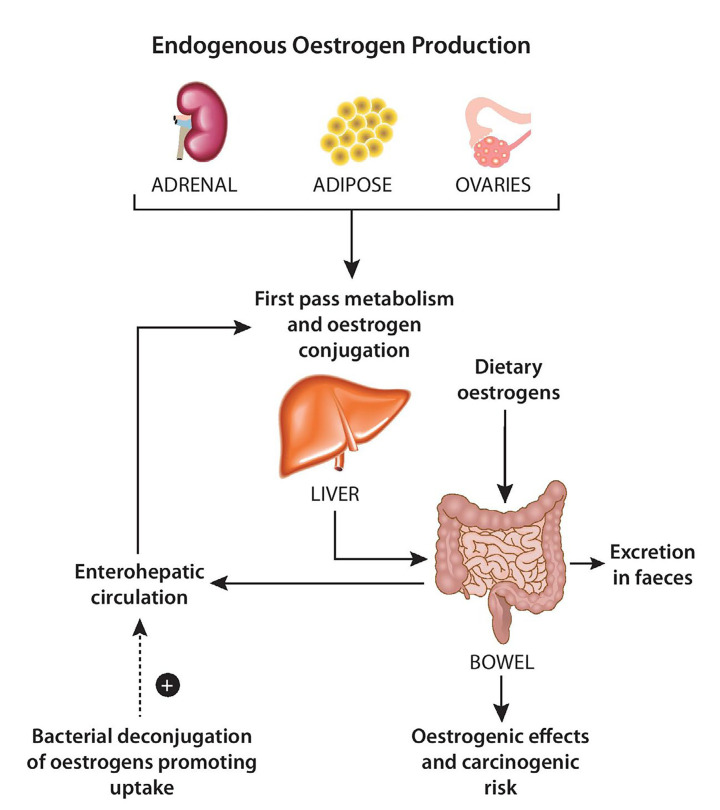
The gut microbiome is a novel player in the pathogenesis and treatment of breast cancer. The term "microbiome" is used to describe the diverse community of micro-organisms existing within the gastrointestinal tract. The gut microbiome plays an important role in oestrogen metabolism through its ability to deconjugate oestrogens within the gut resulting in their reabsorption. Therefore, it is not unsurprising that "dysbiosis", the disruption of normal gut microbiota composition, is now thought to play a role in the development of the disease, as women with breast cancer have been shown to have altered gut microbiota and this has been correlated with tumour characteristics. There is emerging evidence to suggest that the gut microbiota may also impact on breast cancer treatment, by mediating both drug efficacy and toxicity. The present review will discuss the influence of the gut microbiota on systemic treatments for breast cancer, including chemotherapy, anti-human epidermal growth factor receptor 2 (HER2) therapy, endocrine therapy and immunotherapy as well as other targeted treatments.
肠道微生物群是乳腺癌发病机制和治疗中的一个新角色。“微生物群”一词用于描述存在于胃肠道内的各种微生物群落。肠道微生物群通过其在肠道内使雌激素去结合从而导致其重吸收的能力,在雌激素代谢中发挥重要作用。因此,现在认为正常肠道微生物群组成的破坏即“生态失调”在该疾病的发展中起作用也就不足为奇了,因为乳腺癌女性的肠道微生物群已显示发生改变,且这与肿瘤特征相关。有新证据表明,肠道微生物群还可能通过介导药物疗效和毒性来影响乳腺癌治疗。本综述将讨论肠道微生物群对乳腺癌全身治疗的影响,包括化疗、抗人表皮生长因子受体2(HER2)治疗、内分泌治疗和免疫治疗以及其他靶向治疗。