Department of Cardiovascular Biology and Medicine, Juntendo University Graduate School of Medicine, Tokyo, 113-8431, Japan.
Department of Advanced Senotherapeutics, Juntendo University Graduate School of Medicine, Tokyo, 113-8431, Japan.
Sci Rep. 2022 Sep 1;12(1):14883. doi: 10.1038/s41598-022-19245-x.
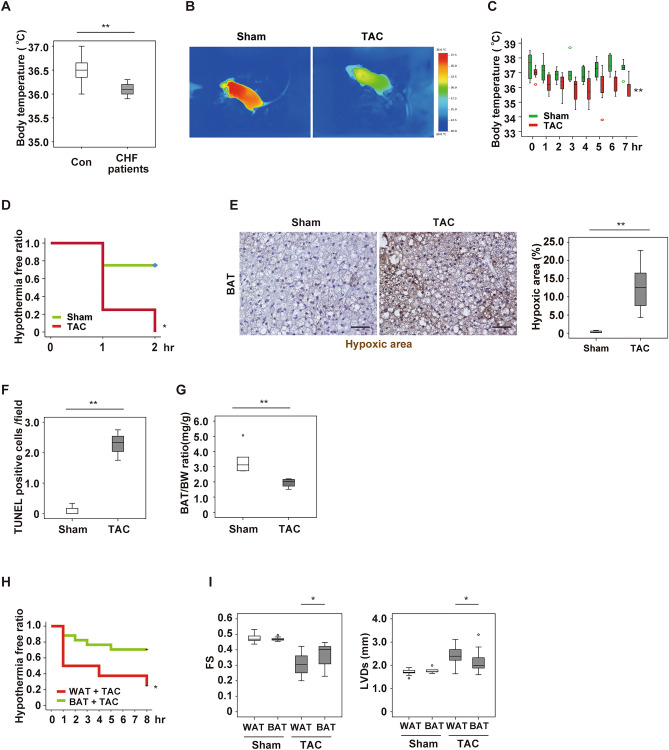
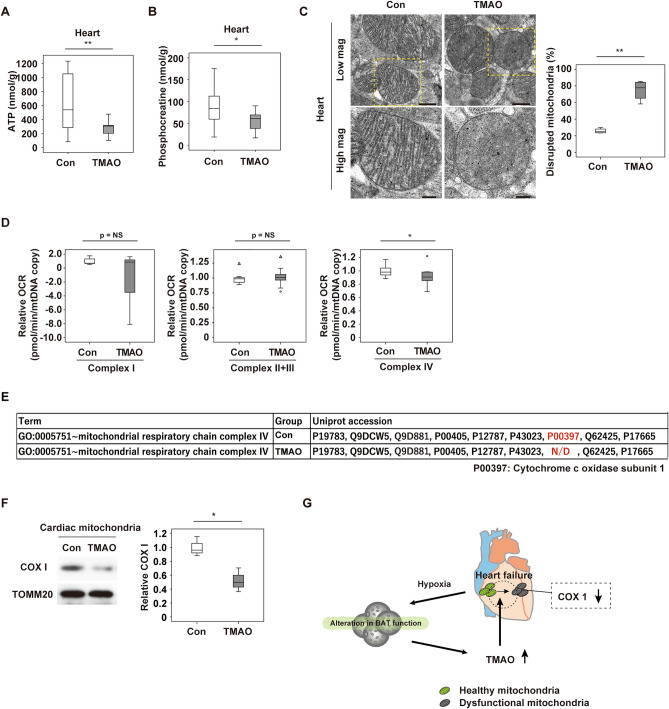
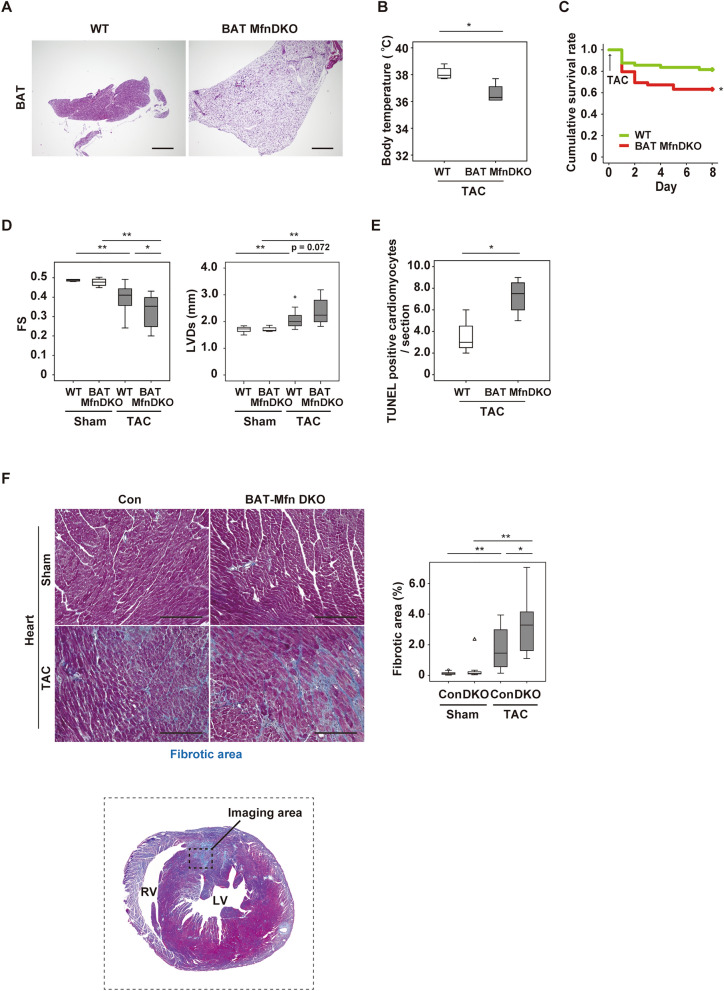
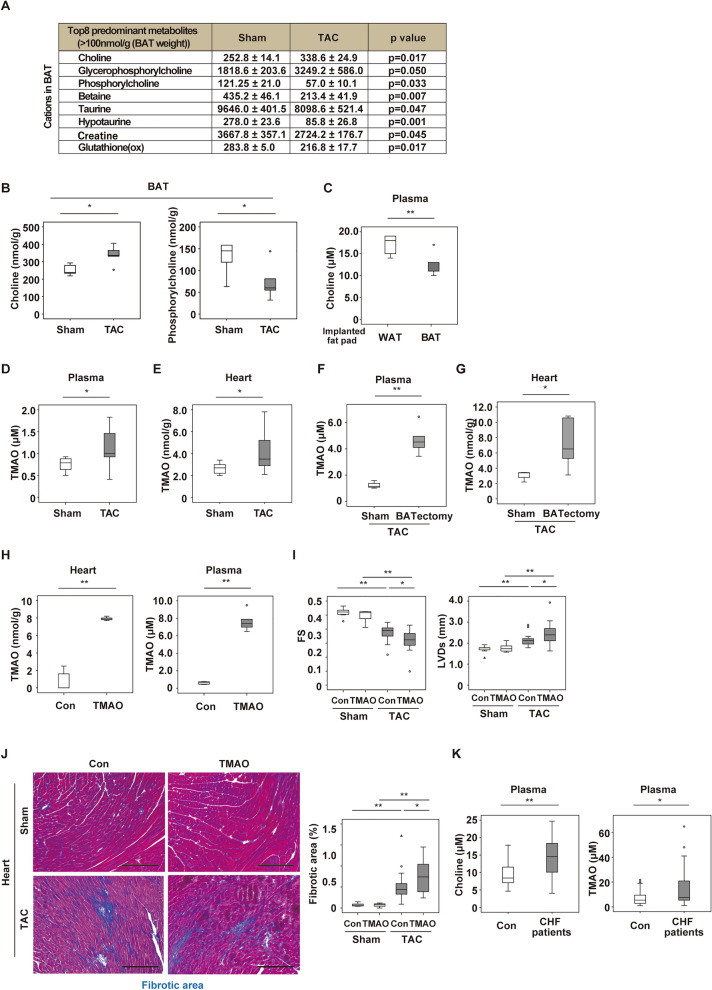
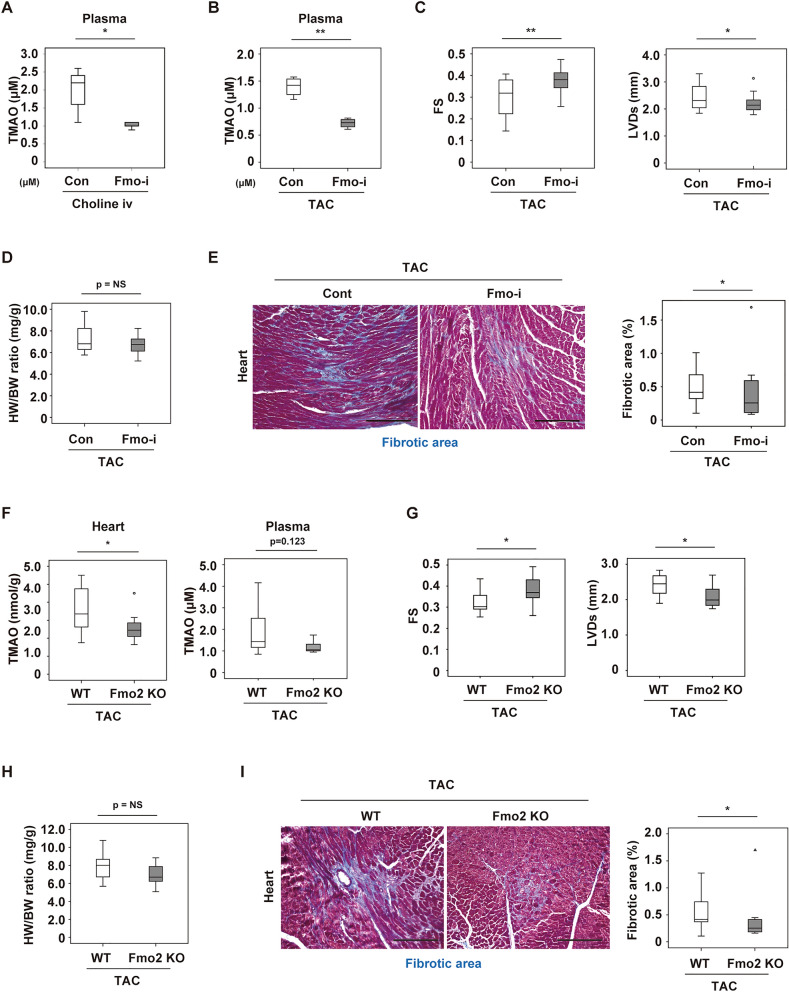
Low body temperature predicts a poor outcome in patients with heart failure, but the underlying pathological mechanisms and implications are largely unknown. Brown adipose tissue (BAT) was initially characterised as a thermogenic organ, and recent studies have suggested it plays a crucial role in maintaining systemic metabolic health. While these reports suggest a potential link between BAT and heart failure, the potential role of BAT dysfunction in heart failure has not been investigated. Here, we demonstrate that alteration of BAT function contributes to development of heart failure through disorientation in choline metabolism. Thoracic aortic constriction (TAC) or myocardial infarction (MI) reduced the thermogenic capacity of BAT in mice, leading to significant reduction of body temperature with cold exposure. BAT became hypoxic with TAC or MI, and hypoxic stress induced apoptosis of brown adipocytes. Enhancement of BAT function improved thermogenesis and cardiac function in TAC mice. Conversely, systolic function was impaired in a mouse model of genetic BAT dysfunction, in association with a low survival rate after TAC. Metabolomic analysis showed that reduced BAT thermogenesis was associated with elevation of plasma trimethylamine N-oxide (TMAO) levels. Administration of TMAO to mice led to significant reduction of phosphocreatine and ATP levels in cardiac tissue via suppression of mitochondrial complex IV activity. Genetic or pharmacological inhibition of flavin-containing monooxygenase reduced the plasma TMAO level in mice, and improved cardiac dysfunction in animals with left ventricular pressure overload. In patients with dilated cardiomyopathy, body temperature was low along with elevation of plasma choline and TMAO levels. These results suggest that maintenance of BAT homeostasis and reducing TMAO production could be potential next-generation therapies for heart failure.
体温过低预示心力衰竭患者预后不良,但潜在的病理机制和影响在很大程度上尚不清楚。棕色脂肪组织(BAT)最初被认为是一种产热器官,最近的研究表明,它在维持全身代谢健康方面起着至关重要的作用。虽然这些报告表明 BAT 与心力衰竭之间可能存在联系,但 BAT 功能障碍在心力衰竭中的潜在作用尚未得到研究。在这里,我们通过胆碱代谢的定向改变证明了 BAT 功能的改变会导致心力衰竭的发展。胸主动脉缩窄(TAC)或心肌梗死(MI)降低了小鼠 BAT 的产热能力,导致暴露于寒冷时体温显著降低。TAC 或 MI 使 BAT 缺氧,缺氧应激诱导棕色脂肪细胞凋亡。增强 BAT 功能可改善 TAC 小鼠的产热和心脏功能。相反,在 BAT 功能遗传缺陷的小鼠模型中,收缩功能受损,与 TAC 后生存率低有关。代谢组学分析表明,BAT 产热减少与血浆三甲胺 N-氧化物(TMAO)水平升高有关。TMAO 给药可通过抑制线粒体复合物 IV 活性导致心脏组织中磷酸肌酸和 ATP 水平显著降低。黄素单加氧酶的遗传或药物抑制可降低小鼠血浆 TMAO 水平,并改善左心室压力超负荷动物的心脏功能障碍。在扩张型心肌病患者中,体温较低,同时伴有血浆胆碱和 TMAO 水平升高。这些结果表明,维持 BAT 动态平衡和减少 TMAO 产生可能是心力衰竭的下一代潜在治疗方法。