Wu Xiao, Ding Zengbo, Fan Tengteng, Wang Ke, Li Suxia, Zhao Jing, Zhu Weili
School of Basic Medical Sciences, Peking University, Beijing, China.
National Institute on Drug Dependence and Beijing Key Laboratory of Drug Dependence, Peking University, Beijing, China.
Front Cell Dev Biol. 2022 Aug 16;10:943067. doi: 10.3389/fcell.2022.943067. eCollection 2022.
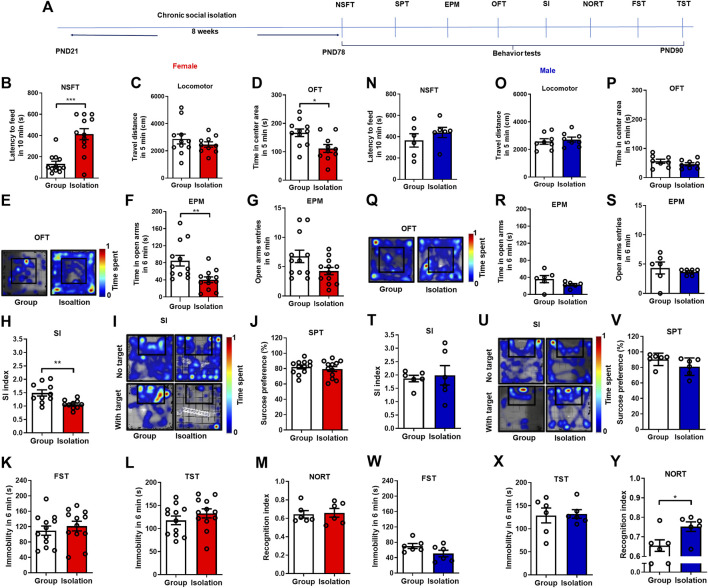
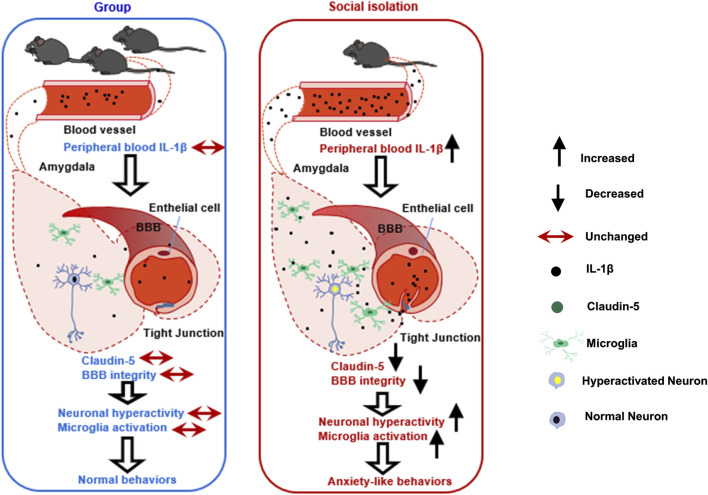
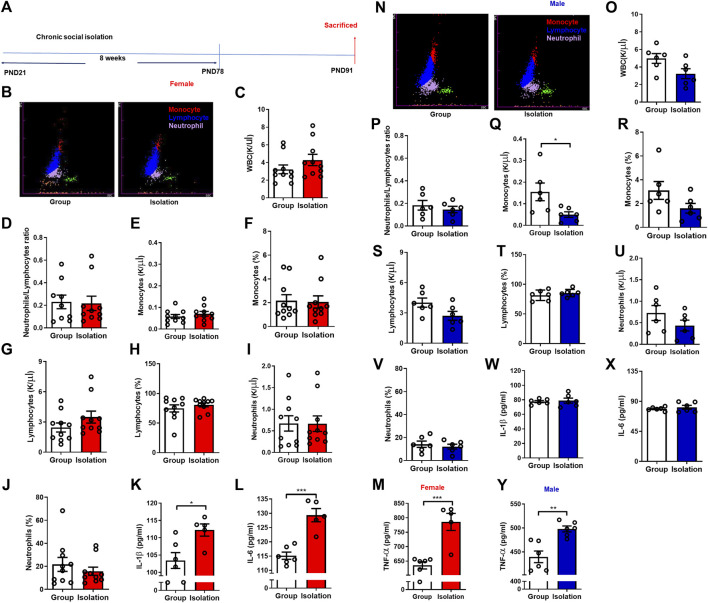
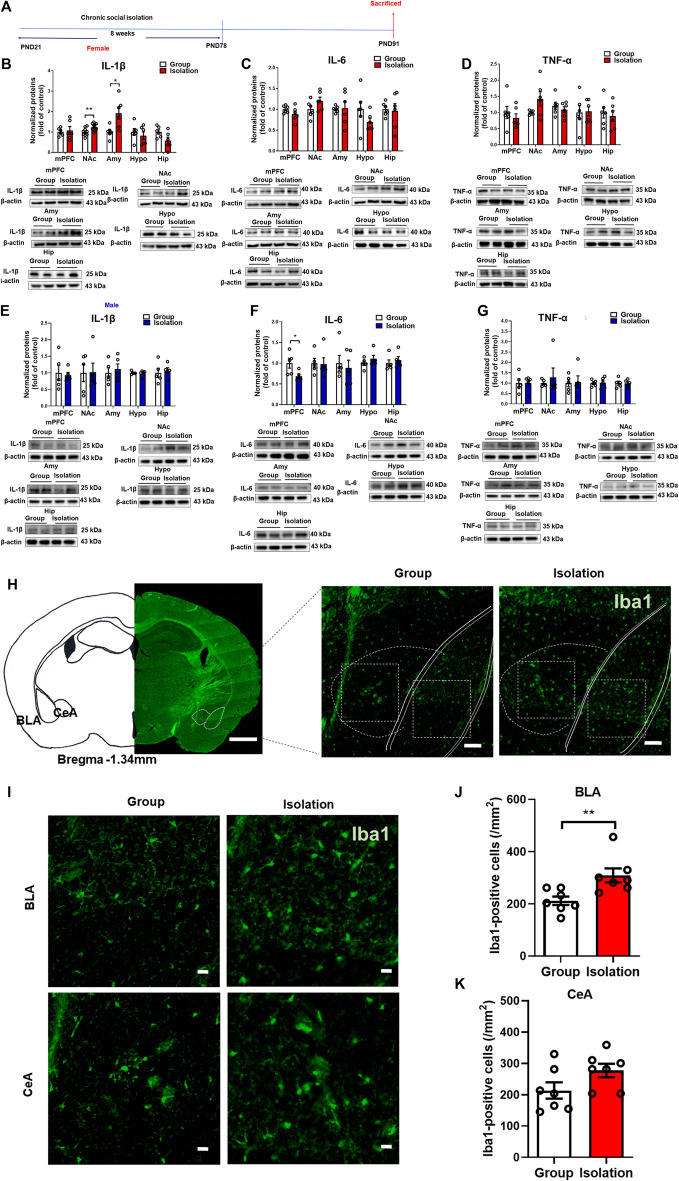
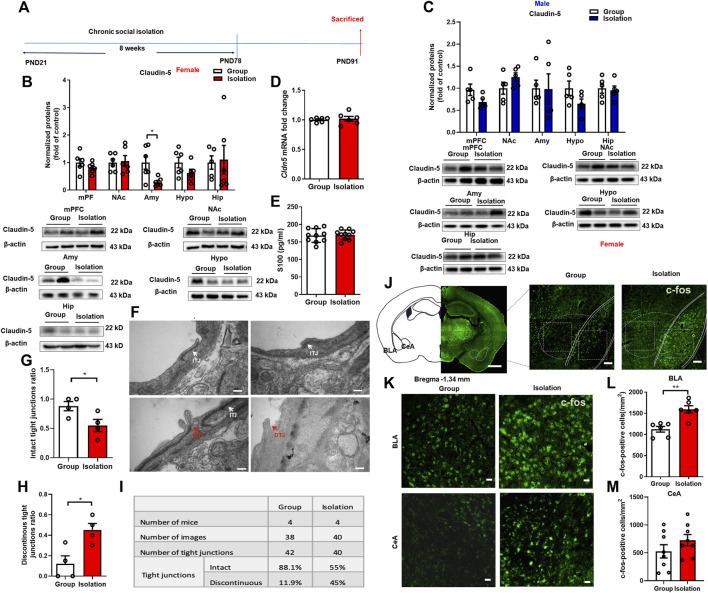
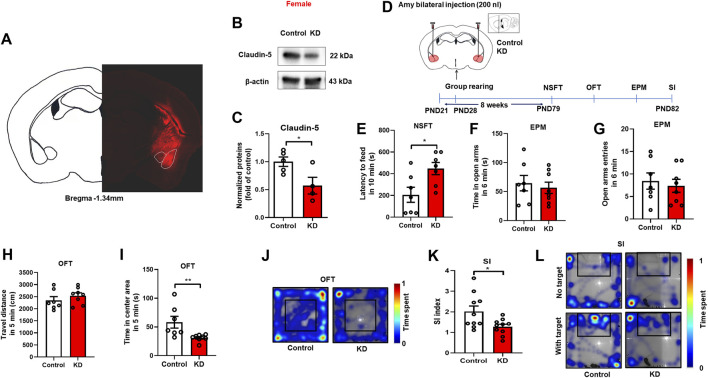
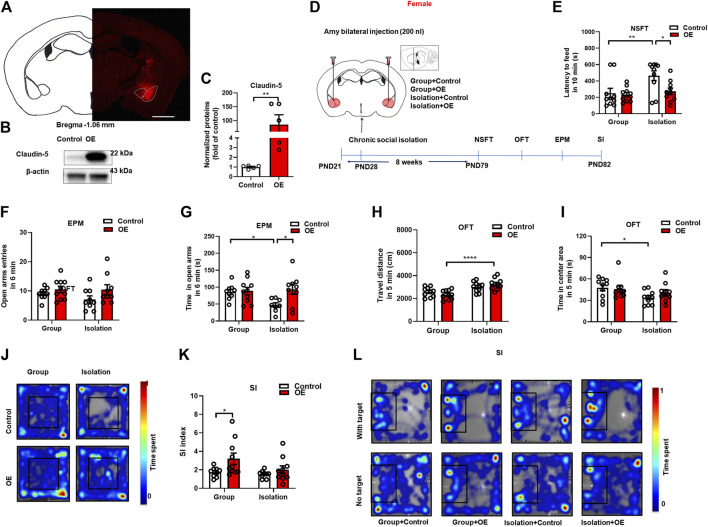
Social interaction plays an essential role in species survival for socialized animals. Previous studies have shown that a lack of social interaction such as social isolation, especially in the early-life phase, increases the risk of developing mental diseases in adulthood. Chronic social stress alters blood-brain barrier (BBB) integrity and increases peripheral cytokines to infiltrate the brain, which is linked to the development of depressive-like behaviors in mice, suggesting that BBB function is crucial in environmental stimuli-driven mood disorders via increased neuroinflammation in the brain. However, the precise mechanisms of inflammation and BBB integrity underlying the behavioral profiles induced by social isolation remain poorly understood. Here we showed that chronic childhood social isolation from post-weaning for consecutive 8 weeks in female but not male C57BL/6J mice induces anxiety-like behaviors. The levels of peripheral inflammatory cytokines including interleukin (IL)-1β, IL-6, and tumor necrosis factor (TNF)-α in the plasma of socially isolated female mice were increased. Importantly, we found decreased expression of the endothelial cell tight junction protein Claudin-5, increased BBB breakdown and microglial activation in the amygdala of isolated but not group-housed female mice. Moreover, the neuronal activity in the amygdala was increased as evidenced by c-fos positive cells, and the levels of IL-1β in the amygdala, a critical brain region for regulating social processing and interaction, were also higher in female mice exposed to social isolation. Finally, down-regulation of Claudin-5 induced anxiety-like behaviors in group-housed females and overexpression of Claudin-5 with adeno-associated virus in the amygdala to restore BBB integrity decreased subsequent anxiety-like behaviors. Together, these findings suggest that chronic childhood social isolation impaired BBB permeability and caused neuroinflammation in the amygdala by recruiting peripheral cytokines into the brain and activating microglia, consequently triggering the development of anxiety-like behaviors in female mice.
社交互动对群居动物的物种生存起着至关重要的作用。先前的研究表明,缺乏社交互动,如社会隔离,尤其是在生命早期阶段,会增加成年后患精神疾病的风险。慢性社会压力会改变血脑屏障(BBB)的完整性,并增加外周细胞因子渗入大脑,这与小鼠抑郁样行为的发展有关,表明血脑屏障功能在环境刺激驱动的情绪障碍中至关重要,其通过大脑中神经炎症的增加来实现。然而,社会隔离诱导的行为特征背后炎症和血脑屏障完整性的确切机制仍知之甚少。在这里,我们表明,雌性而非雄性C57BL/6J小鼠从断奶后连续8周的慢性童年社会隔离会诱发焦虑样行为。社会隔离的雌性小鼠血浆中包括白细胞介素(IL)-1β、IL-6和肿瘤坏死因子(TNF)-α在内的外周炎性细胞因子水平升高。重要的是,我们发现,隔离饲养而非群居的雌性小鼠杏仁核中内皮细胞紧密连接蛋白Claudin-5的表达降低,血脑屏障破坏增加,小胶质细胞激活。此外,如c-fos阳性细胞所示,杏仁核中的神经元活动增加,在参与社会处理和互动的关键脑区杏仁核中,暴露于社会隔离的雌性小鼠的IL-1β水平也更高。最后,Claudin-5的下调在群居雌性小鼠中诱发焦虑样行为,而在杏仁核中用腺相关病毒过表达Claudin-5以恢复血脑屏障完整性则减少了随后的焦虑样行为。总之,这些发现表明,慢性童年社会隔离损害了血脑屏障通透性,并通过将外周细胞因子募集到大脑中并激活小胶质细胞,在杏仁核中引起神经炎症,从而触发雌性小鼠焦虑样行为的发展。