Guo Xunyi, Lin Feng, Yang Fengjiao, Chen Jing, Cai Weixiong, Zou Tao
Department of Psychiatry, The Affiliated Hospital of Guizhou Medical University, Guiyang, China.
Department of Clinical Medicine, Guizhou Medical University, Guiyang, China.
Front Psychiatry. 2022 Aug 16;13:946808. doi: 10.3389/fpsyt.2022.946808. eCollection 2022.
The aim of this study was to investigate the characteristics of intestinal flora in patients with functional gastroenteropathy and generalized anxiety disorder (GAD) and the relationship between intestinal flora and psychological factors.
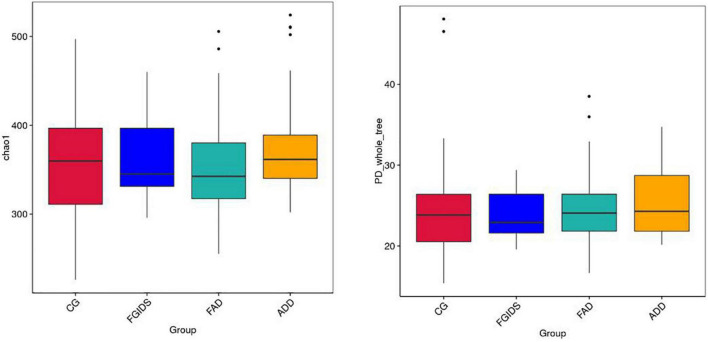
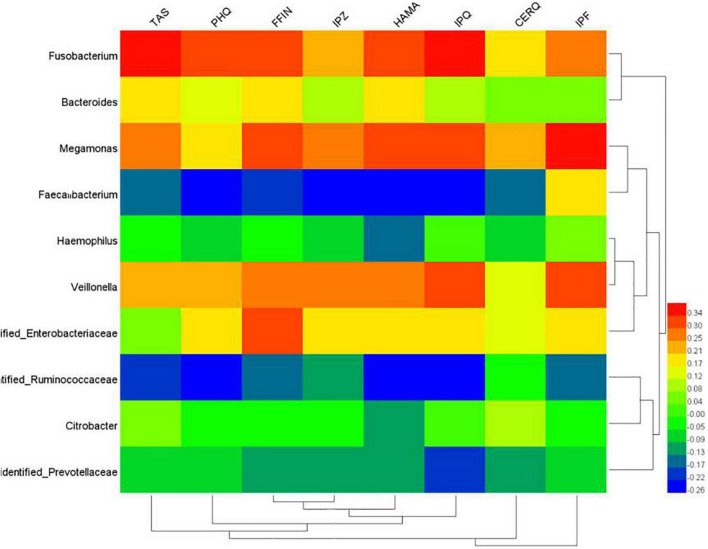
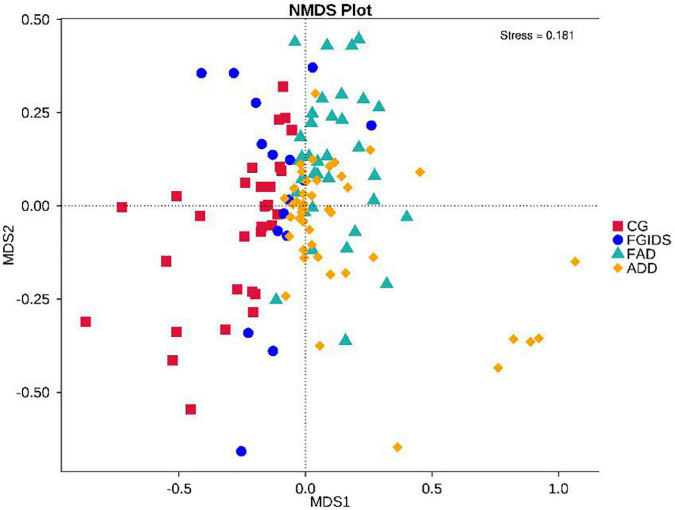
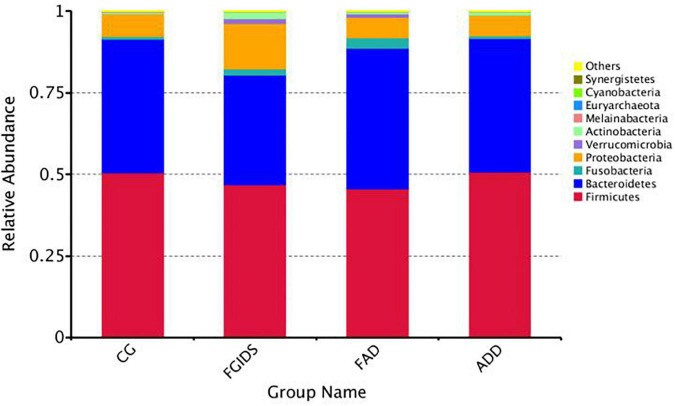
From March 2020 to December 2020, a total of 35 patients with functional gastroenteropathy and generalized anxiety disorder, 30 healthy controls, 16 patients with functional gastroenteropathy, and 44 patients with generalized anxiety disorder were selected from the Affiliated Hospital of Guizhou Medical University. Fecal samples were collected from each group, and the related psychophysiological factors scales (Hamilton Anxiety Scale, Hamilton Depression Scale, Neurotic Personality Questionnaire, concept of illness questionnaire, Toronto Alexithymia Scale, Severity of Physical Symptoms Scale, and Cognitive Emotion Regulation Questionnaire) were improved. 16S rRNA high-pass sequencing was used to determine the correlation between intestinal flora changes and functional gastroenteropathy with generalized anxiety disorder. Then, the scale and gut microbiota results were analyzed for correlation to determine the correlation between personality traits and gut microbiota.
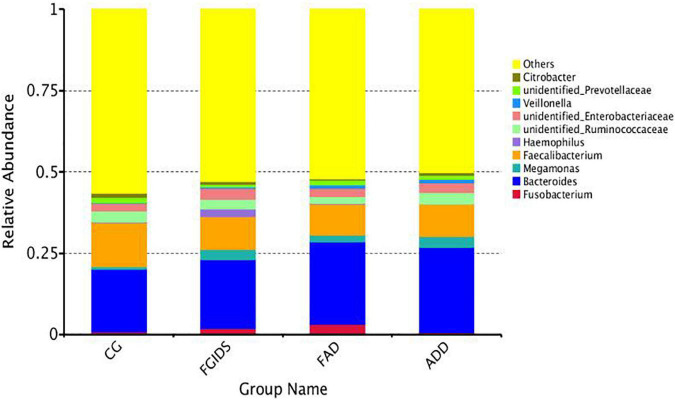
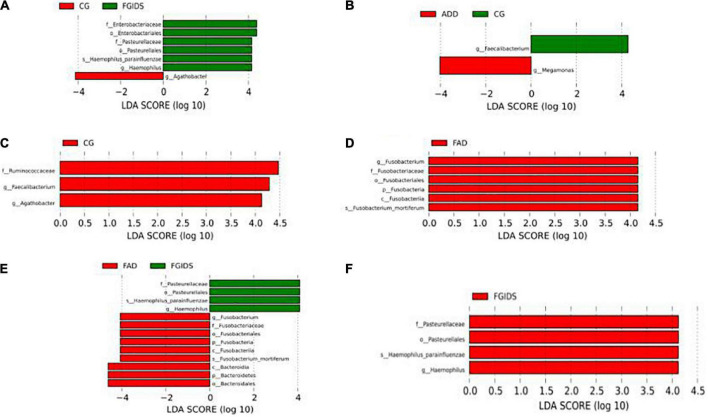
We found similar intestinal microbiota in patients with functional gastroenterology, generalized anxiety disorder, and functional gastroenteropathy with generalized anxiety disorder. But the relative abundance of Clostridium was significantly increased in patients with functional gastrointestinal disease (FGID) and generalized anxiety. The relative abundance of was significantly increased in patients with functional gastrointestinal disease without a generalized anxiety disorder. The intestinal microecological composition was significantly correlated with personality traits.
Functional gastrointestinal disease comorbidity GAD may be related to an increase in the relative abundance of . FGID non-comorbidity GAD may be related to the increased relative abundance of . The increased relative abundance of and is associated with personality traits such as difficulty describing feelings and difficulty identifying feelings, neuroticism, and negative cognition of disease.
本研究旨在调查功能性胃肠病合并广泛性焦虑障碍(GAD)患者的肠道菌群特征以及肠道菌群与心理因素之间的关系。
2020年3月至2020年12月,从贵州医科大学附属医院选取35例功能性胃肠病合并广泛性焦虑障碍患者、30例健康对照者、16例功能性胃肠病患者和44例广泛性焦虑障碍患者。收集每组的粪便样本,并完善相关心理生理因素量表(汉密尔顿焦虑量表、汉密尔顿抑郁量表、神经质人格问卷、疾病观念问卷、多伦多述情障碍量表、躯体症状严重程度量表和认知情绪调节问卷)。采用16S rRNA高通量测序确定肠道菌群变化与功能性胃肠病合并广泛性焦虑障碍之间的相关性。然后,分析量表和肠道微生物群结果的相关性,以确定人格特质与肠道微生物群之间的相关性。
我们发现功能性胃肠病患者、广泛性焦虑障碍患者以及功能性胃肠病合并广泛性焦虑障碍患者的肠道微生物群相似。但在功能性胃肠病(FGID)合并广泛性焦虑的患者中,梭菌的相对丰度显著增加。在无广泛性焦虑障碍的功能性胃肠病患者中,[此处原文缺失具体菌名]的相对丰度显著增加。肠道微生态组成与人格特质显著相关。
功能性胃肠病合并GAD可能与[此处原文缺失具体菌名]相对丰度增加有关。FGID不合并GAD可能与[此处原文缺失具体菌名]相对丰度增加有关。[此处原文缺失具体菌名]和[此处原文缺失具体菌名]相对丰度增加与诸如难以描述感受、难以识别感受、神经质以及对疾病的负面认知等人格特质相关。