Ferreira Pedro Paulo Ribeiro, Silva Luís Filipe Rocha, Dias-Peixoto Marco Fabrício, Cassilhas Ricardo Cardoso, Gripp Fernando, Amorim Fabiano Trigueiro, Mang Zachary A, Esteves Elizabethe Adriana, Tricoli Valmor A, Ferraresi Cleber, Magalhães Flávio de Castro
Department of Physical Education, Federal University of the Jequitinhonha and Mucuri Valleys, Campus JK, Diamantina, MG, Brazil.
Department of Health, Exercise, and Sports Sciences, University of New Mexico, Albuquerque, NM, USA.
Contemp Clin Trials Commun. 2022 Aug 17;29:100984. doi: 10.1016/j.conctc.2022.100984. eCollection 2022 Oct.
Insulin resistance (IR) is the main risk factor for developing type 2 diabetes. Both strength training (ST) and photobiomodulation therapy (PBMt) reduce IR, but the effect of combining different volumes of ST with PBMt is unknown.
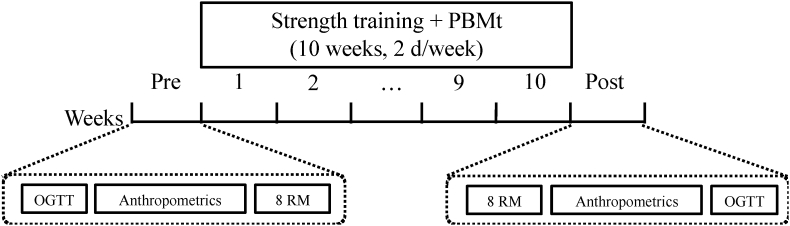
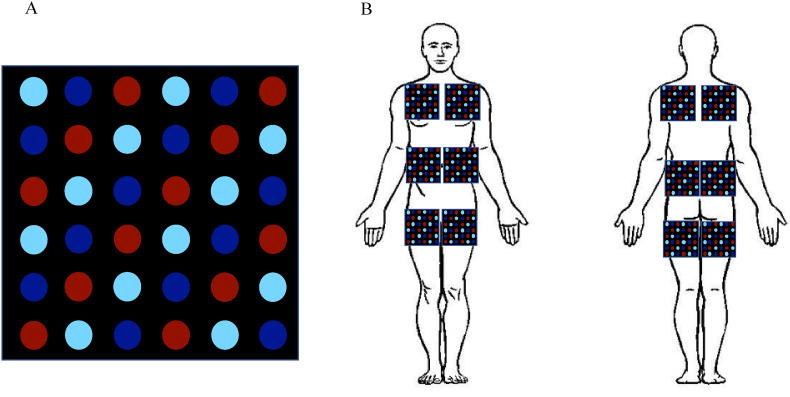
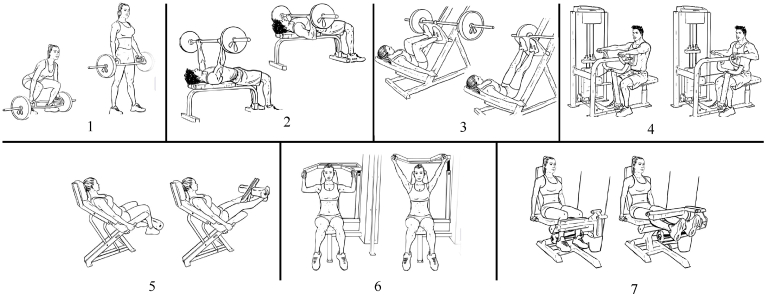
Overweight/obese individuals will be assigned to 4 groups (n = 12/group): ST with volume following international guidelines (3 sets per exercise - high volume) or one-third of this volume (1 set per exercise - low volume), combined with PBMt or placebo. ST will be performed for 20 sessions over 10 weeks and will consist of 7 exercises. The PBMt will be applied after training sessions using blankets with light emitters (LEDs) placed over the skin on the frontal and the posterior region of the body, following the parameters recommended by the literature. The placebo group will undergo an identical procedure, but blankets will emit insignificant light. To measure plasma glucose and insulin concentrations, oral glucose tolerance tests (OGTT) will be performed before and after the training period. Thereafter, IR, the area under the curve of glucose and insulin, and OGTT-derived indices of insulin sensitivity/resistance will be calculated.
This study will determine the effects of different ST volumes on IR and whether the addition of PBMt potentiates the effects of ST. Because previously sedentary, obese, insulin-resistant individuals might not comply with recommended volumes of exercise, the possibility that adding PBMt to low-volume ST enhances ST effects on IR bears practical significance.
胰岛素抵抗(IR)是2型糖尿病发生的主要危险因素。力量训练(ST)和光生物调节疗法(PBMt)均可降低IR,但不同运动量的ST与PBMt联合使用的效果尚不清楚。
超重/肥胖个体将被分为4组(每组n = 12):按照国际指南进行的高运动量ST(每项运动3组)或该运动量的三分之一(每项运动1组,低运动量),分别联合PBMt或安慰剂。ST将在10周内进行20次,包括7项运动。训练后,使用带有发光二极管(LED)的毯子覆盖身体前部和后部皮肤,按照文献推荐的参数进行PBMt治疗。安慰剂组将接受相同的操作,但毯子发出的光很微弱。为了测量血浆葡萄糖和胰岛素浓度,将在训练期前后进行口服葡萄糖耐量试验(OGTT)。此后,将计算IR、葡萄糖和胰岛素曲线下面积以及OGTT衍生的胰岛素敏感性/抵抗指数。
本研究将确定不同运动量的ST对IR的影响,以及添加PBMt是否会增强ST的效果。由于之前久坐、肥胖、胰岛素抵抗的个体可能无法遵循推荐的运动量,因此在低运动量ST中添加PBMt是否能增强ST对IR的影响具有实际意义。