Mishra Vishnu S, Patil Sachin, Reddy Puli Chandramouli, Lochab Bimlesh
Department of Life Sciences, School of Natural Sciences, Shiv Nadar University, Delhi, India.
Materials Chemistry Laboratory, Department of Chemistry, School of Natural Sciences, Shiv Nadar University, Delhi, India.
Front Oncol. 2022 Aug 16;12:953098. doi: 10.3389/fonc.2022.953098. eCollection 2022.
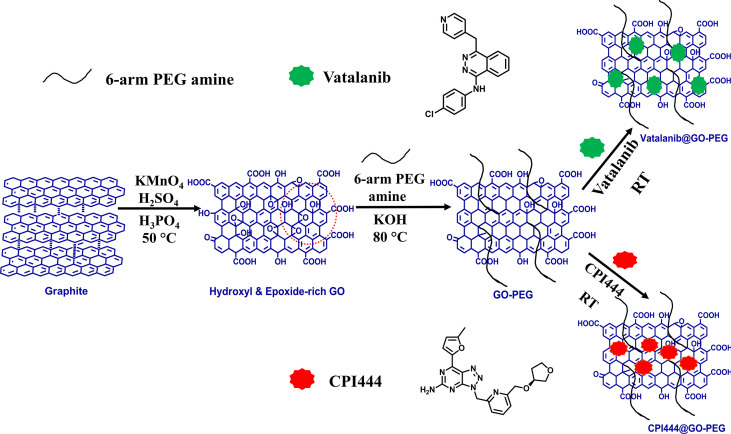
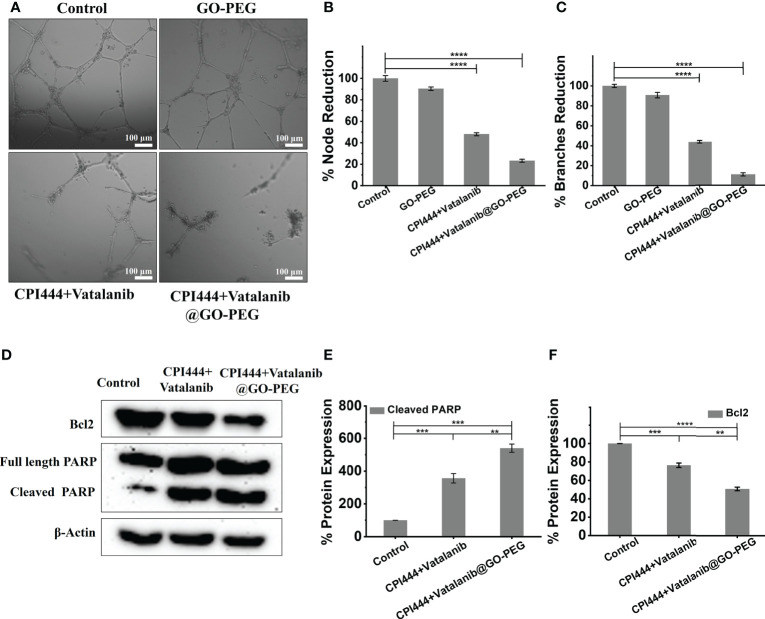
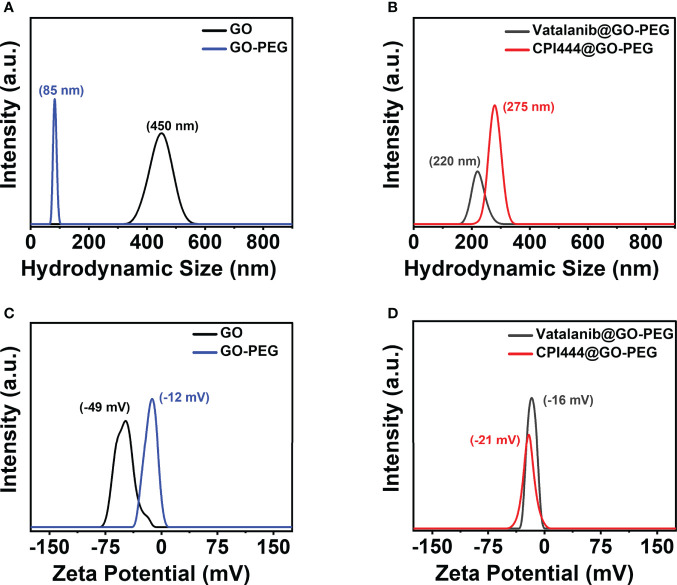
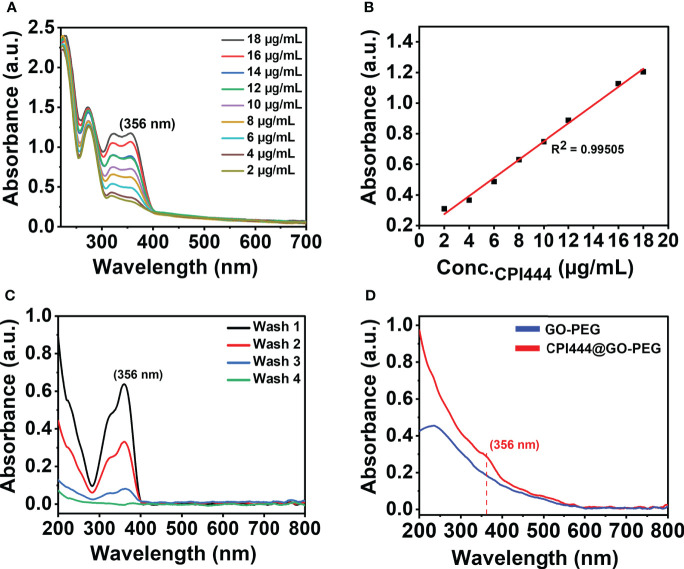
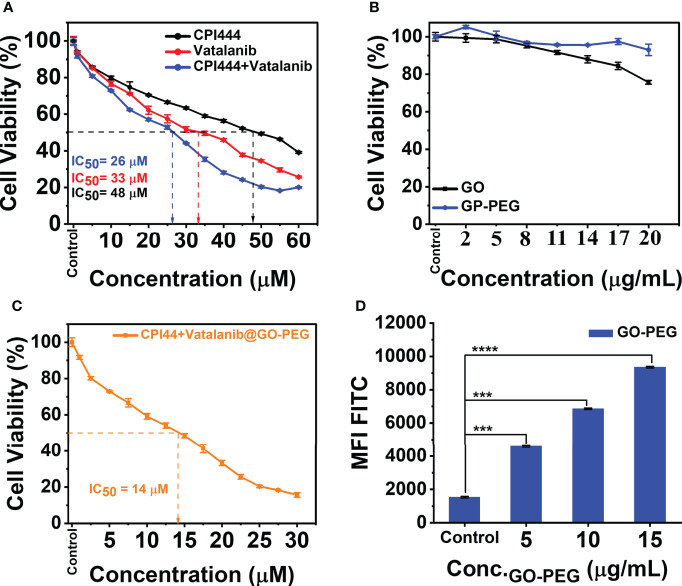
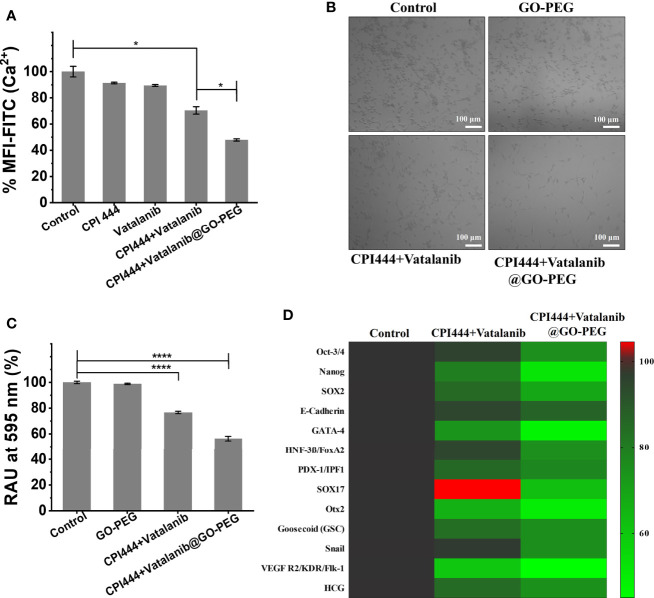
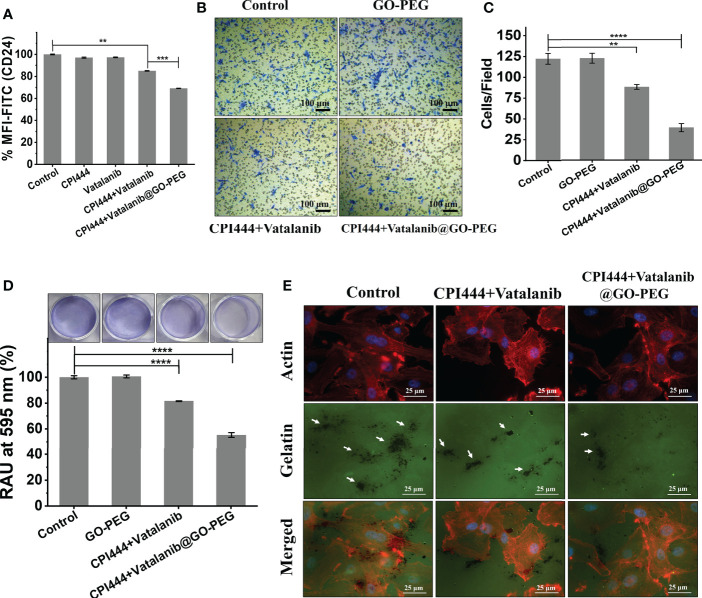
Glioblastoma multiforme (GBM) is known as the primary malignant and most devastating form of tumor found in the central nervous system of the adult population. The active pharmaceutical component in current chemotherapy regimens is mostly hydrophobic and poorly water-soluble, which hampers clinical implications. Nanodrug formulations using nanocarriers loaded with such drugs assisted in water dispersibility, improved cellular permeability, and drug efficacy at a low dose, thus adding to the overall practical value. Here, we successfully developed a water-dispersible and biocompatible nanocargo (GO-PEG) based on covalently modified graphene oxide (GO) with a 6-armed poly(ethylene glycol) amine dendrimer for effective loading of the two hydrophobic anticancer drug molecules, CPI444 and vatalanib. These drug molecules target adenosine receptor (A2AR), vascular endothelial growth factor receptor (VEGFR), platelet-derived growth factor receptor (PDGFR), and type III stem cell receptor tyrosine kinase (c-KIT), which plays a crucial role in cancers. The effective cellular delivery of the drugs when loaded on GO-PEG is attributed to the increased permeability of the drug-nanoconjugate formulation. We observed that this combinatorial drug treatment with nanocargo resulted in a significant reduction in the overall cell survival as supported by reduced calcium levels and stem cell markers such as Oct4 and Nanog, which are two of the prime factors for GBM stem cell proliferation. Furthermore, reduced expression of CD24 upon treatment with nanoformulation impeded cellular migration. Cellular assays confirmed inhibition of cell proliferation, migration, and angiogenic potential of GBM treated with GO-PEG-Drug conjugates. Ultimately, GBM U87 cells assumed programmed cell death at a very low concentration due to nanocarrier-mediated drug delivery along with the chosen combination of drugs. Together, this study demonstrated the advantage of GO-PEG mediated combined delivery of CPI444 and vatalanib drugs with increased permeability, a three-pronged combinatorial strategy toward effective GBM treatment.
多形性胶质母细胞瘤(GBM)是成人中枢神经系统中发现的原发性恶性且最具破坏性的肿瘤形式。当前化疗方案中的活性药物成分大多具有疏水性且水溶性差,这阻碍了其临床应用。使用负载此类药物的纳米载体的纳米药物制剂有助于提高水分散性、改善细胞通透性并在低剂量下提高药物疗效,从而增加了整体实用价值。在此,我们成功开发了一种基于共价修饰氧化石墨烯(GO)与六臂聚(乙二醇)胺树枝状大分子的水分散性且生物相容性良好的纳米载体(GO-PEG),用于有效负载两种疏水性抗癌药物分子CPI444和瓦他拉尼。这些药物分子靶向腺苷受体(A2AR)、血管内皮生长因子受体(VEGFR)、血小板衍生生长因子受体(PDGFR)和III型干细胞受体酪氨酸激酶(c-KIT),它们在癌症中起着关键作用。药物负载在GO-PEG上时的有效细胞递送归因于药物-纳米缀合物制剂通透性的增加。我们观察到,这种纳米载体联合药物治疗导致总体细胞存活率显著降低,这得到了钙水平降低以及干细胞标志物如Oct4和Nanog减少的支持,而Oct4和Nanog是GBM干细胞增殖的两个主要因素。此外,用纳米制剂处理后CD24表达降低阻碍了细胞迁移。细胞实验证实了GO-PEG-药物缀合物对GBM细胞增殖、迁移和血管生成潜力的抑制作用。最终,由于纳米载体介导的药物递送以及所选药物组合,GBM U87细胞在极低浓度下发生程序性细胞死亡。总之,本研究证明了GO-PEG介导的CPI444和瓦他拉尼联合递送具有增加通透性的优势,这是一种针对有效治疗GBM的三管齐下的联合策略。