Chen Qin, Zhou Xueliang, Jin Jianqiang, Feng Jiangbiao, Xu Zhounan, Chen Yunping, Zhao Haibo, Li Zhongchen
Zhejiang Province People's Hospital Haining Hospital, Haining, China.
The 903 Hospital of the Chinese People's Liberation Army, Beijing, China.
J Oncol. 2022 Aug 23;2022:5939158. doi: 10.1155/2022/5939158. eCollection 2022.
Osteosarcoma (OS) is the most common primary bone malignancy in children and adolescents with a high incidence and poor prognosis. Activation of the RAS pathway promotes progression and metastasis of osteosarcoma. RAS has been studied in many different tumors; however, the prognostic value of RAS-associated genes in OS remains unclear. On this basis, we investigated the RAS-related gene signature and explored the intrinsic biological features of OS.
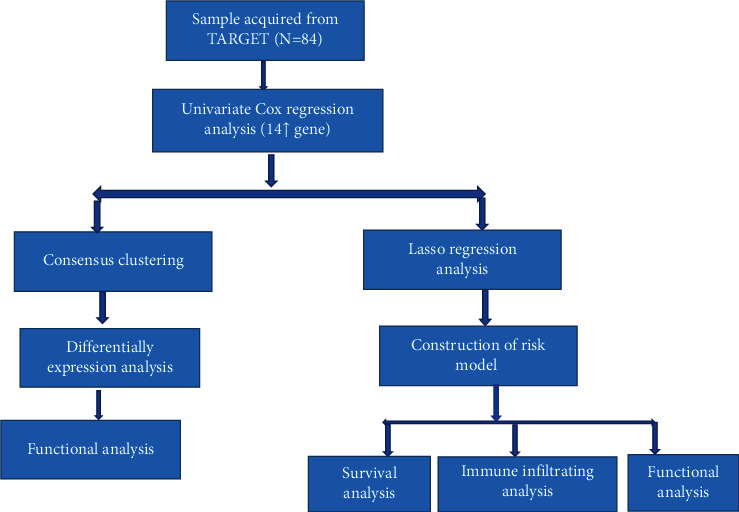
We obtained RNA transcriptome sequencing data and clinical information of osteosarcoma patients from the TARGET database. RAS pathway-related genes were obtained from the KEGG pathway database. Molecular subgroups and risk models were developed using consensus clustering and least absolute shrinkage and selection operator (LASSO) regression, respectively. ESTIMATE algorithm and ssGSEA analysis were used to assess the tumor microenvironment and immune penetrance between the two groups. A comprehensive review of gene ontology (GO) and KEGG analyses revealed inherent biological functional differences between the two groups.
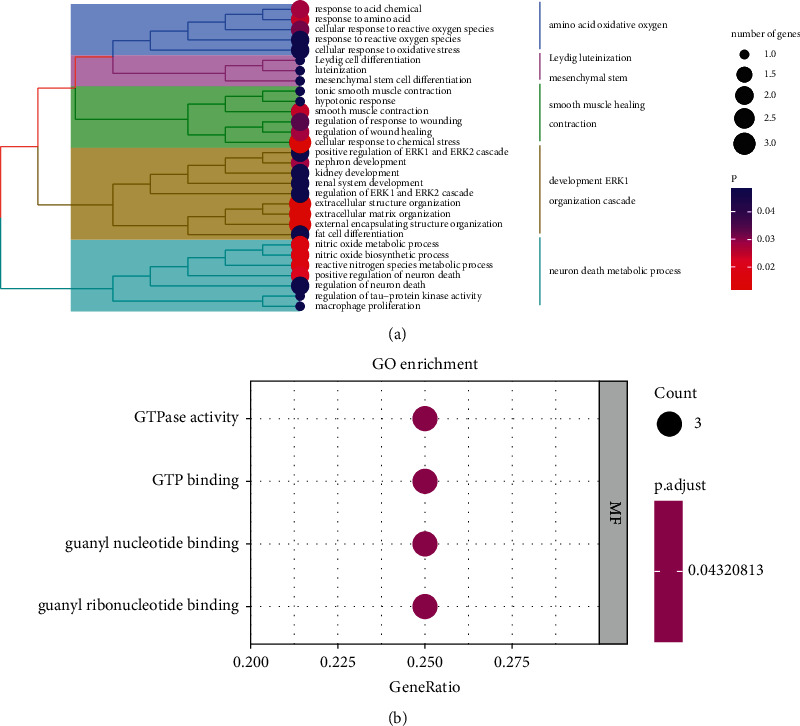
The consistent clustering showed stratification of osteosarcoma patients into two subtypes based on RAS-associated genes and provided a robust prediction of prognosis. A risk model further confirmed that RAS-related genes are the best prognostic indicators for OS patients. GO analysis showed that GDP/GTP binding, focal adhesion, cytoskeletal motor activity, and cell-matrix junctions were associated with the RAS-related model group. Furthermore, RAS signaling in osteosarcoma based on KEGG analysis was significantly associated with cancer progression, with immune function and tumor microenvironment particularly affected.
We constructed a prognostic model founded on RAS-related gene and demonstrated its predictive ability. Then, furtherly exploration of the molecular mechanisms and immune characteristics proved the role of RAS-related gene in the dysregulation in OS.
骨肉瘤(OS)是儿童和青少年中最常见的原发性骨恶性肿瘤,发病率高且预后差。RAS通路的激活促进骨肉瘤的进展和转移。RAS已在许多不同肿瘤中得到研究;然而,RAS相关基因在骨肉瘤中的预后价值仍不清楚。在此基础上,我们研究了RAS相关基因特征并探索了骨肉瘤的内在生物学特性。
我们从TARGET数据库获得了骨肉瘤患者的RNA转录组测序数据和临床信息。RAS通路相关基因从KEGG通路数据库中获取。分别使用一致性聚类和最小绝对收缩和选择算子(LASSO)回归建立分子亚组和风险模型。采用ESTIMATE算法和ssGSEA分析评估两组之间的肿瘤微环境和免疫浸润情况。对基因本体(GO)和KEGG分析的综合回顾揭示了两组之间固有的生物学功能差异。
一致性聚类显示骨肉瘤患者基于RAS相关基因分为两个亚型,并对预后提供了可靠的预测。风险模型进一步证实,RAS相关基因是骨肉瘤患者的最佳预后指标。GO分析表明,GDP/GTP结合、粘着斑、细胞骨架运动活性和细胞-基质连接与RAS相关模型组相关。此外,基于KEGG分析发现骨肉瘤中的RAS信号传导与癌症进展显著相关,尤其对免疫功能和肿瘤微环境有影响。
我们构建了一个基于RAS相关基因的预后模型并证明了其预测能力。然后,对分子机制和免疫特征的进一步探索证明了RAS相关基因在骨肉瘤失调中的作用。