The MOE Key Laboratory for Standardization of Chinese Medicines, Institute of Chinese Materia Medica, Shanghai University of Traditional Chinese Medicine, Shanghai 201210, China.
The MOE Key Laboratory for Standardization of Chinese Medicines, Institute of Chinese Materia Medica, Shanghai University of Traditional Chinese Medicine, Shanghai 201210, China.
EBioMedicine. 2022 Sep;83:104239. doi: 10.1016/j.ebiom.2022.104239. Epub 2022 Aug 30.
Glioblastoma (GBM) is the most aggressive type of primary brain tumor and is often resistant to current therapies. Tumor microenvironment-centered therapies may unleash new hope for GBM treatment. Therefore, an in-depth understanding of tumor-stroma communication is urgently needed to identify promising therapeutic targets.
We systematically analyzed GBM single-cell RNA sequencing (scRNA-seq), bulk RNA-seq and spatial scRNA-seq data from various human and mice studies to characterize the network within the microenvironment. Moreover, we applied ex vivo co-culture system, flow cytometry analysis and immunofluorescent staining to validate our findings.
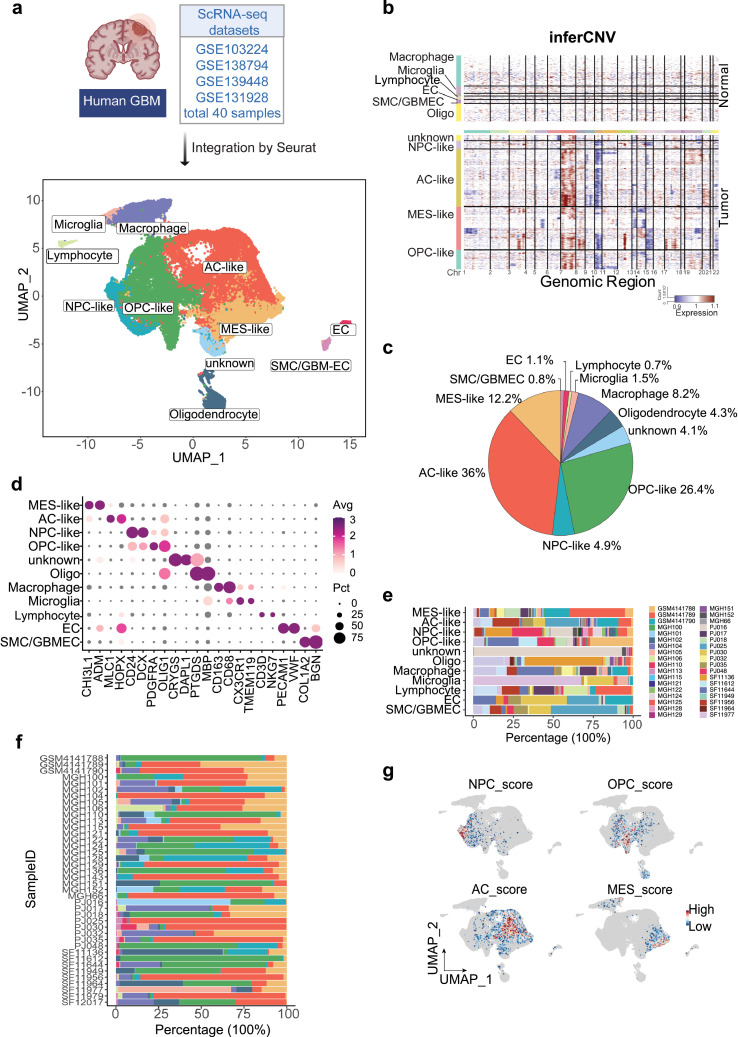
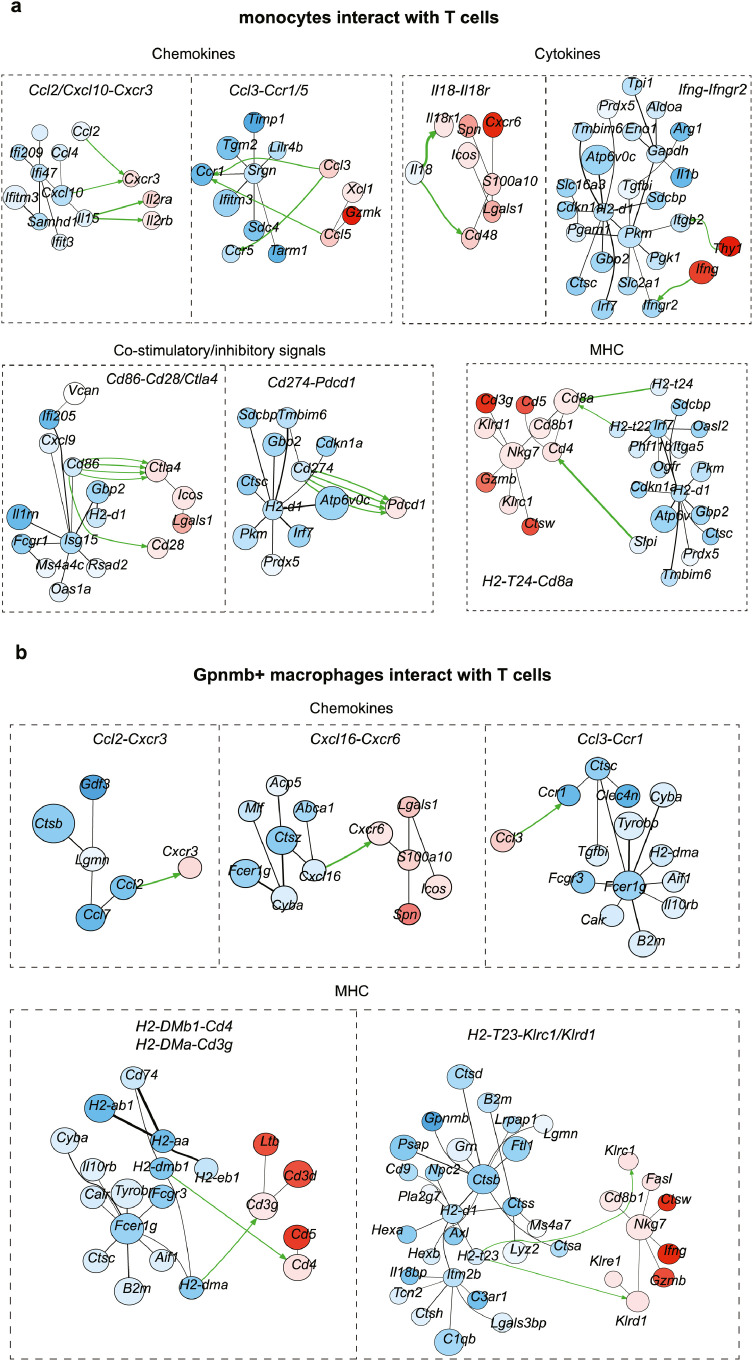
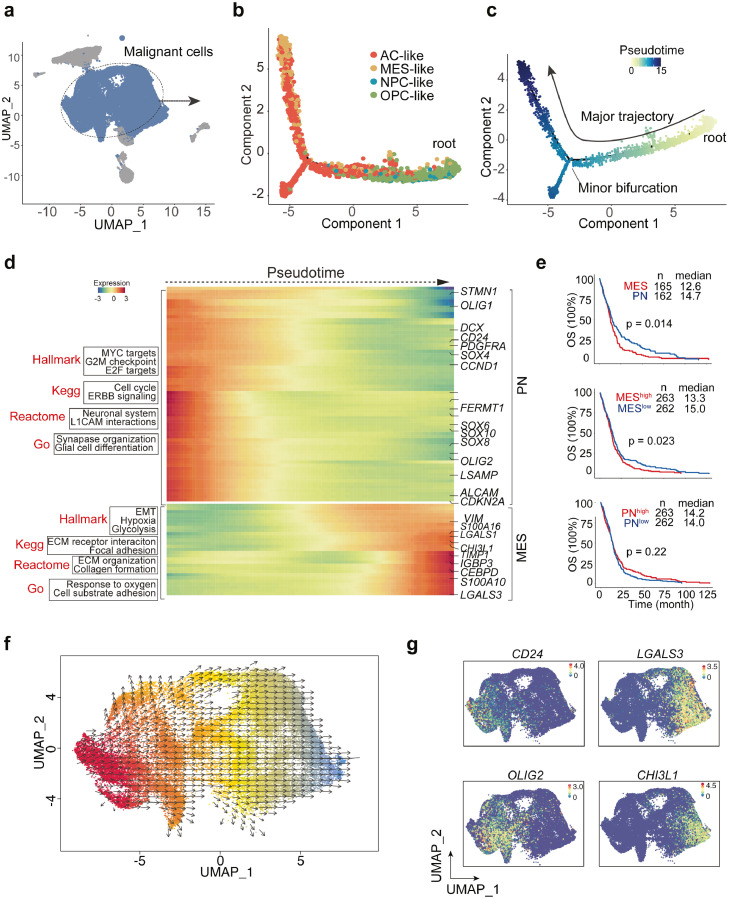
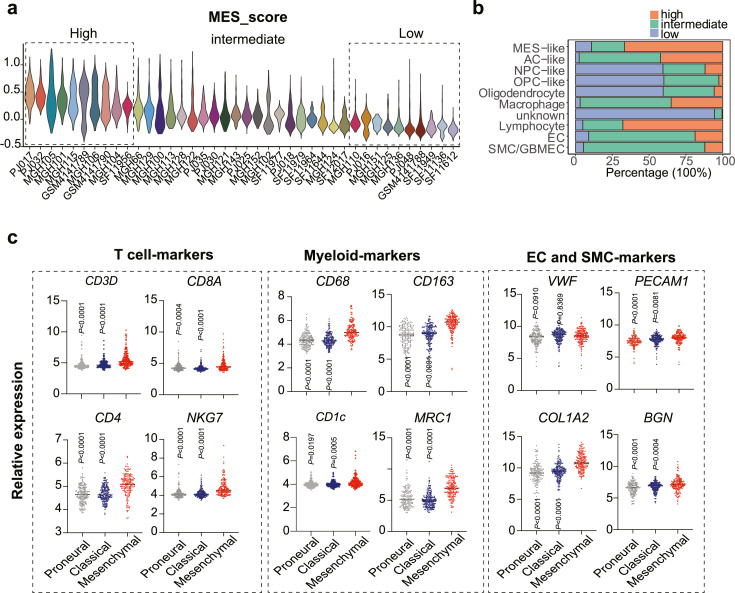
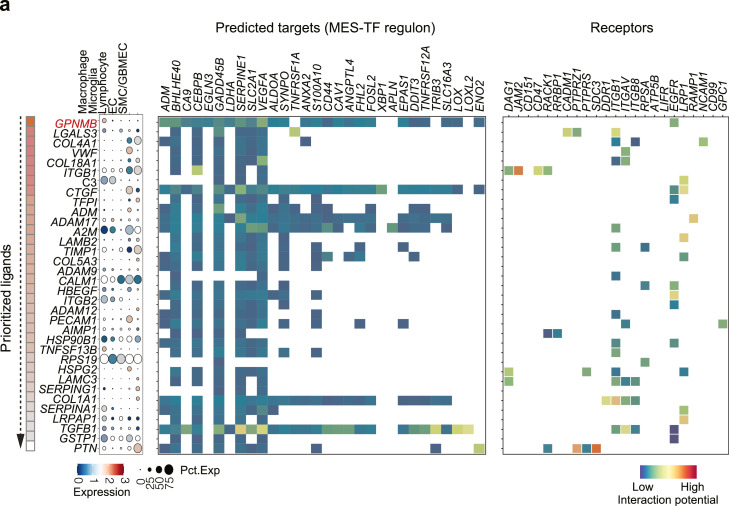
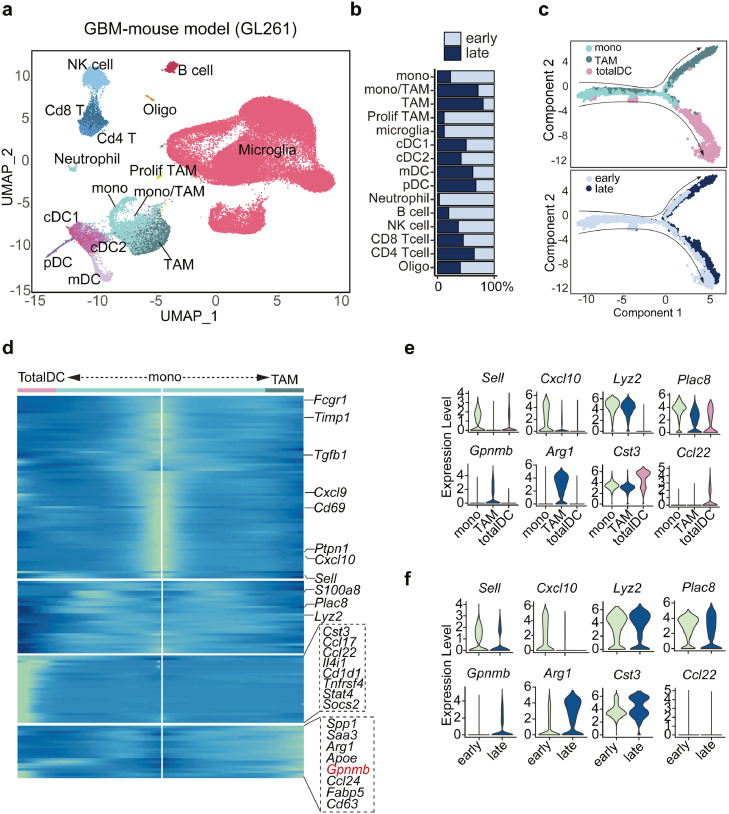
Our integrative analyses revealed that highly heterogeneous GBM tumor cells can be classified into MES-like, AC-like, OPC-like and NPC-like subtypes based on molecular studying. Additionally, trajectory and regulatory network inference implied a PN to MES cell state transition regulated by specific transcriptional factor (TF) regulons. Importantly, we discovered that glycoprotein nonmetastatic B (GPNMB) derived from macrophages played a crucial role in this transition through immune cell-tumor interplay. Besides, through deep signal transduction analyses and cell co-culture studies, we further disclosed that these GPNMB-high macrophage subpopulations, originating from monocytes, could also ineffectively retain T cells from activating by dendritic cells (DCs).
Our study suggests that targeting this particular GPNMB-high macrophage subset may provide a new strategy to control GBM plasticity and facilitate T cell-based immunotherapy.
A full list of funding bodies that contributed to this study can be found in the Acknowledgements section.
胶质母细胞瘤(GBM)是最具侵袭性的原发性脑肿瘤,通常对当前的治疗方法具有抗性。以肿瘤微环境为中心的治疗方法可能为 GBM 的治疗带来新的希望。因此,深入了解肿瘤-基质的通讯对于确定有前途的治疗靶点非常重要。
我们系统地分析了来自不同人类和小鼠研究的 GBM 单细胞 RNA 测序(scRNA-seq)、批量 RNA-seq 和空间 scRNA-seq 数据,以描绘微环境内的网络。此外,我们应用了体外共培养系统、流式细胞分析和免疫荧光染色来验证我们的发现。
我们的综合分析表明,高度异质的 GBM 肿瘤细胞可以根据分子研究分为 MES 样、AC 样、OPC 样和 NPC 样亚型。此外,轨迹和调控网络推断表明,特定转录因子(TF)调控子调节 PN 到 MES 细胞状态的转变。重要的是,我们发现源自巨噬细胞的糖蛋白非转移性 B(GPNMB)通过免疫细胞-肿瘤相互作用在这种转变中发挥关键作用。此外,通过深入的信号转导分析和细胞共培养研究,我们进一步揭示了这些源自单核细胞的 GPNMB 高巨噬细胞亚群可以通过树突状细胞(DCs)有效地阻止 T 细胞激活。
我们的研究表明,靶向这种特定的 GPNMB 高巨噬细胞亚群可能为控制 GBM 的可塑性并促进基于 T 细胞的免疫疗法提供新策略。
对本研究做出贡献的资助机构的完整列表可在致谢部分找到。