Research Department, HatchTech B.V., 3900 AG Veenendaal, the Netherlands; Adaptation Physiology Group, Department of Animal Sciences, Wageningen University & Research, 6700 AH Wageningen, the Netherlands.
Research Department, HatchTech B.V., 3900 AG Veenendaal, the Netherlands.
Poult Sci. 2022 Oct;101(10):102092. doi: 10.1016/j.psj.2022.102092. Epub 2022 Aug 1.
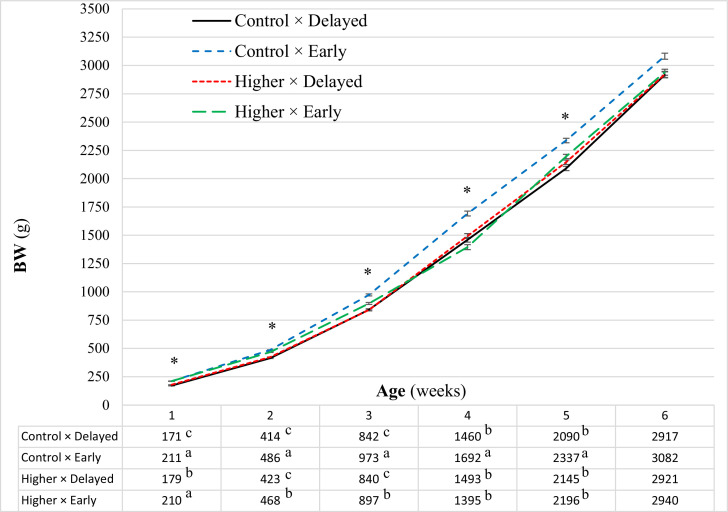
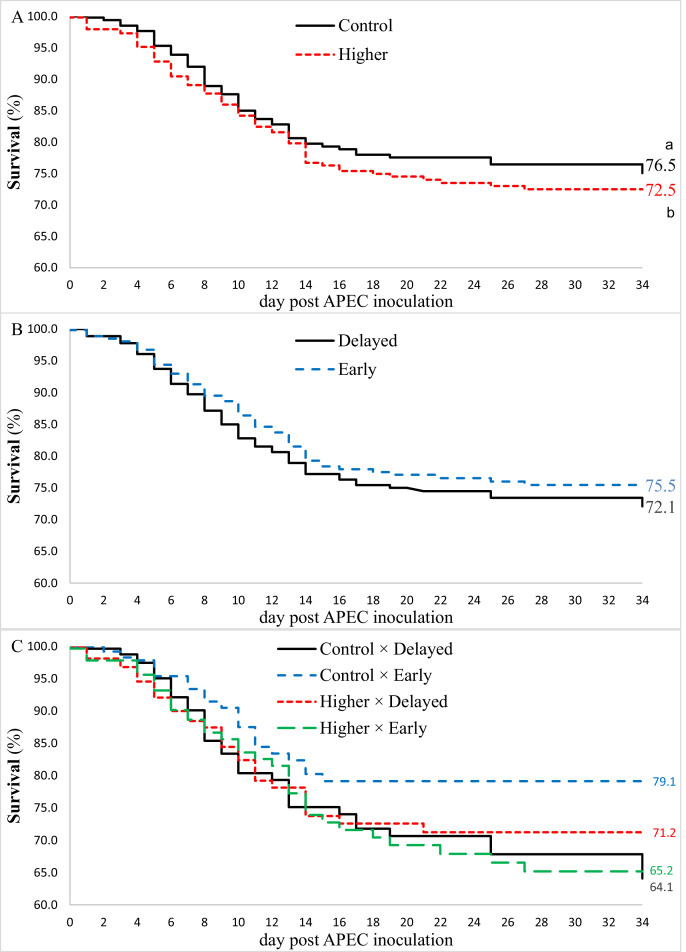
Colibacillosis is a poultry disease that negatively affects welfare and causes economic losses. Treatment with antibiotics raises concerns on antimicrobial resistance. Consequently, alternative approaches to enhance poultry resilience are needed. Access to feed and water directly after hatch (early feeding) may enhance resilience at later ages. Additionally, a high eggshell temperature (EST) during mid incubation may improve chick quality at hatch, supporting potential positive effects of early feeding. Effects of EST [37.8°C (control) or 38.9°C (higher)] during mid-incubation (embryo days 7-14) and feeding strategy (early feeding or 48 h delayed feeding) were tested in a 2 × 2 factorial arrangement. At hatch, ̴ 1,800 broilers were divided over 36 pens and grown for 6 wk. At d 8 post hatch, avian pathogenic E. coli (APEC) was inoculated intratracheally as model to investigate broiler resilience against respiratory diseases. Incidence and severity of colibacillosis, local infection, and systemic infection were assessed at 6 moments between 3 h and 7 d postinoculation. Broilers were weighed daily during 13 d postinoculation and weekly thereafter. At higher EST, early feeding resulted in higher incidence of systemic infection compared to delayed feeding whereas at control EST, systemic infection was not different between feeding strategies. Regardless of EST, early compared to delayed feeding resulted in lower incidence of local infection, fewer BW deviations, and higher growth until d 35. In conclusion, early feeding could be considered as a strategy to enhance broiler resilience, but only when EST is not too high.
大肠杆菌病是一种禽类疾病,会对禽类福利产生负面影响,并导致经济损失。抗生素治疗会引起人们对抗微生物药物耐药性的担忧。因此,需要寻找增强禽类抵抗力的替代方法。出雏后立即(早期饲喂)获得饲料和水可能会增强后期的抵抗力。此外,孵化中期蛋壳温度(EST)较高(37.8°C[对照]或 38.9°C[较高])可能会提高出雏时雏鸡的质量,支持早期饲喂的潜在积极影响。在孵化中期(胚胎第 7-14 天)进行 EST[37.8°C(对照)或 38.9°C(较高)]和饲喂策略(早期饲喂或 48 小时延迟饲喂)的 2×2 析因试验。出雏时,将约 1800 只肉鸡分为 36 个栏,并饲养 6 周。出雏后第 8 天,通过气管内接种禽致病性大肠杆菌(APEC)作为模型,研究肉鸡对呼吸道疾病的抵抗力。在接种后 3 小时至 7 天内的 6 个时间点评估大肠杆菌病、局部感染和全身感染的发生率和严重程度。在接种后 13 天内每天称重,并在此后每周称重。在较高的 EST 下,早期饲喂比延迟饲喂更容易导致全身感染,而在对照 EST 下,两种饲喂策略之间的全身感染没有差异。无论 EST 如何,与延迟饲喂相比,早期饲喂导致局部感染的发生率较低,体重偏差较小,并且在第 35 天之前的生长速度更快。总之,早期饲喂可以被认为是增强肉鸡抵抗力的一种策略,但前提是 EST 不太高。