Department of Orthopaedics, Union Hospital, Tongji Medical College, Huazhong University of Science and Technology, Wuhan, 430022, China.
Department of Spine Surgery, Honghui Hospital, Xi'an Jiaotong University, Xi'an, 710054, China.
Exp Mol Med. 2022 Sep;54(9):1472-1485. doi: 10.1038/s12276-022-00844-7. Epub 2022 Sep 2.
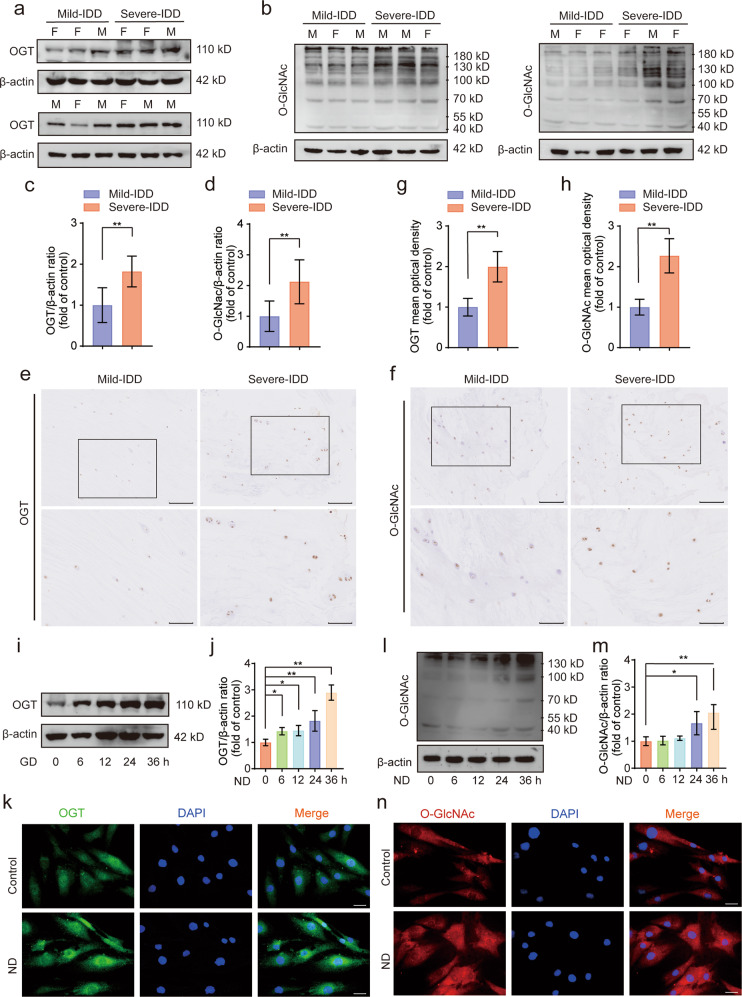
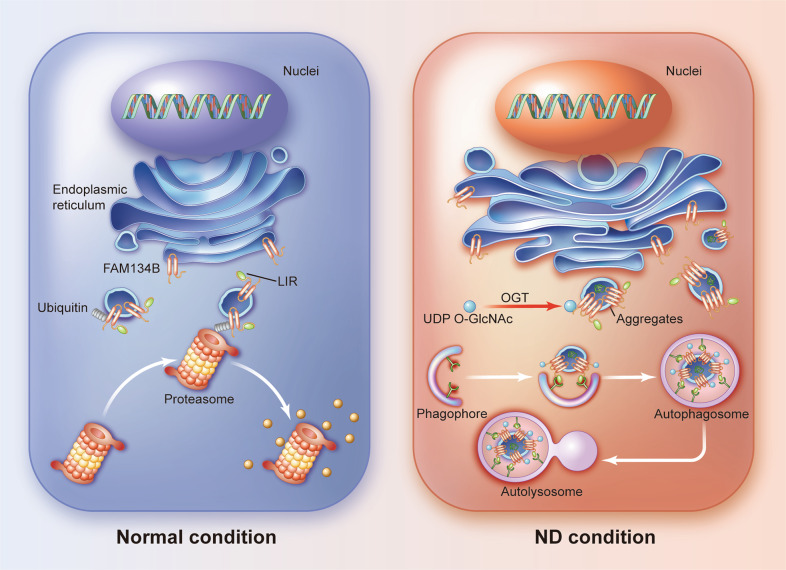
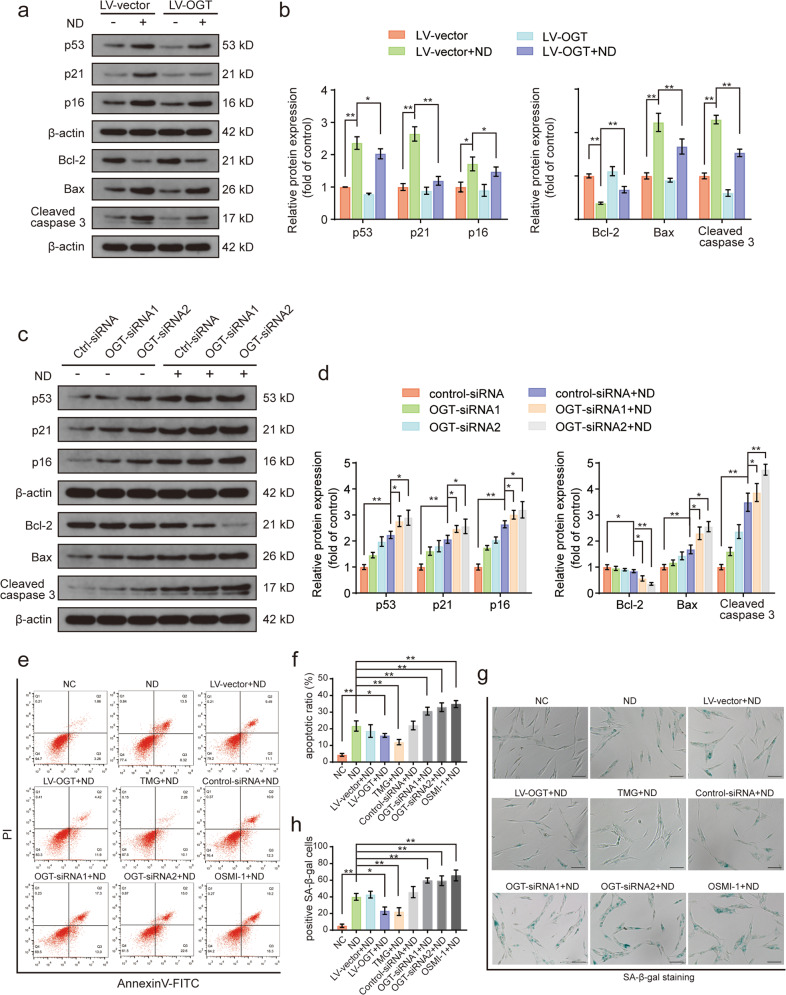
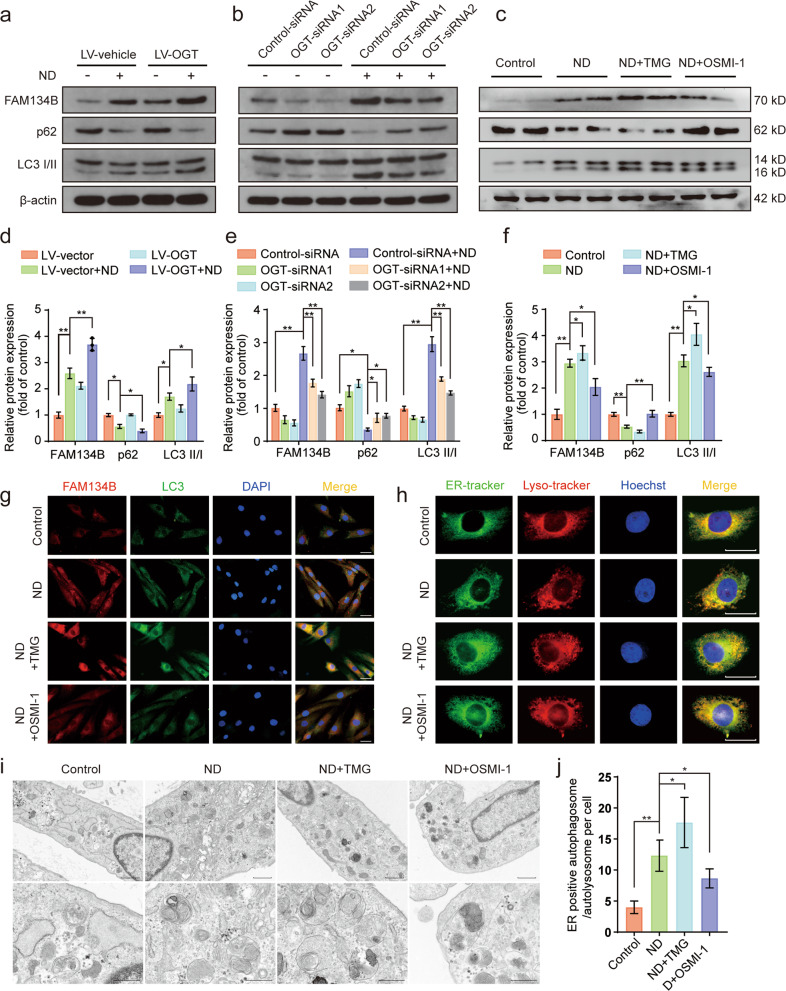
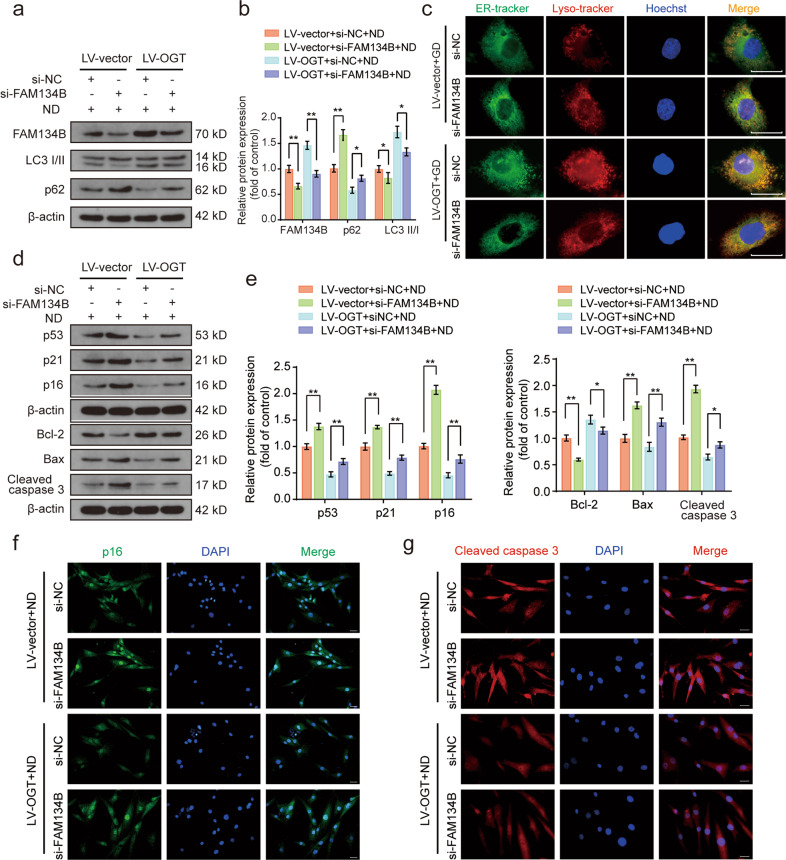
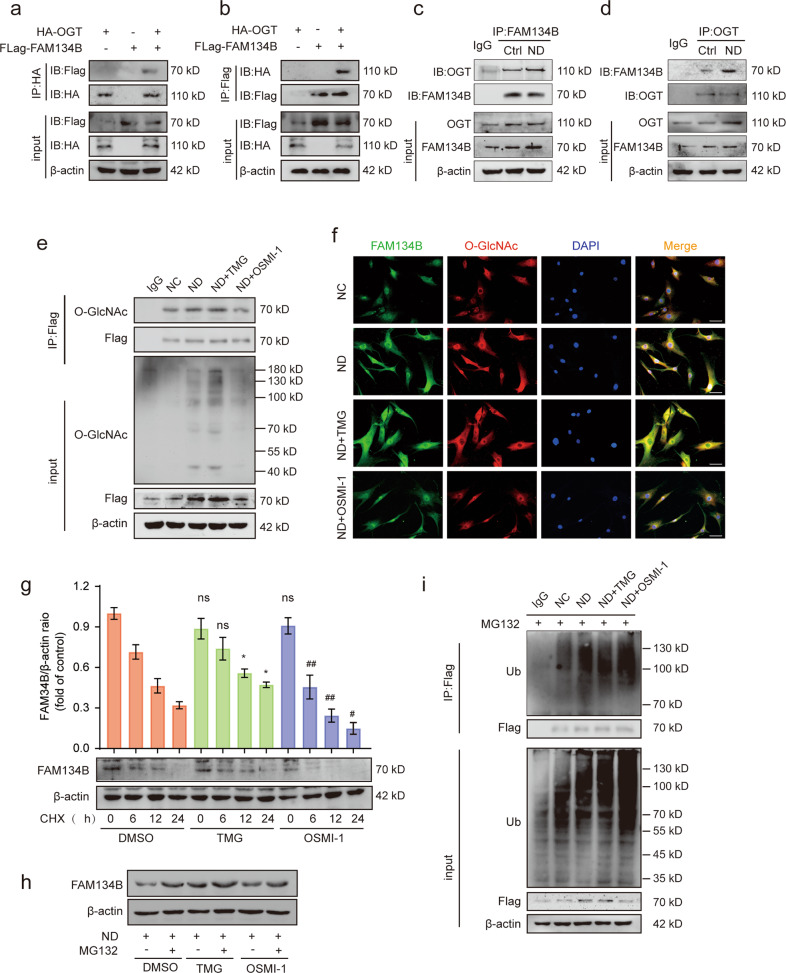
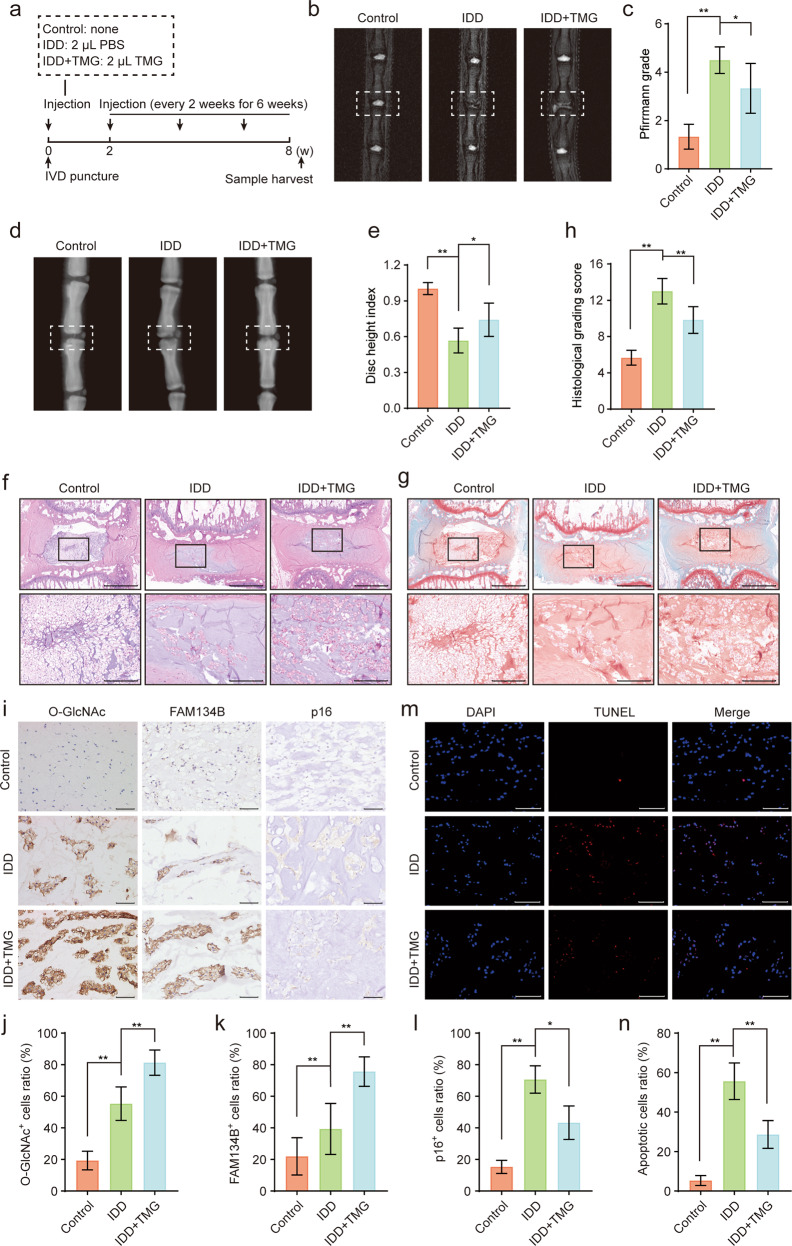
Both O-linked β-N-acetylglucosaminylation (O-GlcNAcylation) and endoplasmic reticulum-phagy (ER-phagy) are well-characterized conserved adaptive regulatory mechanisms that maintain cellular homeostasis and function in response to various stress conditions. Abnormalities in O-GlcNAcylation and ER-phagy have been documented in a wide variety of human pathologies. However, whether O-GlcNAcylation or ER-phagy is involved in the pathogenesis of intervertebral disc degeneration (IDD) is largely unknown. In this study, we investigated the function of O-GlcNAcylation and ER-phagy and the related underlying mechanisms in IDD. We found that the expression profiles of O-GlcNAcylation and O-GlcNAc transferase (OGT) were notably increased in degenerated NP tissues and nutrient-deprived nucleus pulposus (NP) cells. By modulating the O-GlcNAc level through genetic manipulation and specific pharmacological intervention, we revealed that increasing O-GlcNAcylation abundance substantially enhanced cell function and facilitated cell survival under nutrient deprivation (ND) conditions. Moreover, FAM134B-mediated ER-phagy activation was regulated by O-GlcNAcylation, and suppression of ER-phagy by FAM134B knockdown considerably counteracted the protective effects of amplified O-GlcNAcylation. Mechanistically, FAM134B was determined to be a potential target of OGT, and O-GlcNAcylation of FAM134B notably reduced FAM134B ubiquitination-mediated degradation. Correspondingly, the protection conferred by modulating O-GlcNAcylation homeostasis was verified in a rat IDD model. Our data demonstrated that OGT directly associates with and stabilizes FAM134B and subsequently enhances FAM134B-mediated ER-phagy to enhance the adaptive capability of cells in response to nutrient deficiency. These findings may provide a new option for O-GlcNAcylation-based therapeutics in IDD prevention.
O -linked β-N-乙酰氨基葡萄糖(O-GlcNAc)ylation 和内质网自噬(ER-phagy)都是经过充分研究的保守适应性调节机制,可在各种应激条件下维持细胞内稳态和功能。在广泛的人类病理中已经记录到 O-GlcNAcylation 和 ER-phagy 的异常。然而,O-GlcNAcylation 或 ER-phagy 是否参与椎间盘退行性变(IDD)的发病机制尚不清楚。在这项研究中,我们研究了 O-GlcNAcylation 和 ER-phagy 的功能及其在 IDD 中的相关潜在机制。我们发现,在退变的 NP 组织和营养剥夺的髓核(NP)细胞中,O-GlcNAcylation 和 O-GlcNAc 转移酶(OGT)的表达谱明显增加。通过遗传操作和特定的药理学干预来调节 O-GlcNAc 水平,我们发现增加 O-GlcNAcylation 丰度可显著增强细胞在营养缺乏(ND)条件下的功能和生存能力。此外,FAM134B 介导的 ER-phagy 激活受到 O-GlcNAcylation 的调节,并且 FAM134B 敲低抑制 ER-phagy 会显著抵消扩增的 O-GlcNAcylation 的保护作用。从机制上讲,FAM134B 被确定为 OGT 的潜在靶标,并且 FAM134B 的 O-GlcNAcylation 显著减少 FAM134B 泛素化介导的降解。相应地,在大鼠 IDD 模型中验证了调节 O-GlcNAc 动态平衡所赋予的保护作用。我们的数据表明,OGT 直接与 FAM134B 结合并稳定 FAM134B,随后增强 FAM134B 介导的 ER-phagy,以增强细胞对营养缺乏的适应性。这些发现可能为基于 O-GlcNAcylation 的 IDD 预防治疗提供新选择。