Department of Translational Medical Sciences, University "Federico II", Naples, Italy.
Research Unit (URT) Genomics of Diabetes, Institute of Experimental Endocrinology and Oncology, National Research Council, Naples, Italy.
Front Immunol. 2022 Aug 18;13:908453. doi: 10.3389/fimmu.2022.908453. eCollection 2022.
Thymic epithelial tumors (TETs) are frequently accompanied by Good Syndrome (GS), a rare immunodeficiency, characterized by hypogammaglobulinemia and peripheral B cell lymphopenia. TETs can be also associated to other immunological disorders, both immunodeficiency and autoimmunity.
In this study, we enrolled TET patients with GS to address differences between patients with or without associated autoimmune diseases (AD). We analyzed the immunophenotype from peripheral blood of these patients focusing on selected immune cell subsets (CD4+T cells, CD8+T cells, T regulatory cells, NK cells, B-cells, monocytes, eosinophils, basophils, neutrophils) and serum levels of cytokines, chemokines and growth factors.
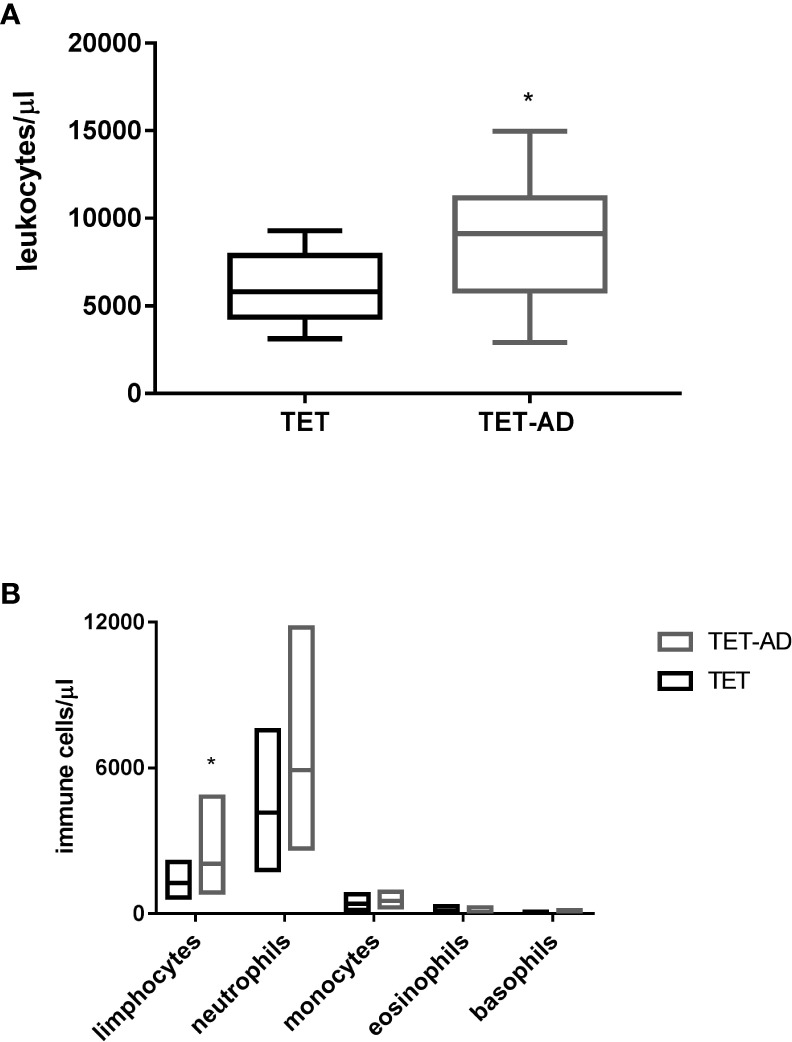
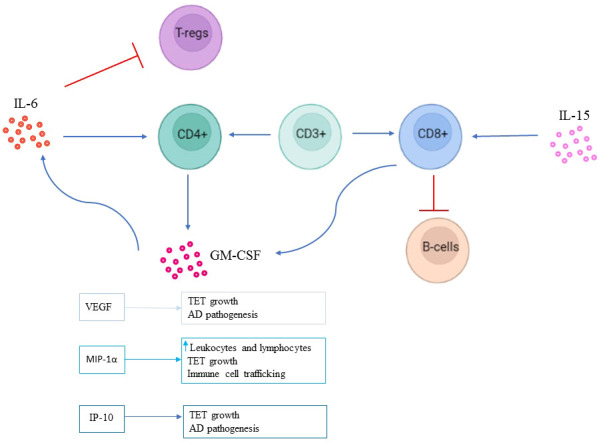
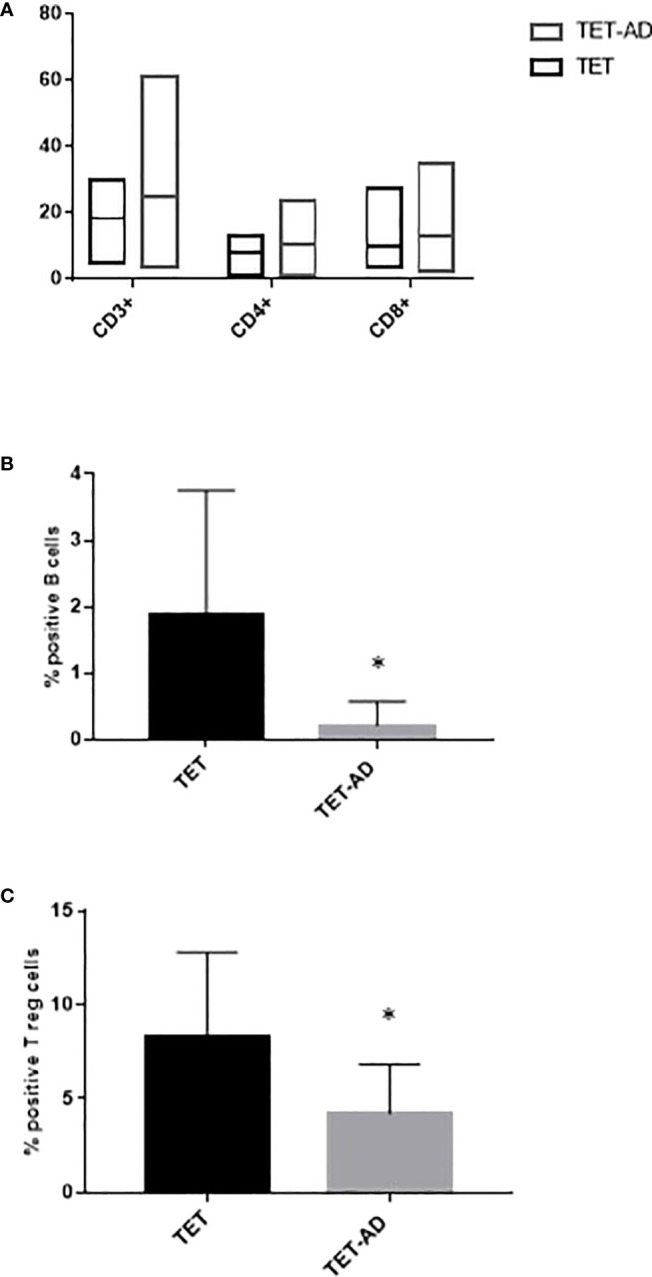
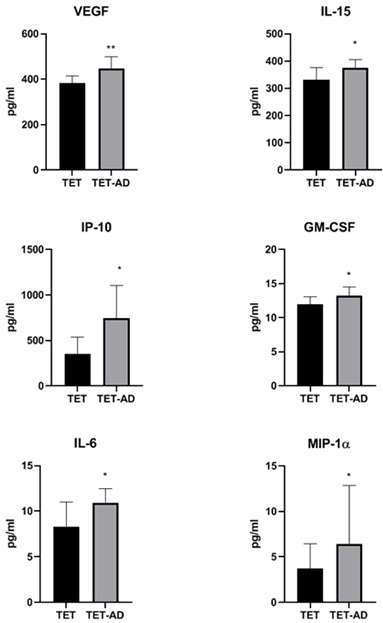
We observed higher number of leucocytes, in particular lymphocytes, B lymphopenia and lower number of T regulatory cells in TET patients with associated AD compared to TET patients without AD. In the group of TET patients with AD, we also observed increased serum levels of IL-15, VEGF, IP-10, GM-CSF, IL-6, and MIP-1α. Thus, we identified considerable differences in the lymphocyte profiles of TET patients with and without ADs, in particular a reduction in the numbers of B lymphocytes and T-regulatory cells in the former, as well as differences in the serum levels of various immune modulators.
Although the pathogenic mechanisms are still unclear, our results add new knowledge to better understand the disease, suggesting the need of surveilling the immunophenotype of TET patients to ameliorate their clinical management.
胸腺瘤(TET)常伴有Good 综合征(GS),这是一种罕见的免疫缺陷病,表现为低丙种球蛋白血症和外周 B 细胞淋巴细胞减少症。TET 也可能与其他免疫性疾病相关,包括免疫缺陷和自身免疫性疾病。
本研究纳入了伴有 GS 的 TET 患者,以探讨伴有或不伴有相关自身免疫性疾病(AD)的患者之间的差异。我们分析了这些患者外周血的免疫表型,重点关注选定的免疫细胞亚群(CD4+T 细胞、CD8+T 细胞、T 调节细胞、NK 细胞、B 细胞、单核细胞、嗜酸性粒细胞、嗜碱性粒细胞、中性粒细胞)和细胞因子、趋化因子和生长因子的血清水平。
我们观察到,与不伴有 AD 的 TET 患者相比,伴有 AD 的 TET 患者白细胞,特别是淋巴细胞增多,B 细胞减少,T 调节细胞减少。在伴有 AD 的 TET 患者组中,我们还观察到 IL-15、VEGF、IP-10、GM-CSF、IL-6 和 MIP-1α 血清水平升高。因此,我们发现伴有和不伴有 AD 的 TET 患者的淋巴细胞谱存在明显差异,特别是前者 B 淋巴细胞和 T 调节细胞数量减少,以及各种免疫调节剂的血清水平存在差异。
尽管发病机制尚不清楚,但我们的研究结果为更好地了解该疾病提供了新的知识,提示需要监测 TET 患者的免疫表型,以改善其临床管理。