Division of Rheumatology, Allergy and Clinical Immunology, University of California at Davis, Davis, CA, United States.
Department of Rheumatology and Immunology, Affiliated Hospital of Qingdao University, Qingdao, Shandong, China.
Front Immunol. 2022 Aug 17;13:912961. doi: 10.3389/fimmu.2022.912961. eCollection 2022.
BACKGROUND/AIMS: Primary sclerosing cholangitis (PSC) is a chronic inflammatory biliary disease for which the immunopathological basis remains an enigma. Natural killer (NK) cells are key components of innate immunity and seemingly play diversified roles in different autoimmune disorders (AIDs). The aim of this study was to determine the role of NK cells in the pathogenesis of PSC.
The frequency and phenotype of circulating NK cells in a large cohort of patients with PSC and healthy controls (HCs) were systematically examined. In addition, the functional capacity of NK cells including cytotoxicity and cytokine production was studied.
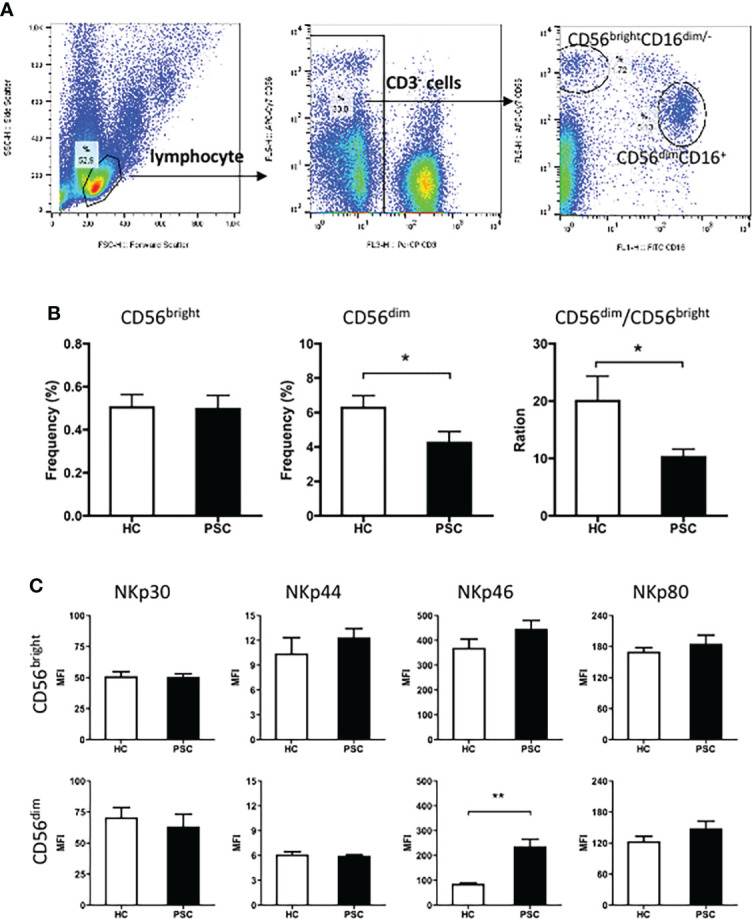
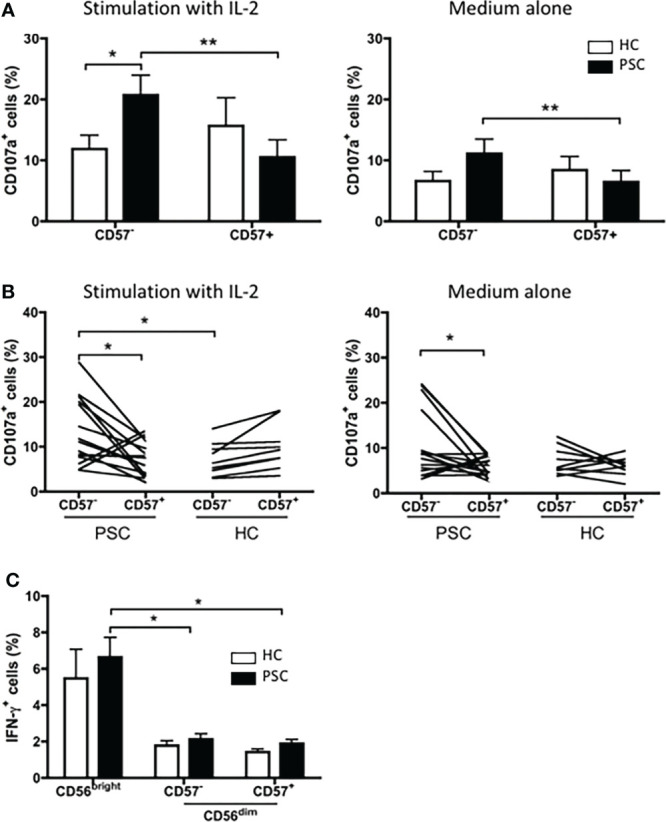
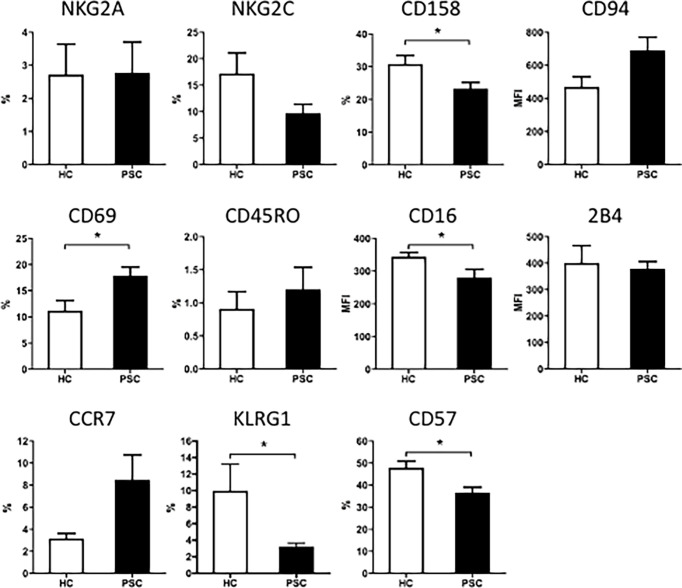
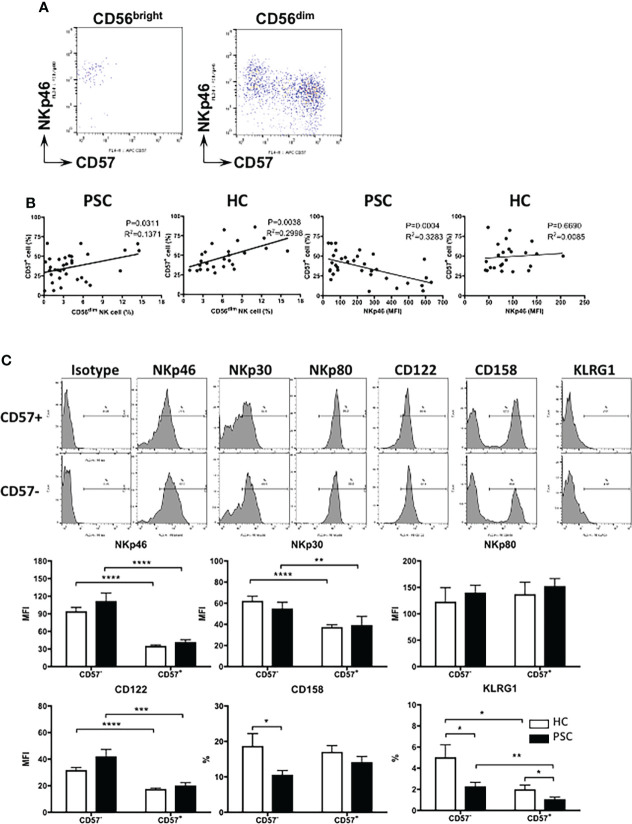
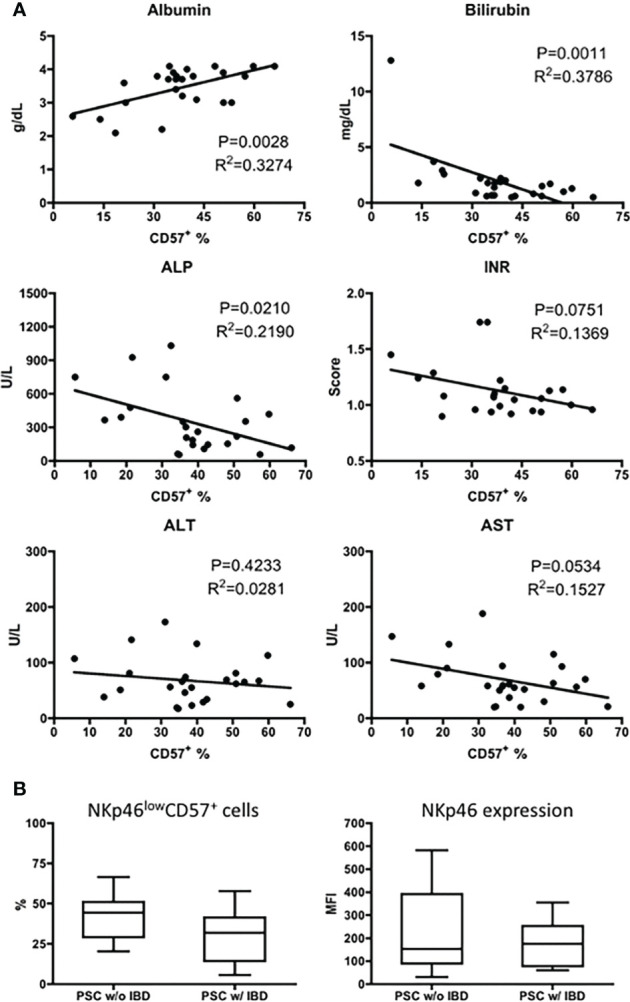
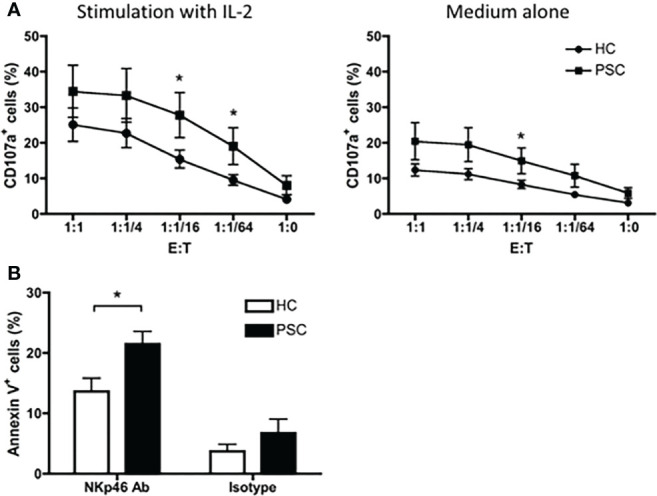
The frequency of CD3CD56CD16 (defined as CD56) NK cells in PSC patients was significantly lower in comparison to HCs. CD56 NK cells from PSC displayed a more immature phenotype including high expression of the natural killing receptor NKp46 and downregulation of the highly differentiated NK cell marker CD57. Interestingly, the reduction of CD57 expression of NK cells was associated with the disease severity of PSC. In addition, PSC CD56 NK cells exhibited increased CD107a degranulation and cytolytic activity toward target cells compared with HCs. Further analysis demonstrated that CD57CD56 NK cells from PSC had elevated expression of NKp46, NKp30, IL-2 receptor, and KLRG1 and higher cytotoxic capacity as compared to CD57CD56 NK cells.
Our data demonstrate that the differentiation of PSC NK cells is dysregulated with enhanced cytotoxic activity. This change is likely to be functionally involved in pathogenesis and disease progression, deducing the potential of NK-directed immunotherapy for PSC.
背景/目的:原发性硬化性胆管炎(PSC)是一种慢性炎症性胆道疾病,其免疫病理学基础仍然是一个谜。自然杀伤(NK)细胞是先天免疫的关键组成部分,在不同的自身免疫性疾病(AIDs)中似乎发挥着多样化的作用。本研究旨在确定 NK 细胞在 PSC 发病机制中的作用。
系统检测了一大群 PSC 患者和健康对照(HCs)循环 NK 细胞的频率和表型。此外,还研究了 NK 细胞的功能能力,包括细胞毒性和细胞因子产生。
与 HCs 相比,PSC 患者的 CD3CD56CD16(定义为 CD56)NK 细胞频率明显降低。PSC 的 CD56 NK 细胞表现出更不成熟的表型,包括高表达自然杀伤受体 NKp46 和下调高度分化的 NK 细胞标记物 CD57。有趣的是,NK 细胞 CD57 表达的减少与 PSC 的疾病严重程度相关。此外,与 HCs 相比,PSC CD56 NK 细胞对靶细胞的 CD107a 脱颗粒和细胞毒性活性增加。进一步分析表明,与 CD57CD56 NK 细胞相比,PSC 的 CD57CD56 NK 细胞表达更高水平的 NKp46、NKp30、IL-2 受体和 KLRG1,并且具有更高的细胞毒性能力。
我们的数据表明,PSC NK 细胞的分化失调,细胞毒性活性增强。这种变化可能在发病机制和疾病进展中具有功能相关性,提示 NK 定向免疫疗法治疗 PSC 的潜力。