Transplant Division, Department of Surgery, Indiana University School of Medicine, Indianapolis, IN, United States.
Department of Microbiology and Immunology, Indiana University School of Medicine, Indianapolis, IN, United States.
Front Immunol. 2023 Jul 17;14:1217809. doi: 10.3389/fimmu.2023.1217809. eCollection 2023.
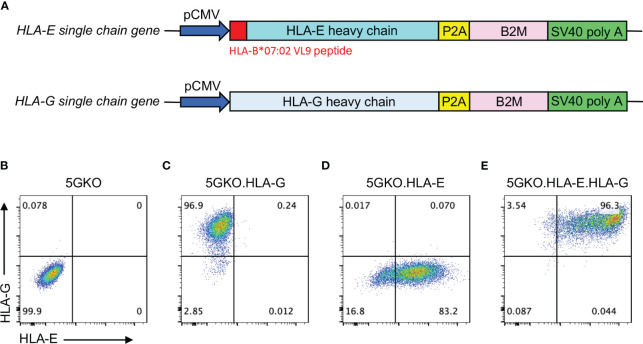
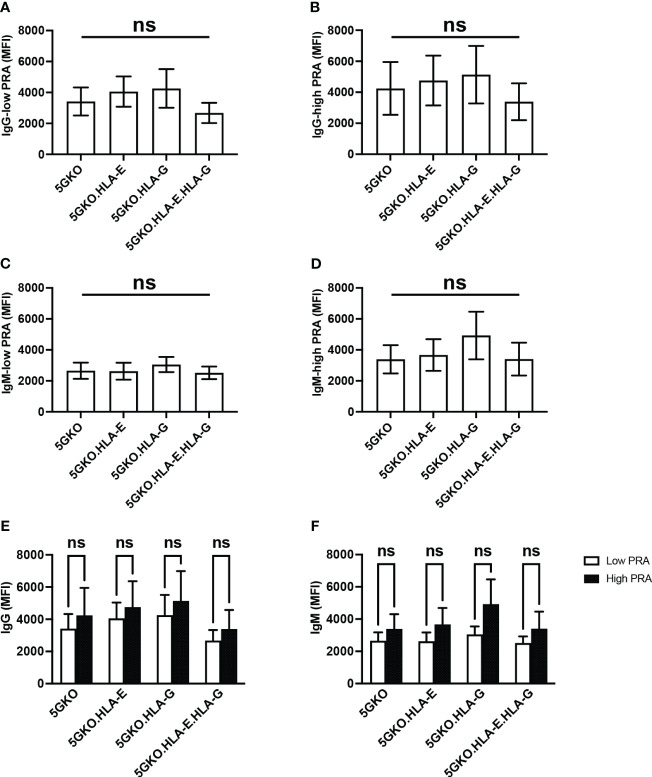
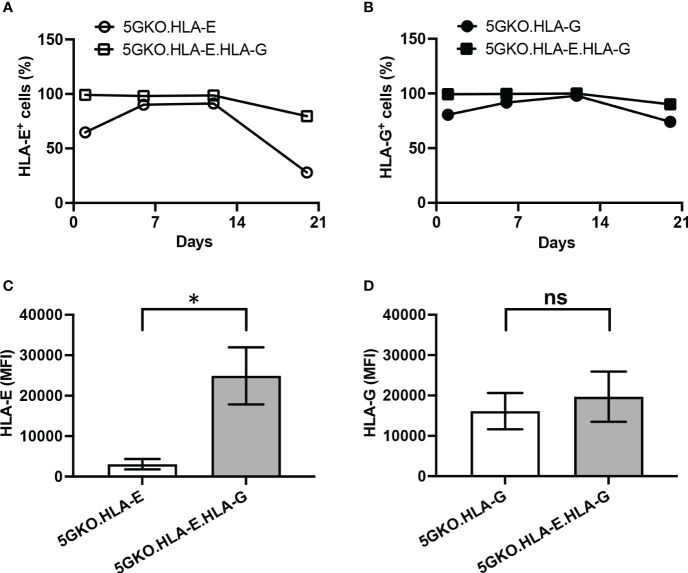
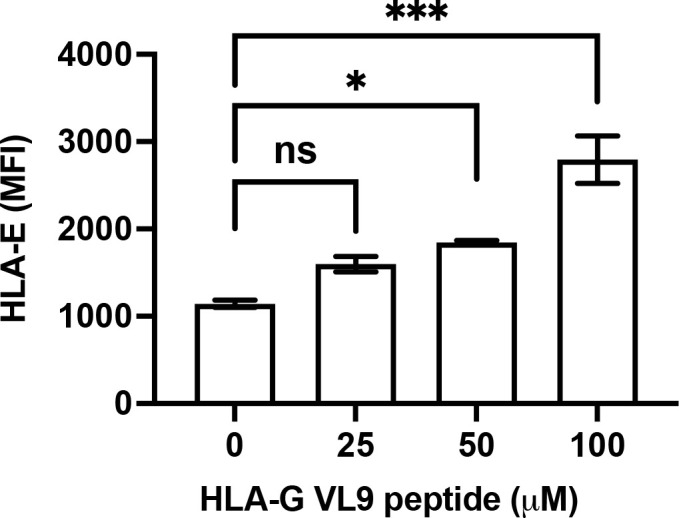
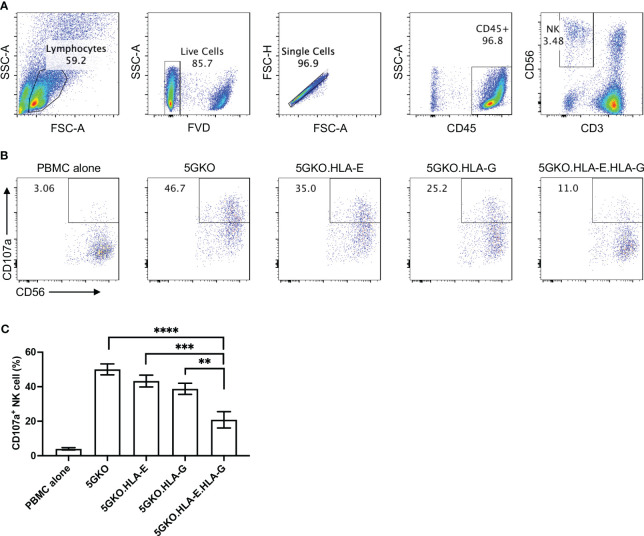
Natural killer (NK) cells play an important role in immune rejection in solid organ transplantation. To mitigate human NK cell activation in xenotransplantation, introducing inhibitory ligands on xenografts genetic engineering of pigs may protect the graft from human NK cell-mediated cytotoxicity and ultimately improve xenograft survival. In this study, non-classical HLA class I molecules HLA-E and HLA-G were introduced in an immortalized porcine liver endothelial cell line with disruption of five genes (, , , , and ) encoding three major carbohydrate xenoantigens (αGal, Neu5Gc, and Sda) and swine leukocyte antigen class I (SLA-I) molecules. Expression of HLA-E and/or HLA-G on pig cells were confirmed by flow cytometry. Endogenous HLA-G molecules as well as exogenous HLA-G VL9 peptide could dramatically enhance HLA-E expression on transfected pig cells. We found that co-expression of HLA-E and HLA-G on porcine cells led to a significant reduction in human NK cell activation compared to the cells expressing HLA-E or HLA-G alone and the parental cell line. NK cell activation was assessed by analysis of CD107a expression in CD3CD56 population gated from human peripheral blood mononuclear cells. CD107a is a sensitive marker of NK cell activation and correlates with NK cell degranulation and cytotoxicity. HLA-E and/or HLA-G on pig cells did not show reactivity to human sera IgG and IgM antibodies. This study demonstrated that co-expression of HLA-E and HLA-G on genetically modified porcine endothelial cells provided a superior inhibition in human xenoreactive NK cells, which may guide further genetic engineering of pigs to prevent human NK cell mediated rejection.
自然杀伤 (NK) 细胞在实体器官移植中的免疫排斥中发挥重要作用。为减轻异种移植中人类 NK 细胞的激活,在异种移植物上引入抑制性配体或对猪进行基因工程改造,可能会保护移植物免受人类 NK 细胞介导的细胞毒性作用,从而最终提高异种移植物的存活率。在这项研究中,我们在一个已破坏编码三个主要碳水化合物异种抗原(αGal、Neu5Gc 和 Sda)和猪白细胞抗原 I 类 (SLA-I) 分子的 5 个基因(、、、、和)的永生化猪肝内皮细胞系中引入了非经典 HLA I 类分子 HLA-E 和 HLA-G。通过流式细胞术证实了猪细胞上 HLA-E 和/或 HLA-G 的表达。内源性 HLA-G 分子和外源性 HLA-G VL9 肽均可显著增强转染猪细胞上 HLA-E 的表达。我们发现,与单独表达 HLA-E 或 HLA-G 的细胞以及亲本细胞系相比,猪细胞上共表达 HLA-E 和 HLA-G 可显著降低人类 NK 细胞的激活。通过分析从人外周血单核细胞中门控的 CD3CD56 群体中的 CD107a 表达来评估 NK 细胞的激活。CD107a 是 NK 细胞激活的敏感标志物,与 NK 细胞脱颗粒和细胞毒性相关。猪细胞上的 HLA-E 和/或 HLA-G 与人类血清 IgG 和 IgM 抗体无反应性。这项研究表明,在基因修饰的猪内皮细胞上共表达 HLA-E 和 HLA-G 可提供对人类异种反应性 NK 细胞的卓越抑制作用,这可能为进一步对猪进行基因工程改造以防止人类 NK 细胞介导的排斥反应提供指导。