Integrative Chemical Biology (ICB), Institute for Stem Cell Science and Regenerative Medicine (inStem), Bengaluru, India.
Epigenetics and Human Disease Laboratory, Centre of Excellence in Epigenetics (CoEE) Department of Life Sciences, Shiv Nadar University, Delhi, UP, India.
Front Endocrinol (Lausanne). 2022 Aug 17;13:886594. doi: 10.3389/fendo.2022.886594. eCollection 2022.
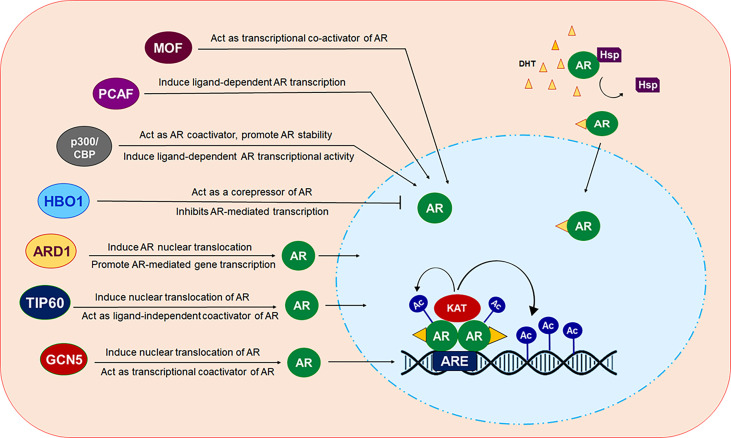
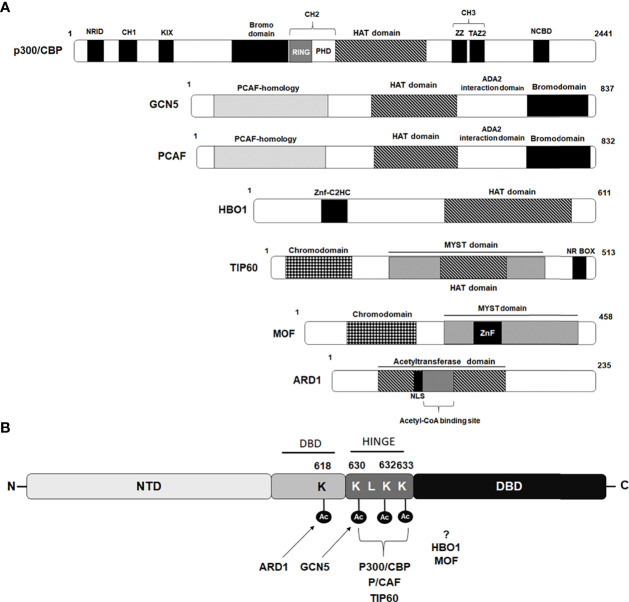
The development and growth of a normal prostate gland, as well as its physiological functions, are regulated by the actions of androgens through androgen receptor (AR) signaling which drives multiple cellular processes including transcription, cellular proliferation, and apoptosis in prostate cells. Post-translational regulation of AR plays a vital role in directing its cellular activities modulating its stability, nuclear localization, and transcriptional activity. Among various post-translational modifications (PTMs), acetylation is an essential PTM recognized in AR and is governed by the regulated actions of acetyltransferases and deacetyltransferases. Acetylation of AR has been identified as a critical step for its activation and depending on the site of acetylation, the intracellular dynamics and activity of the AR can be modulated. Various acetyltransferases such as CBP, p300, PCAF, TIP60, and ARD1 that are known to acetylate AR, may directly coactivate the AR transcriptional function or help to recruit additional coactivators to functionally regulate the transcriptional activity of the AR. Aberrant expression of acetyltransferases and their deregulated activities have been found to interfere with AR signaling and play a key role in development and progression of prostatic diseases, including prostate cancer (PCa). In this review, we summarized recent research advances aimed at understanding the role of various lysine acetyltransferases (KATs) in the regulation of AR activity at the level of post-translational modifications in normal prostate physiology, as well as in development and progression of PCa. Considering the critical importance of KATs in modulating AR activity in physiological and patho-physiological context, we further discussed the potential of targeting these enzymes as a therapeutic option to treat AR-related pathology in combination with hormonal therapy.
正常前列腺的发育和生长以及其生理功能是通过雄激素通过雄激素受体 (AR) 信号来调节的,该信号驱动包括转录、细胞增殖和前列腺细胞凋亡在内的多种细胞过程。AR 的翻译后调节在指导其细胞活动、调节其稳定性、核定位和转录活性方面起着至关重要的作用。在各种翻译后修饰 (PTM) 中,乙酰化是 AR 中公认的重要 PTM,受乙酰转移酶和脱乙酰酶的调节作用控制。AR 的乙酰化已被确定为其激活的关键步骤,并且根据乙酰化的位点,AR 的细胞内动力学和活性可以被调节。各种乙酰转移酶,如 CBP、p300、PCAF、TIP60 和 ARD1,已知可以乙酰化 AR,它们可以直接共激活 AR 的转录功能,或帮助招募其他共激活因子来功能性调节 AR 的转录活性。异常表达的乙酰转移酶及其失调的活性被发现会干扰 AR 信号,并在前列腺疾病(包括前列腺癌)的发展和进展中发挥关键作用。在这篇综述中,我们总结了最近的研究进展,旨在了解各种赖氨酸乙酰转移酶 (KAT) 在正常前列腺生理学中通过翻译后修饰调节 AR 活性以及在前列腺癌的发展和进展中的作用。鉴于 KAT 在调节 AR 在生理和病理生理背景下的活性方面的重要性,我们进一步讨论了将这些酶作为治疗与激素治疗联合治疗 AR 相关病理学的治疗选择的潜力。