Bernhoff Gabriella, Huhmar Helena M, Rasmussen-Barr Eva, Bunketorp Käll Lina
Department of Neurobiology, Care Sciences and Society, Division of Family Medicine and Primary Care, Karolinska Institute, Stockholm, Sweden.
ME-Centre, Bragée Clinics, Stockholm, Sweden.
J Pain Res. 2022 Aug 27;15:2547-2556. doi: 10.2147/JPR.S369470. eCollection 2022.
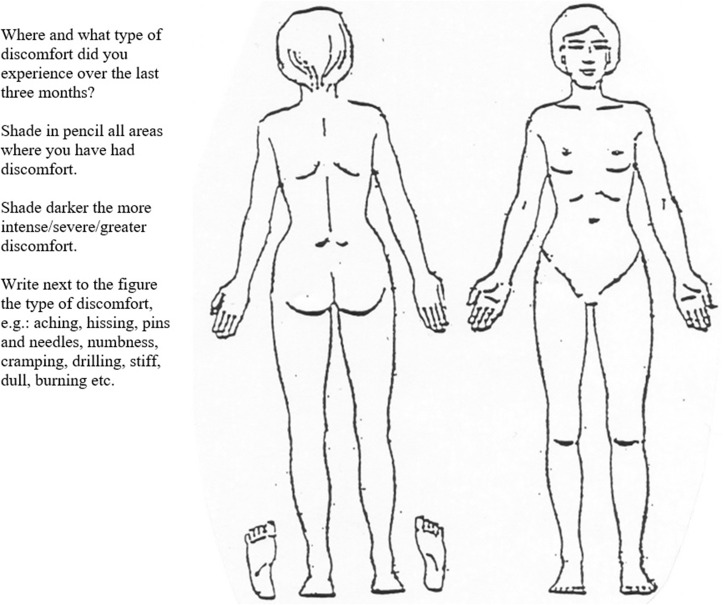
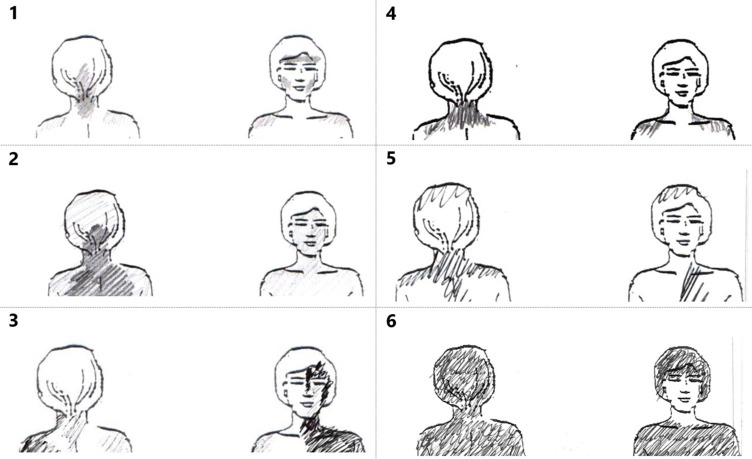
Patients with myalgic encephalomyelitis/chronic fatigue syndrome (ME/CFS) present with a broad spectrum of symptoms, including headache. A simple, yet powerful tool - the pain drawing identifies essential aspects such as pain distribution. The aim with this study was to 1) evaluate the significance of pain drawing as a screening tool for cervicogenic headache using a predefined C2 pain pattern, 2) assess whether there was an association between dizziness/imbalance and a C2 pain pattern, and 3) compare subgroups according to the pain drawing with respect to pain characteristics and quality of life.
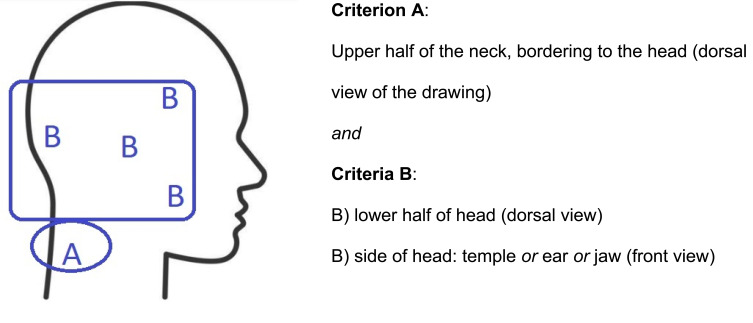
Pain drawings and clinical data from 275 patients investigated for ME/CFS were stratified into: 1) cervicogenic headache as determined by a C2 pain pattern, 2) headache with no C2 pain pattern, and 3) no headache. For inference logistic regression presented with odds ratios (OR) and 95% confidence intervals (95% CI) and Kruskal-Wallis test were applied.
One hundred sixteen participants (42%) were stratified to the group for which the pain drawing corresponded to the C2 pain pattern, thus indicating putative cervicogenic origin of the headache. Dizziness/imbalance was strongly associated with a C2 pain pattern; OR 6.50 ([95% CI 2.42-17.40] p ˂ 0.00), whereas this association was non-significant for patients with headache and no C2 pain pattern. Those demonstrating a C2 pain pattern reported significantly higher pain intensity (p = 0.00) and greater pain extent (p = 0.00) than the other groups, and lower health-related quality of life (p = 0.00) than the group with no headache.
For patients with chronic fatigue who present with a C2 pain pattern (interpreted as cervicogenic headache) the pain drawing seems applicable as a screening tool for signs associated with neuropathic and more severe pain, dizziness and reduced quality of life as detection of these symptoms is essential for targeted treatment.
肌痛性脑脊髓炎/慢性疲劳综合征(ME/CFS)患者存在广泛的症状,包括头痛。一种简单而有效的工具——疼痛绘图可识别疼痛分布等关键方面。本研究的目的是:1)使用预定义的C2疼痛模式评估疼痛绘图作为颈源性头痛筛查工具的意义;2)评估头晕/失衡与C2疼痛模式之间是否存在关联;3)根据疼痛绘图比较各亚组在疼痛特征和生活质量方面的差异。
对275例因ME/CFS接受调查的患者的疼痛绘图和临床数据进行分层:1)由C2疼痛模式确定的颈源性头痛;2)无C2疼痛模式的头痛;3)无头痛。采用比值比(OR)和95%置信区间(95%CI)的推断逻辑回归以及Kruskal-Wallis检验。
116名参与者(42%)被分层到疼痛绘图与C2疼痛模式相符的组,这表明头痛可能源于颈源性。头晕/失衡与C2疼痛模式密切相关;OR为6.50([95%CI 2.42 - 17.40],p<0.00),而对于无C2疼痛模式的头痛患者,这种关联不显著。表现出C2疼痛模式的患者报告的疼痛强度(p = 0.00)和疼痛范围(p = 0.00)明显高于其他组,与无头痛组相比,其健康相关生活质量较低(p = 0.00)。
对于表现出C2疼痛模式(解释为颈源性头痛)的慢性疲劳患者,疼痛绘图似乎可作为一种筛查工具,用于检测与神经性和更严重疼痛、头晕及生活质量下降相关的体征,因为检测这些症状对于针对性治疗至关重要。