Chen Qing, Liang Xiao, Wu Chunling, Liu Ying, Liu Xiaoqiang, Zhao Huiping, Li Kaimian, Chen Songbi, Wang Haiyan, Han Zhiling, Wu Mufeng, Yao Xiaowen, Shui Jun, Qiao Yang, Zhan Xue, Zhang Yao
Environment and Plant Protection Institute, Chinese Academy of Tropical Agricultural Sciences, Key Laboratory of Integrated Pest Management on Tropical Crops, Ministry of Agriculture and Rural Affairs, Haikou, Hainan, China.
Sanya Research Academy, Chinese Academy of Tropical Agriculture Science, Hainan Key Laboratory for Biosafety Monitoring and Molecular Breeding in Off-Season Reproduction Regions, Sanya, Hainan, China.
Front Plant Sci. 2022 Aug 18;13:994866. doi: 10.3389/fpls.2022.994866. eCollection 2022.
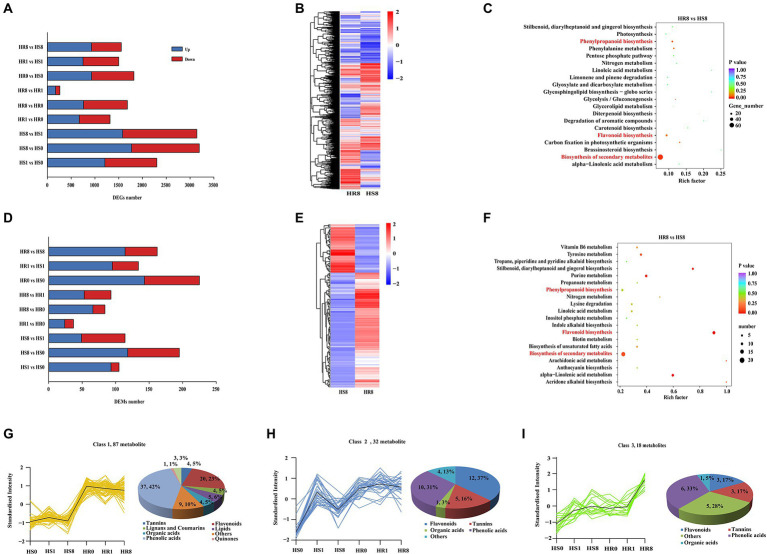
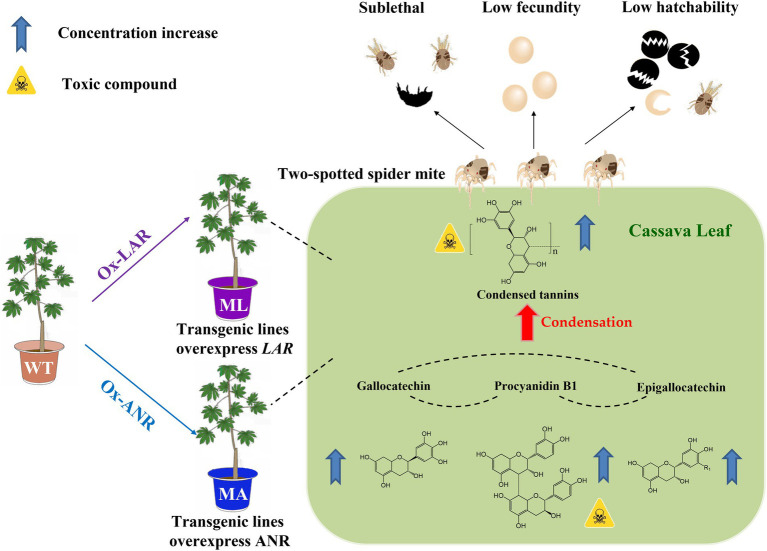
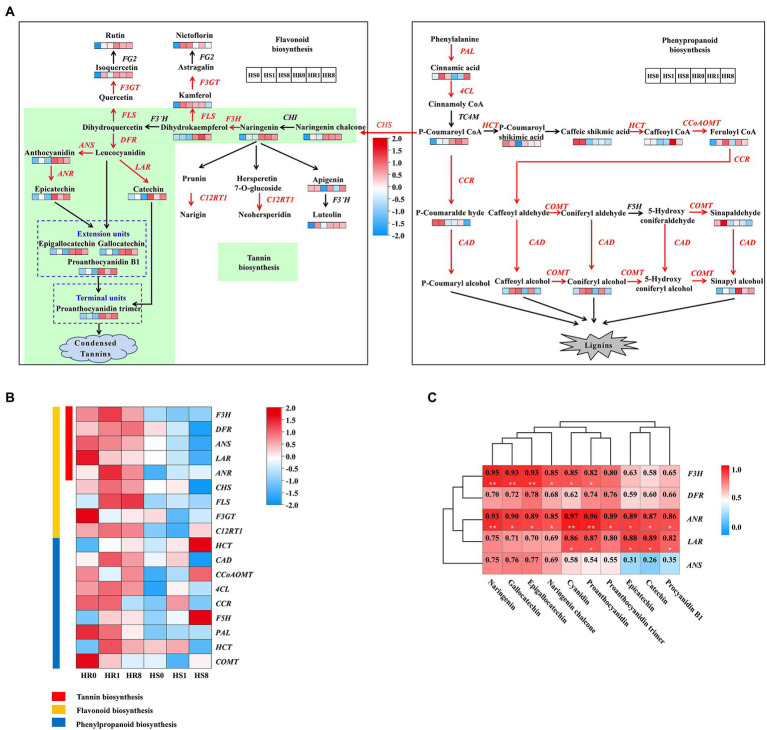
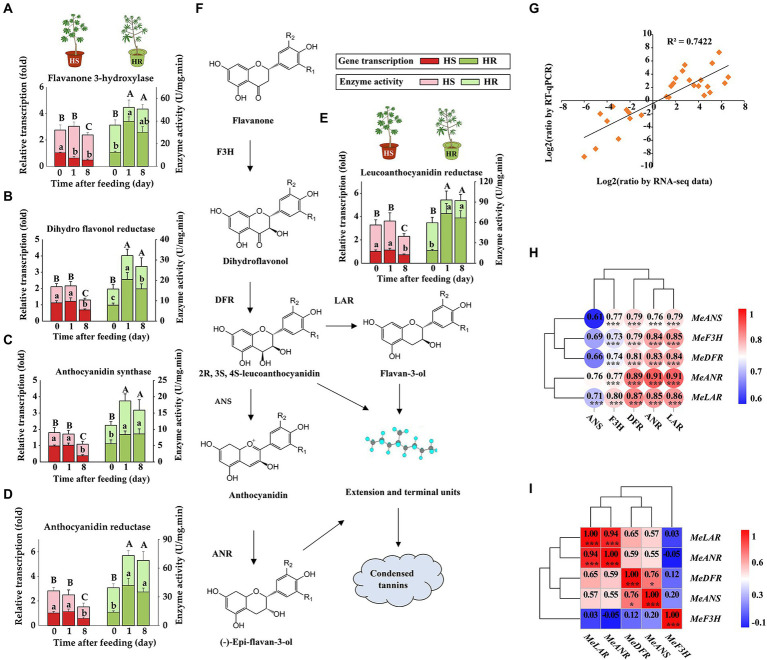
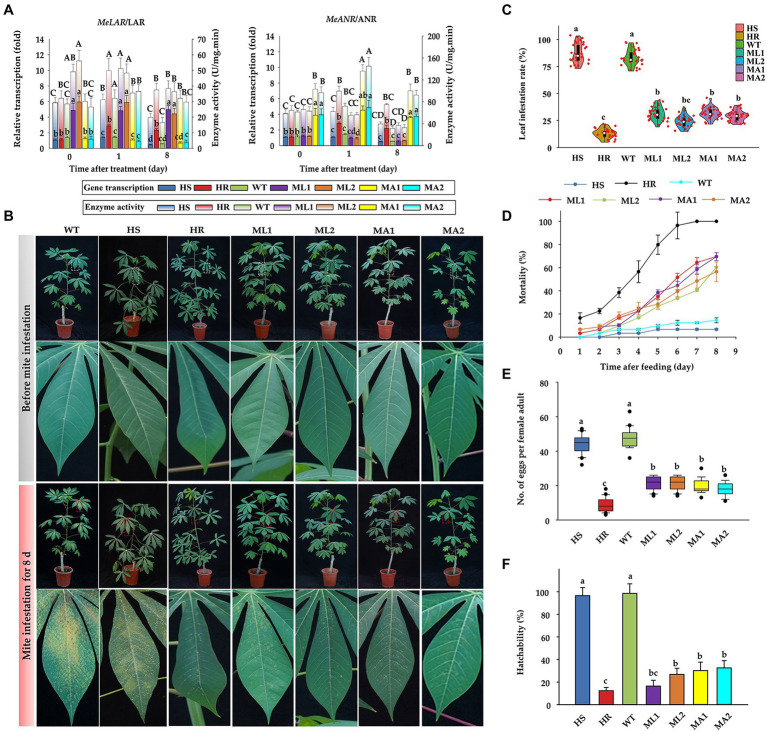
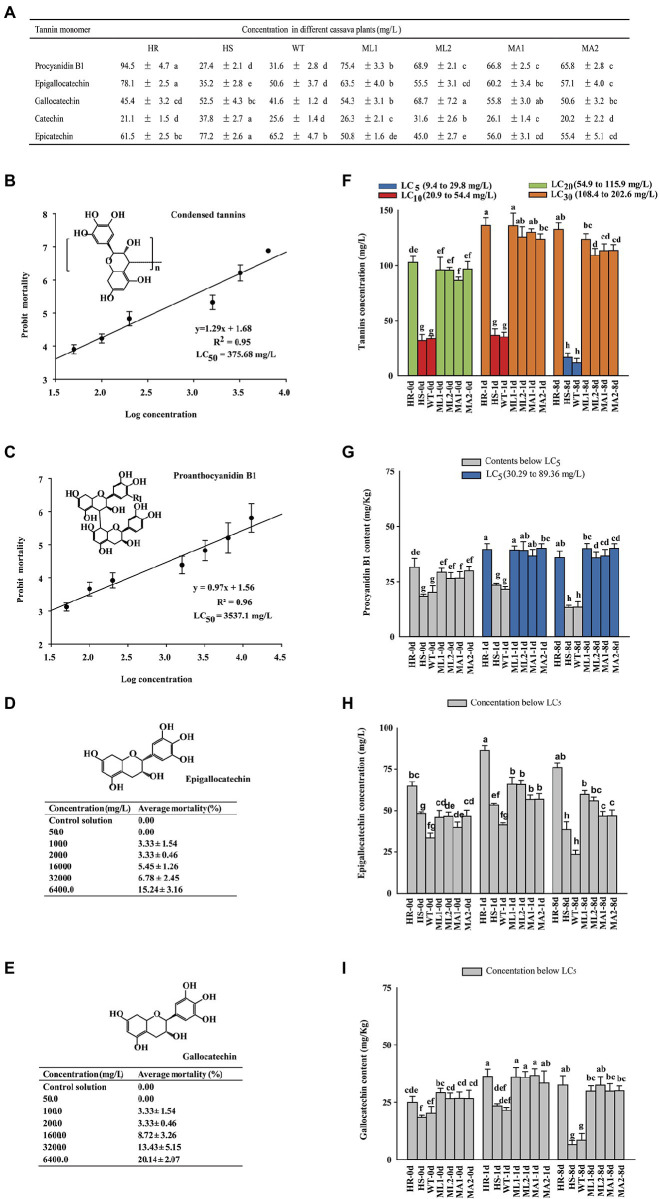
The two-spotted spider mite (TSSM) is a destructive cassava pest. Intensive demonstration of resistance mechanism greatly facilitates the creation of TSSM-resistant cassava germplasm. Gene to metabolite network plays a crucial role in modulating plant resistance, but little is known about the genes and related metabolites which are responsible for cassava resistance to TSSM. Here, a highly resistant (HR) and a highly susceptible (HS) cassava cultivar were used, integrative and comparative transcriptomic and metabolomic analyses between these two cultivars after TSSM infestation revealed that several genes and metabolites were closely related and significantly different in abundance. In particular, the expression of leucoanthocyanidin reductase () and anthocyanidin reductase () genes showed a high positive correlation with most of the metabolites in the tannin biosynthesis pathway. Furthermore, transgenic cassava lines overexpressing either of the genes elevated tannin concentrations and conferred cassava resistance to TSSM. Additionally, different forms of tannins possessed distinct bioactivity on TSSM, of which total condensed tannins (LC = 375.68 mg/l) showed maximum lethal effects followed by procyanidin B1 (LC = 3537.10 mg/l). This study accurately targets , and specific tannin compounds as critical genes and metabolites in shaping cassava resistance to TSSM, which could be considered as biomarkers for evaluation and creation of pest-resistant cassava germplasm.
二斑叶螨是木薯的一种毁灭性害虫。深入研究抗性机制极大地促进了抗二斑叶螨木薯种质的创制。基因到代谢物网络在调节植物抗性中起着关键作用,但对于木薯抗二斑叶螨的相关基因和代谢物却知之甚少。在此,使用了一个高抗(HR)和一个高感(HS)木薯品种,对这两个品种在二斑叶螨侵染后的转录组和代谢组进行综合比较分析,结果表明有几个基因和代谢物密切相关且丰度存在显著差异。特别是,无色花青素还原酶()和花青素还原酶()基因的表达与单宁生物合成途径中的大多数代谢物呈高度正相关。此外,过表达这两个基因之一的转基因木薯品系提高了单宁浓度,并赋予木薯对二斑叶螨的抗性。此外,不同形式的单宁对二斑叶螨具有不同的生物活性,其中总缩合单宁(LC = 375.68 mg/l)显示出最大致死效应,其次是原花青素B1(LC = 3537.10 mg/l)。本研究准确地将、和特定单宁化合物作为塑造木薯对二斑叶螨抗性的关键基因和代谢物,它们可被视为评估和创制抗虫木薯种质的生物标志物。