Feng Huanhuan, Liu Yaming, Feng Liang, Zhan Limeng, Meng Shuaishuai, Ji Hongjun, Zhang Jiaheng, Li Mingyu, He Peng, Zhao Weiwei, Wei Jun
Sauvage Laboratory for Smart Materials, Shenzhen Key Laboratory of Flexible Printed Electronics Technology, Harbin Institute of Technology (Shenzhen), China.
State Key Laboratory of Advanced Welding and Joining (Shenzhen), Harbin Institute of Technology (Shenzhen), China.
Research (Wash D C). 2022 Aug 5;2022:9871489. doi: 10.34133/2022/9871489. eCollection 2022.
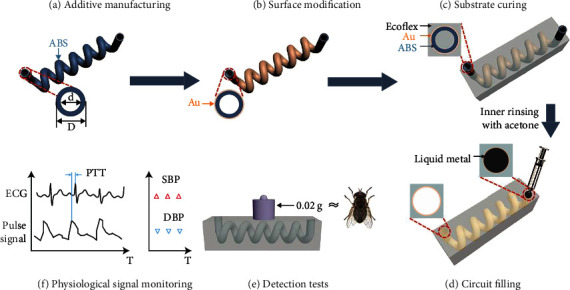
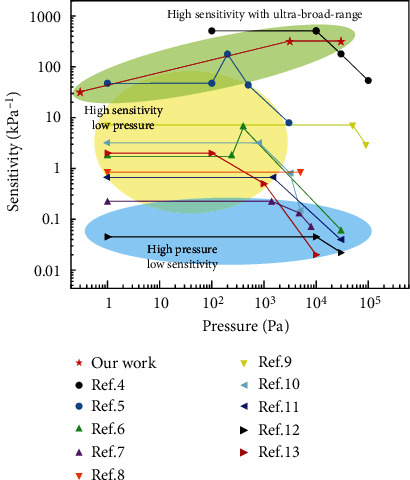
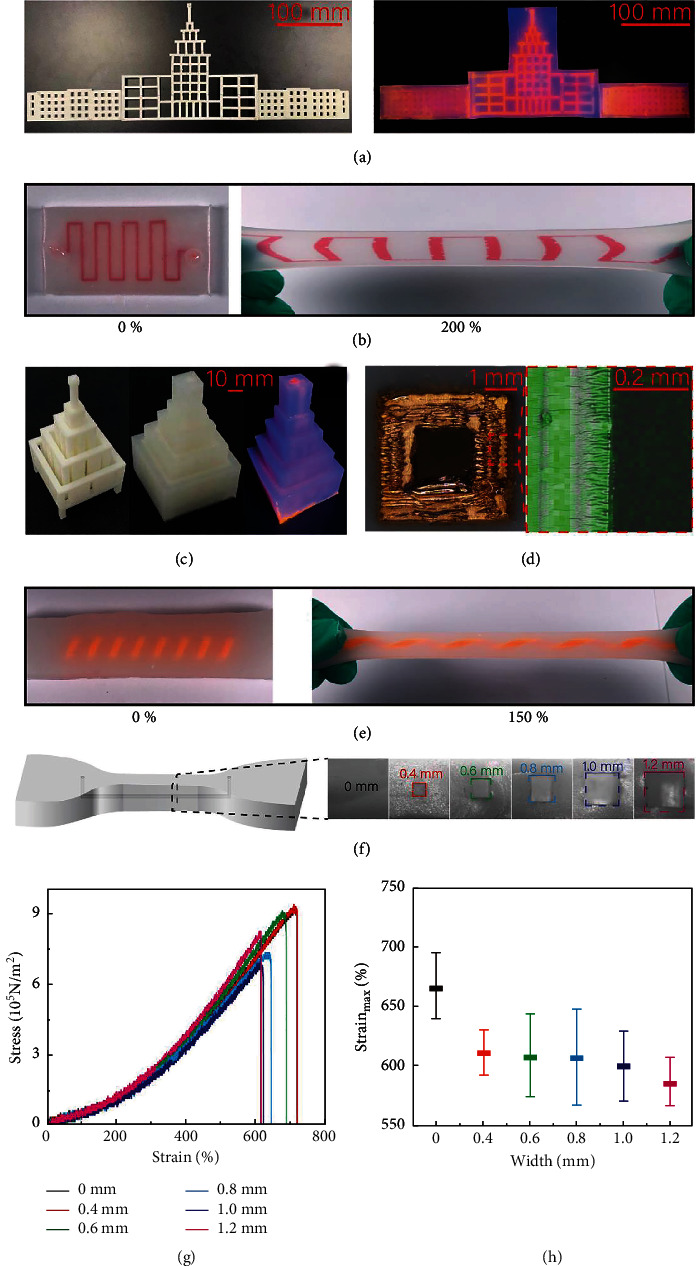
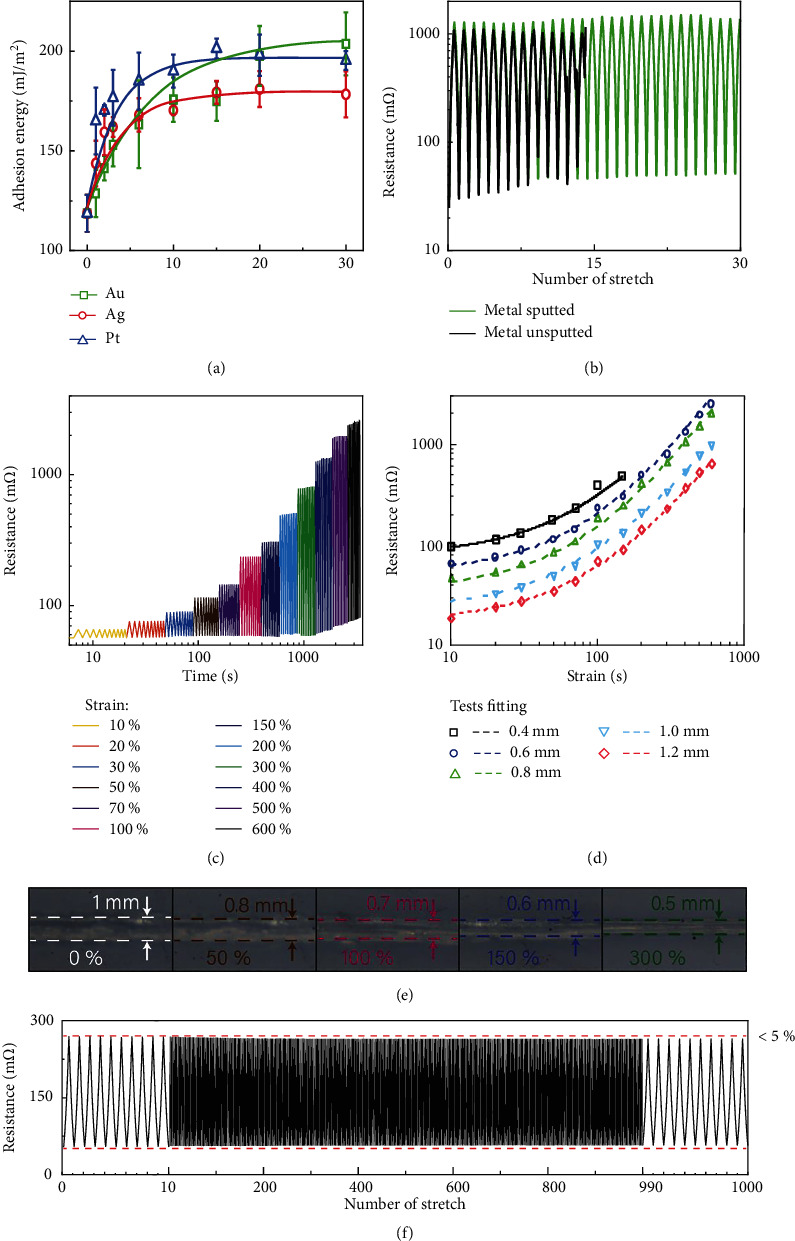
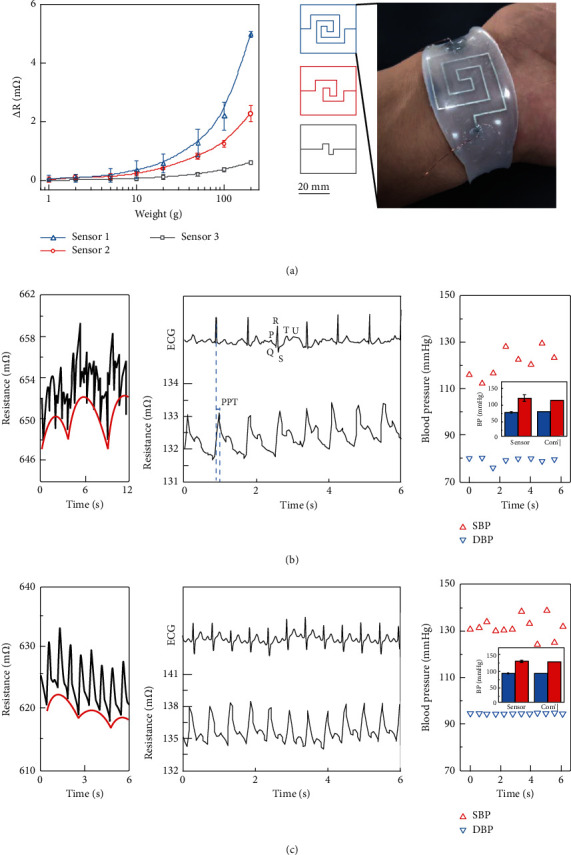
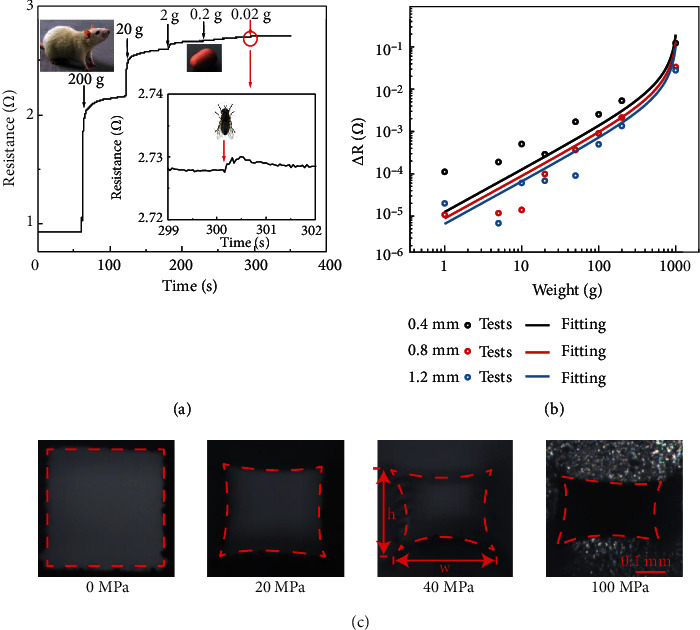
Flexible electronics can be seamlessly attached to human skin and used for various purposes, such as pulse monitoring, pressure measurement, tensile sensing, and motion detection. Despite their broad applications, most flexible electronics do not possess both high sensitivity and wide detection range simultaneously; their sensitivity drops rapidly when they are subjected to even just medium pressure. In this study, ultrabroad-range, high-sensitivity flexible electronics are fabricated through additive manufacturing to address this issue. The key to possess high sensitivity and a wide detection range simultaneously is to fabricate flexible electronics with large depth-width ratio circuit channels using the additive manufacturing inner-rinsing template method. These electronics exhibit an unprecedented high sensitivity of 320 kPa over the whole detection range, which ranges from 0.3 to 30,000 Pa (five orders of magnitude). Their minimum detectable weight is 0.02 g (the weight of a fly), which is comparable with human skin. They can stretch to over 500% strain without breaking and show no tensile fatigue after 1000 repetitions of stretching to 100% strain. A highly sensitive and flexible electronic epidermal pulse monitor is fabricated to detect multiple physiological signals, such as pulse signal, breathing rhythm, and real-time beat-to-beat cuffless blood pressure. All of these signals can be obtained simultaneously for detailed health detection and monitoring. The fabrication method does not involve complex expensive equipment or complicated operational processes, so it is especially suitable for the fabrication of large-area, complex flexible electronics. We believe this approach will pave the way for the application of flexible electronics in biomedical detection and health monitoring.
柔性电子器件能够无缝贴合在人体皮肤上,并用于多种用途,如脉搏监测、压力测量、拉伸传感和运动检测。尽管其应用广泛,但大多数柔性电子器件无法同时具备高灵敏度和宽检测范围;即使仅受到中等压力,它们的灵敏度也会迅速下降。在本研究中,通过增材制造来制备超宽范围、高灵敏度的柔性电子器件,以解决这一问题。同时具备高灵敏度和宽检测范围的关键在于,使用增材制造内冲洗模板法制造具有大深宽比电路通道的柔性电子器件。这些电子器件在整个检测范围内(从0.3到30,000 Pa,跨越五个数量级)展现出前所未有的320 kPa高灵敏度。它们的最小可检测重量为0.02 g(一只苍蝇的重量),与人类皮肤相当。它们能够拉伸至超过500%的应变而不断裂,并且在1000次拉伸至100%应变的重复测试后无拉伸疲劳现象。制造了一种高灵敏度且柔性的电子表皮脉搏监测器,用于检测多种生理信号,如脉搏信号、呼吸节律和实时逐搏无袖带血压。所有这些信号都可以同时获取,以进行详细的健康检测和监测。该制造方法不涉及复杂昂贵的设备或复杂的操作过程,因此特别适合制造大面积、复杂的柔性电子器件。我们相信这种方法将为柔性电子器件在生物医学检测和健康监测中的应用铺平道路。