Malpede Maurizio, Shayegh Soheil
Bocconi University and University of Verona, Milan, Italy.
RFF-CMCC European Institute on Economics and the Environment (EIEE), Centro Euro-Mediterraneo sui Cambiamenti Climatici, Lecce, Italy.
Lett Spat Resour Sci. 2022;15(3):637-651. doi: 10.1007/s12076-022-00316-6. Epub 2022 Aug 31.
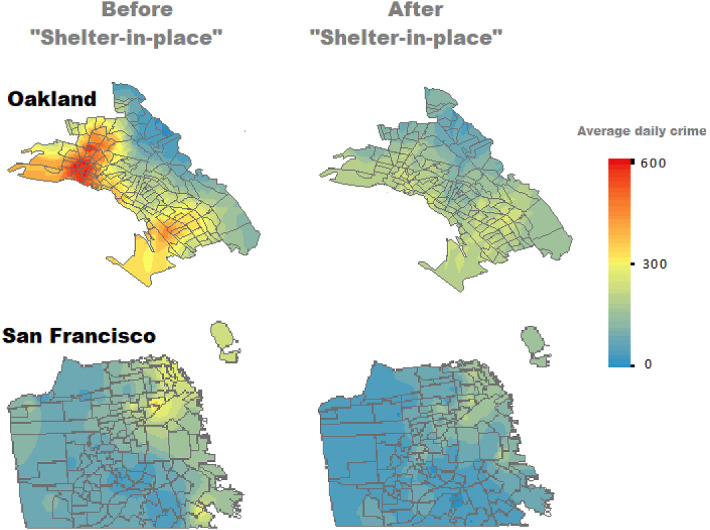
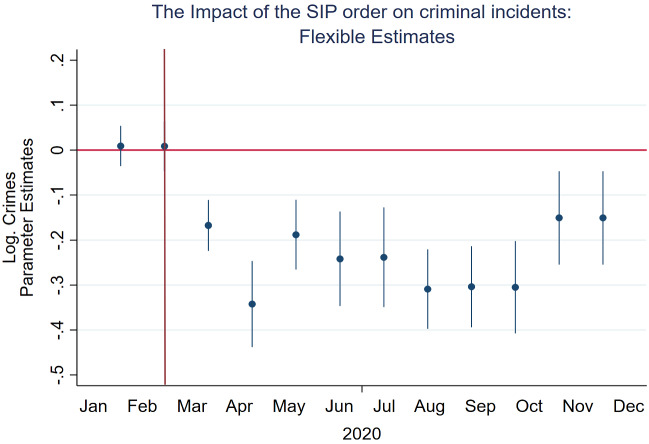
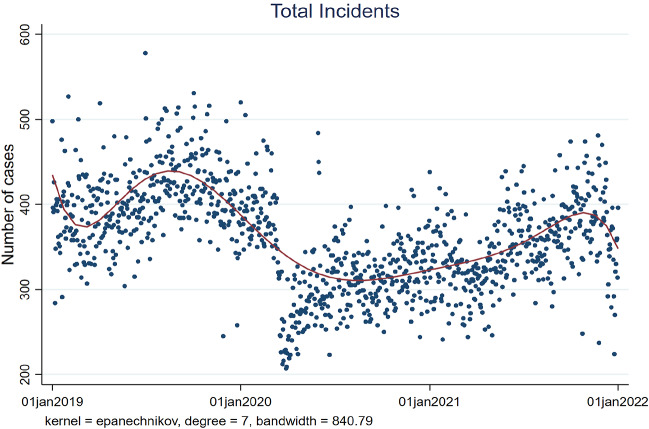
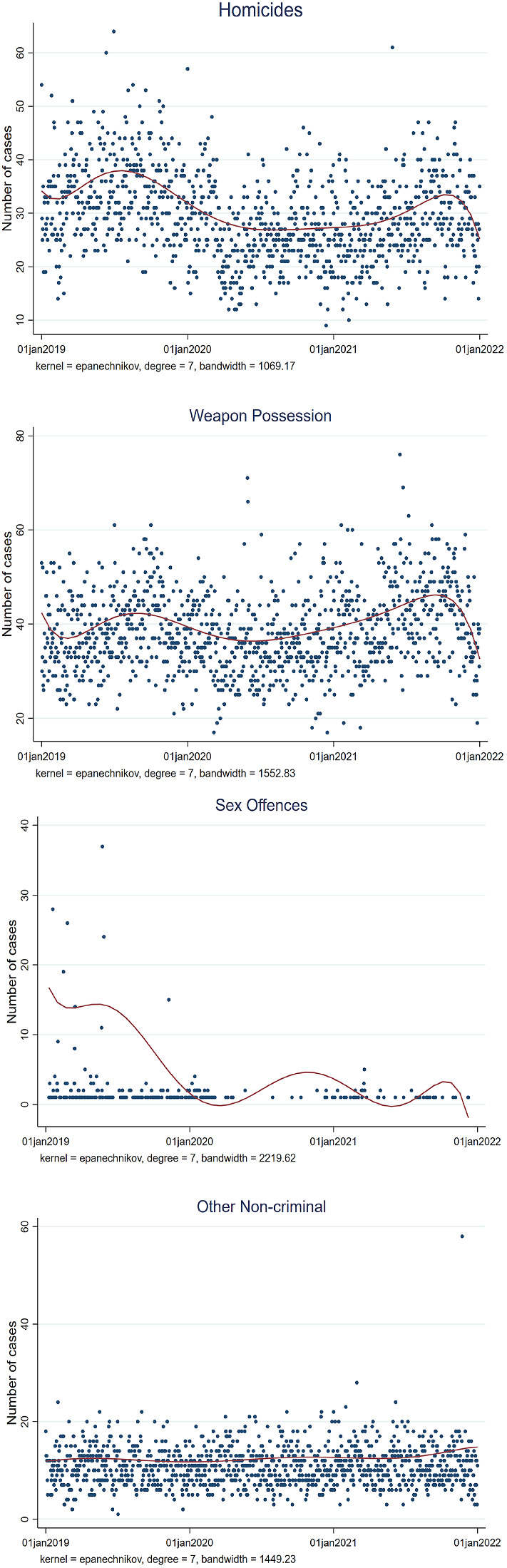
When coronavirus disease (COVID-19) was spreading worldwide, many national and local governments started to impose socially restrictive measures to limit the spread of the virus. Such quarantine measures in different cities worldwide have brought a new trend in public safety improvement and crime reduction. Using daily crime reports in the U.S., this paper evaluates the immediate unintended effects of shelter-in-place orders on different crime categories using fine-grained spatial units (i.e., neighborhoods) rather than entire cities, states, or countries. Results for San Francisco suggest an immediate drop of between 10 and 20% points in the total number of crimes after one month from the introduction of the restrictions. In particular, we show that while theft, homicide, and traffic accidents have fallen sharply, domestic violence incidents and weapon possession offences were not affected by the lockdown. The results are robust to the inclusion of spatial and temporal dependence.
当冠状病毒病(COVID-19)在全球蔓延时,许多国家和地方政府开始实施社会限制措施以限制病毒传播。全球不同城市的此类检疫措施带来了公共安全改善和犯罪减少的新趋势。本文利用美国的每日犯罪报告,使用细粒度空间单位(即社区)而非整个城市、州或国家,评估就地避难令对不同犯罪类别的直接意外影响。旧金山的结果表明,自实施限制措施一个月后,犯罪总数立即下降了10至20个百分点。特别是,我们发现虽然盗窃、凶杀和交通事故大幅下降,但家庭暴力事件和持有武器犯罪并未受到封锁的影响。纳入空间和时间依赖性后,结果依然稳健。