Abrams David S
University of Pennsylvania Law School and Wharton, United States.
J Public Econ. 2021 Feb;194:104344. doi: 10.1016/j.jpubeco.2020.104344. Epub 2021 Jan 22.
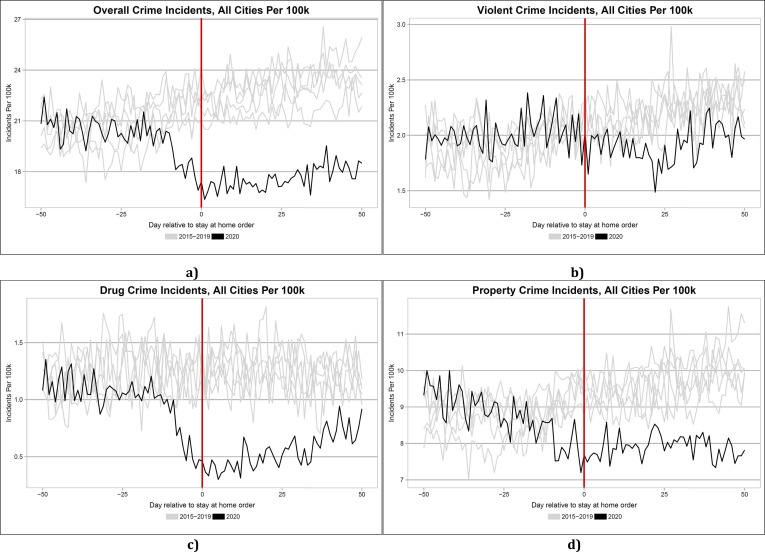
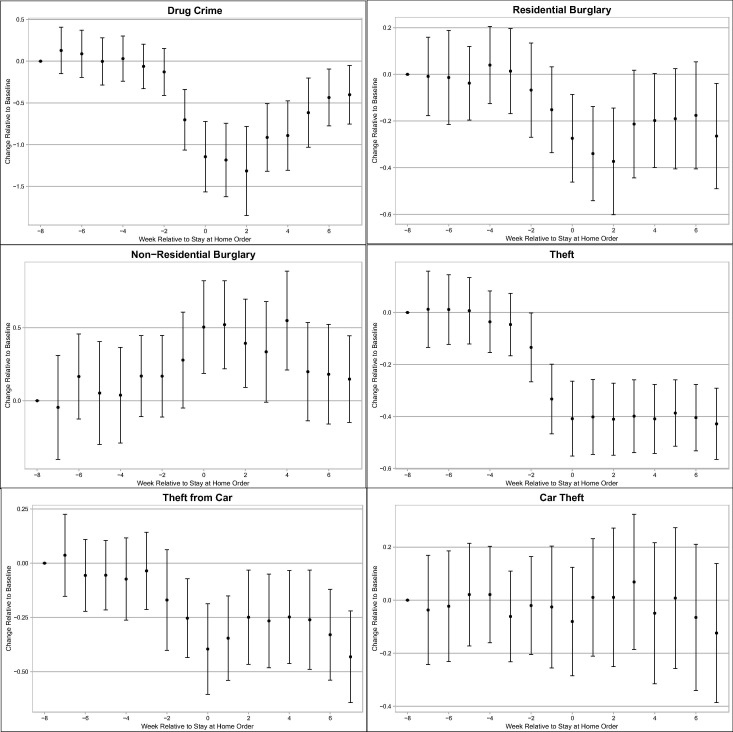
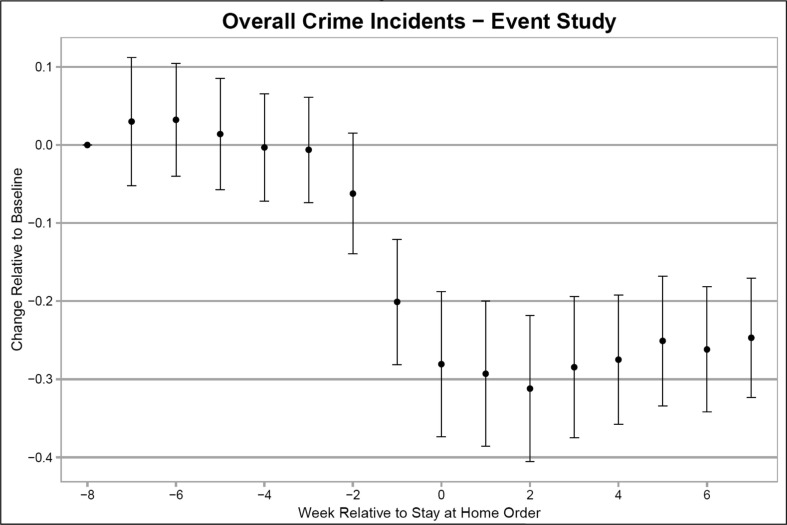
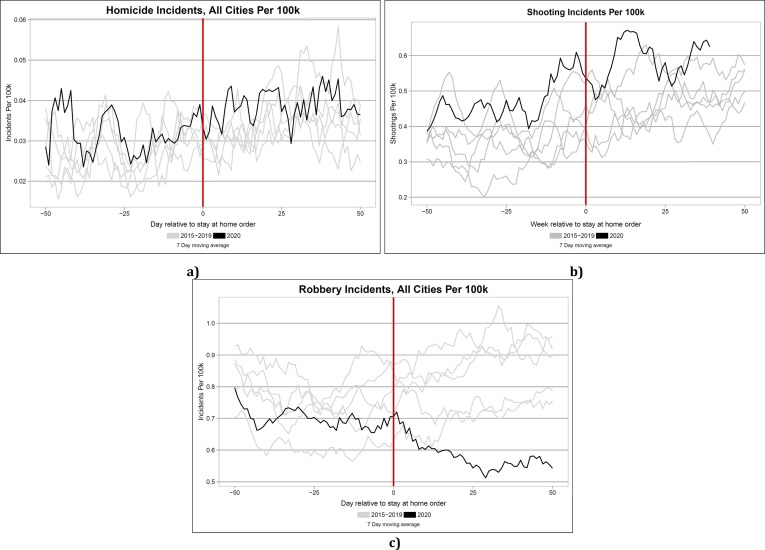
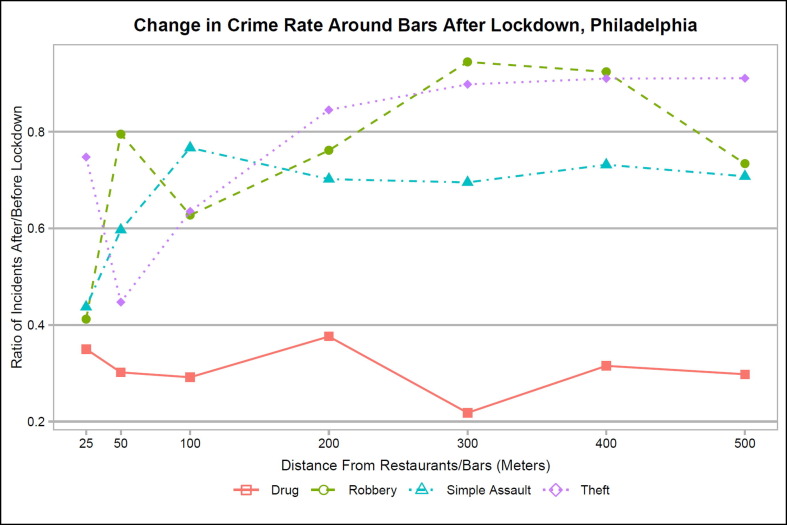
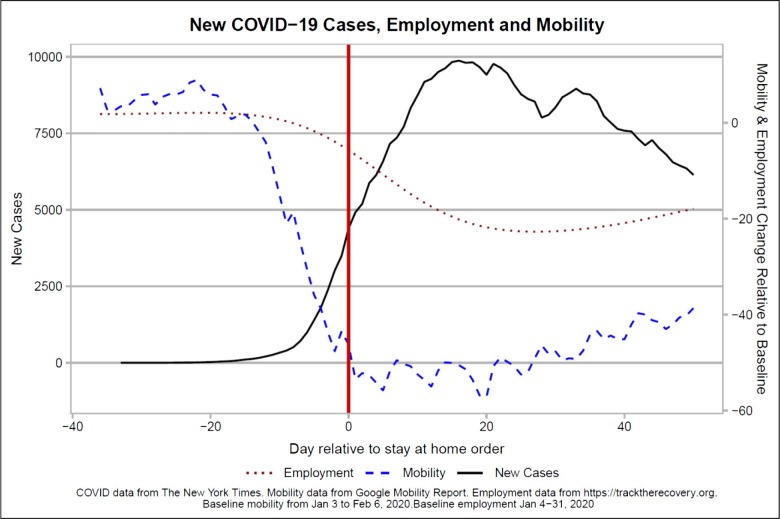
Data from 25 large U.S. cities is assembled to estimate the impact of the onset of the COVID-19 pandemic on crime. There is a widespread immediate drop in both criminal incidents and arrests most heavily pronounced among drug crimes, theft, residential burglaries, and most violent crimes. The decline appears to precede stay-at-home orders, and arrests follow a similar pattern as reports. There is no decline in homicides and shootings, and an increase in non-residential burglary and car theft in most cities, suggesting that criminal activity was displaced to locations with fewer people. Pittsburgh, New York City, San Francisco, Philadelphia, Washington DC and Chicago each saw overall crime drops of at least 35%. Evidence from police-initiated reports and geographic variation in crime change suggests that most of the observed changes are not due to changes in crime reporting.
收集了来自美国25个大城市的数据,以评估新冠疫情爆发对犯罪的影响。犯罪事件和逮捕人数都出现了普遍的立即下降,在毒品犯罪、盗窃、住宅入室盗窃和大多数暴力犯罪中最为明显。这种下降似乎在居家令之前就出现了,逮捕人数的变化模式与报告情况相似。凶杀案和枪击案没有下降,大多数城市的非住宅入室盗窃和汽车盗窃有所增加,这表明犯罪活动转移到了人员较少的地方。匹兹堡、纽约市、旧金山、费城、华盛顿特区和芝加哥的总体犯罪率降幅均至少达到35%。警方发起的报告以及犯罪变化的地理差异所提供的证据表明,观察到的大多数变化并非源于犯罪报告的变化。